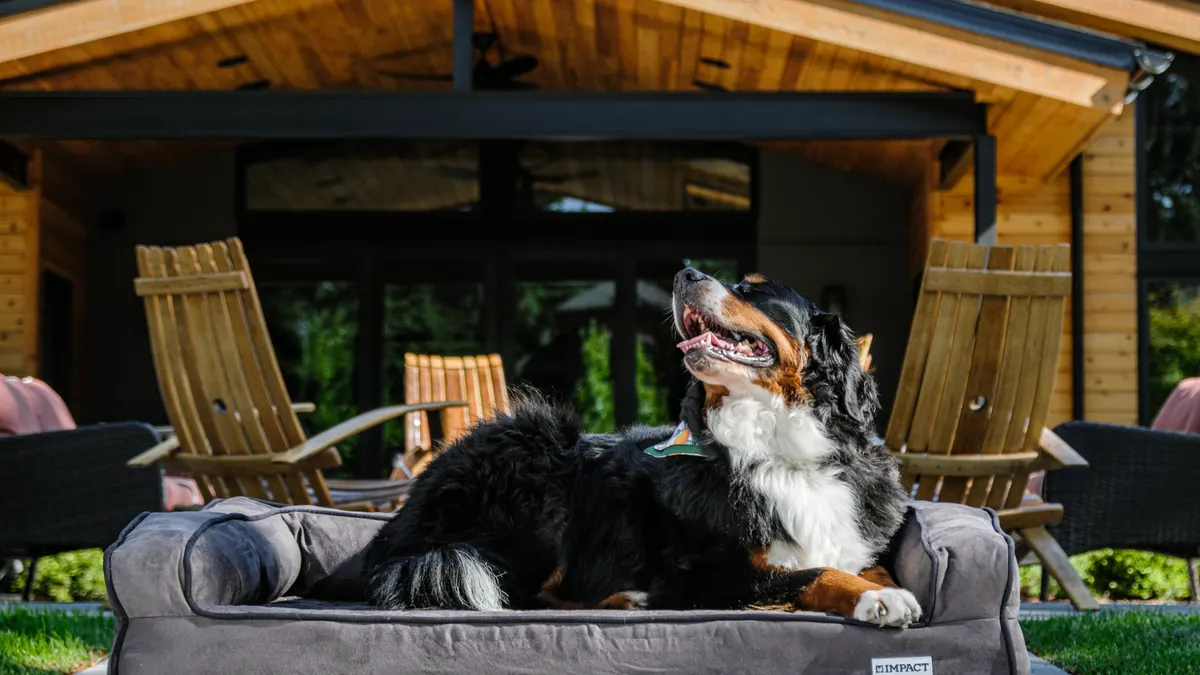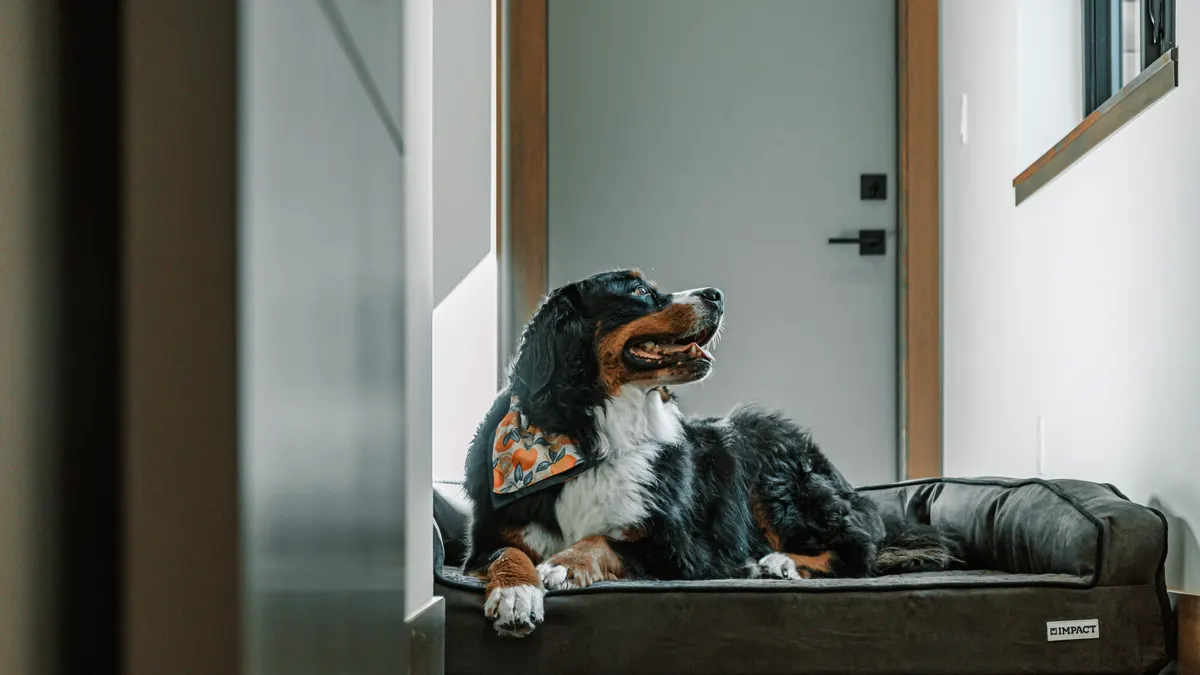
At 6:40 on a January morning, a twelve-year-old shepherd circles her plush bed twice, then flops onto the tile beside it instead. Owners read that as stubbornness. It is usually the bed failing three quiet tests: too warm, too high to step into, too flat to push off. An older dog spends 14 to 18 hours a day resting, so the surface under them stops being décor and starts shaping their joints, their sleep, and their mornings. My own lab mix, Nellie, only trusted her bed again after we swapped a high bolster for a flat, low-entry slab. A new bed will not cure arthritis or rebuild lost muscle, but it can take pressure off sore hips, hold in warmth, and turn getting up into a single motion. This guide covers what actually matters when you shop, what to walk past, and how to match a bed to your dog rather than to the marketing photo.
The answer, up front
A senior dog bed should offer firm, even support — usually 4 to 5 inches of quality memory or orthopedic foam — with a low step-in edge, a waterproof liner, a washable cover, and a non-slip base. Bolsters help dogs that lean or rest their head, as long as the dog can walk in without jumping. Arthritic dogs often do better with warmth; dogs that pant at rest do better on cooling surfaces. Match the bed to the dog, not the photo.
Why the bed matters so much for older dogs
As dogs age, their bodies change in ways that directly affect how they rest. Cartilage in the hips, elbows, shoulders, and spine thins, which is why most older dogs develop some degree of osteoarthritis. Muscle mass also drops, which means less natural padding between bone and floor. Hard surfaces that a younger dog shrugged off become genuinely uncomfortable, and pressure on the same joint for hours can leave an older dog stiff and slow to rise.
There are a few specific things a senior dog bed needs to handle well:
- Pressure redistribution. Memory foam and dense orthopedic foam spread the dog's weight across a larger surface area, which reduces point loading on bony areas like hips and elbows. Cheap polyfill does not do this; it compresses into clumps and creates pressure points.
- Warmth. Older dogs, especially thin ones and those with thin coats, often struggle to retain body heat. A bed that insulates from cold floors helps keep joints looser.
- Easy entry and exit. A bed that is 8 inches tall with a high bolster might look plush, but a dog with sore hips will treat it like a wall. Step-in height matters more than cushion thickness once a dog is past 7 or 8 years old.
- Stability. Slipping on the way out of bed is one of the most common ways an older dog hurts themselves. A grippy bottom and a bed that does not slide across the floor are non-negotiable.
What to look for in a senior dog bed
The following features consistently make a real difference. Use this as a checklist when comparing options:
- A foam layer of at least 4 inches, ideally 5 for medium and large dogs.
- Memory foam or high-density orthopedic foam (look for around 4 to 5 lb density if the manufacturer lists it).
- A removable, machine-washable cover. Accidents happen, and so does muddy-paw season.
- A waterproof or water-resistant inner liner to protect the foam from urine, drool, and spills.
- A non-slip bottom (usually a rubberized or silicone pattern).
- A low profile or a low side that the dog can step over without jumping.
- A size that gives the dog at least 4 to 6 inches of clearance on every side when curled up, and enough length when stretched out on their side.
- Bolsters on one or more sides for head support, unless your dog strongly prefers a flat surface.
Buying criteria at a glance
📊Senior Dog Bed Buying Criteria
| Criterion | Why it matters | What to check |
|---|---|---|
| Foam density | Soft fill flattens under weight and stops supporting joints | Look for high-density or medical-grade foam |
| Entry height | A tall bed forces the dog to climb, which strains the shoulders and hips | Pick a height the dog can step onto without jumping |
| Non-slip base | A bed that slides creates a new fall risk | Check the bottom for rubberized or grippy material |
| Removable, washable cover | Older dogs shed more and may have accidents | Make sure the cover zips off and machine-washes |
| Size and turning room | A cramped bed forces awkward sleep positions | The dog should be able to stretch out fully and turn around |
| Waterproof liner | Useful for incontinent senior dogs | Look for a removable waterproof layer between the foam and the cover |
Click on any product to view full details and reviews
Comparison: common senior dog bed types
| Bed type | Best for | Watch out for |
|---|---|---|
| Orthopedic memory foam | Arthritic dogs, dogs that sleep on their side, most seniors as an all-rounder | Can retain heat; look for gel-infused foam if your dog runs warm |
| Bolster / cuddler | Dogs that like to lean, rest their head, or curl into a ball | High bolsters can block entry; choose one with a low side |
| Heated or self-warming | Thin dogs, arthritic dogs in cold homes, short-coated breeds | Avoid for dogs that cannot move off the heat; check cords |
| Raised cot (mesh or fabric) | Hot climates, dogs that pant heavily, outdoor or porch use | No joint cushioning; pair with a pad for arthritic dogs |
| Cooling mat / gel pad | Dogs that overheat, post-surgery dogs that pant from pain | Most need recharging in the fridge; some dogs dislike the texture |
Three bed categories worth comparing
The right category depends on the dog's body, sleeping style, and any incontinence or arthritis concerns. These are the three I shortlist first.
Memory foam beds for joint support
Solid memory foam is the default orthopedic choice. It molds around the hips, elbows, and shoulders and spreads load evenly, which is exactly what a body with thinning cartilage needs. The catch is heat retention and cheap fill: quality foam springs back, while low-density foam stays flattened within months. Gel-infused versions sleep cooler for warm-weather dogs.
Orthopedic Memory Foam Dog Beds for Senior Dogs
Compare high-density memory foam beds that distribute weight evenly and reduce pressure on joints. Check the foam thickness, density rating, removable cover, and non-slip base before buying.
Look for:
- a solid slab rather than shredded or egg-crate fill
- 4 inches of thickness or more for medium and large dogs
- a cover that zips off and survives repeated washing
- a base that grips hardwood and tile
Low-entry beds for dogs that struggle to climb
A tall bolster is a wall to a dog with sore hips. Low-entry designs keep the orthopedic core but drop or remove the front edge, so the dog walks on instead of climbing. Shortlist this category for arthritis, front-leg weakness, or any senior that hesitates before settling. For measured entry heights and testing steps, see Best Low-Entry Dog Beds for Senior Dogs.
Low-Entry Orthopedic Dog Beds for Senior Dogs
Compare low-entry orthopedic beds with reduced step-in height. Prioritize foam density, non-slip base, removable cover, and a stable frame that does not wobble when the dog steps on the edge.
Look for:
- a step-in edge under 5 inches for small and medium dogs
- an open or flattened front with no tall bolster to clear
- a frame that stays put when the dog steps on the corner
- support that comes from foam density, not bed height
Washable beds for senior dogs with accidents
Incontinence, drooling, and muddy paws are part of senior life, and urine that soaks the foam ends the bed. A zip-off cover plus a waterproof layer between foam and fabric keeps the core clean and the bed in service for years.
Washable Orthopedic Dog Beds for Senior Dogs
Compare washable orthopedic beds with removable covers and waterproof liners. Useful for senior dogs that shed heavily or have occasional accidents. Check the cover material, washing instructions, and whether the foam itself is protected.
Look for:
- a cover that machine-washes without shrinking or tearing
- a waterproof layer that shields the foam itself
- fabric that holds up after repeated cycles
- a non-slip base that survives the wash
Cooling beds for dogs that run warm
Some senior dogs run hot: they pant on warm afternoons, flatten themselves on tile, or abandon their bed entirely in summer. Age makes heat dissipation harder — panting gets less efficient, heart and lung disease limit the cardiovascular reserve, and brachycephalic and thick-coated breeds suffer most. If your dog shows those signals, bed material matters as much as support.
The most reliable option for an older dog is a pressure-activated gel mat layered over a thin orthopedic pad. The gel reacts to weight and body heat and needs no power; it recharges in the fridge for 30 to 60 minutes between uses. A raised mesh cot works well for mobile dogs that sprawl, but offers no joint cushioning on its own. Evaporative mats only perform in dry climates, and electric cooling beds with cords are not safe for unsupervised use or for chewers.
Two rules that hold in most homes: never put a cooling mat directly on a hard floor, because the dog loses support while gaining coolness; and make sure the dog can move off the cool surface on their own. Watch for relief signals — less panting within minutes of lying down, longer unbroken sleep, and less time spent on bare tile.
How we ranked the bed categories
Support comes first: foam density and thickness carry more weight than entry height, and entry height outweighs washability and looks. Every shortlisted bed had to clear all three. The honest limit: no bed here was cut open or load-tested in a lab. The ranking rests on published specifications, long-term owner reports, and the return patterns buyers describe. Your dog's body may still disagree with the table, so treat this as a shortlist, not a verdict.
Step-by-step: choosing the right bed for your dog
- Measure your dog while they sleep. Wait until your dog is fully stretched out on their side, then measure from nose to base of tail and from shoulder to the floor. Add 4 to 6 inches to each.
- Watch how they get in and out. Notice which side they favor, whether they step over the edge or hesitate, and whether they lean against a wall or furniture.
- Note their temperature preferences. A dog that seeks out sunbeams and warm tiles may want a heated bed. A dog that flops onto cool tile may be overheating.
- Pick a bed style that matches those notes. A side-sleeper that runs warm does well with gel-infused memory foam. A curl-up leaner does well with a bolster bed that has a low entry side.
- Size up, not down. A bed that is slightly too large is almost always better than one that is slightly too small. Dogs that hang off the edge lose the joint support.
- Test for a week before deciding. Some dogs ignore a new bed for days. Encourage use by placing a worn shirt on the bed and feeding treats on it. If after a week the dog avoids it, the problem is usually entry height, temperature, or smell (chemical off-gassing from cheap foam is real).
Beds worth walking past
- Beds that are too soft or plush. A bed the dog sinks into feels luxurious to us, but for an arthritic dog it means fighting to push back out every time they stand.
- Donut beds with high, thick bolsters all the way around. They trap the dog inside and force a jump to exit. Many older dogs simply stop using them.
- Beds with no waterproof liner. Foam that absorbs even one accident will smell forever and break down faster.
- Beds that slide. If the bed moves when the dog pushes off to stand, it teaches them to avoid it.
- Extremely cheap "memory foam" beds. Often they are low-density foam that flattens in a few months. A bed that bottoms out under the dog's weight offers no support.
- Heated beds for dogs that cannot easily reposition. Always check that your dog can move off the heat source if they get too warm.
How often to replace a senior dog bed
A quality orthopedic bed usually lasts about 2 to 3 years of daily use before the foam starts to compress and lose support. I replaced a $40 "memory foam" bed that flattened within five months; the same dog never made a crater in the 5-inch slab that followed. If you can press your hand into the foam and it does not spring back quickly, or if the dog has started leaving a permanent body-shaped dip, it is time to replace it. Wash the cover every 2 to 4 weeks, and clean the waterproof liner as needed. Rotate the bed every few weeks if your dog always sleeps in the same position, which helps the foam wear more evenly.
Signs your dog is comfortable in the bed
You will know the bed is working when your dog settles quickly without circling excessively, sleeps through the night, and stands up without the stiff, halting first few steps that come from lying on a hard or unsupportive surface. Many owners also report that their dog simply spends more time on the bed voluntarily, which is one of the clearest signals of all.
Where the bed stops and the vet starts
A new bed helps with comfort, but it does not address the underlying cause of stiffness. If your dog shows any of these signs, do not just upgrade the bed — schedule a veterinary exam:
- Sudden reluctance to use stairs, jump, or walk.
- Whining, panting, or restlessness at night that does not respond to a better bed.
- A noticeable limp that lasts more than a day or two.
- Muscle loss along the hindquarters or spine.
- Pain when touched on the back, hips, or shoulders.
Your vet can help determine whether pain medication, joint supplements, physical therapy, or further imaging is appropriate alongside the comfort changes you make at home. Your own vet may disagree with the age thresholds in this guide; trust their read of your dog.
The final call
The best senior dog bed is the one your dog actually uses, sleeps deeply on, and rises from without stiffness. Focus on dense foam support, easy entry, a washable cover, and a non-slip base, then match the temperature and shape of the bed to your dog's habits. A good bed is one of the cheapest quality-of-life upgrades you can give an aging dog. It pays for itself in better rest, less morning stiffness, and fewer bad nights.
Bed buying questions, answered
Do senior dogs need a cooling bed?
Not all of them. Dogs that pant heavily at rest, hunt for tile in summer, or live with heart, lung, or brachycephalic airway issues gain the most. A pressure-activated gel mat layered over a thin orthopedic pad is the safest all-rounder; skip electric beds with cords.
Why does my senior dog sleep on the floor instead of the bed?
Usually one of three things: the bed runs warm, the entry is too high, or the fill has flattened. Try gel-infused foam or a cooling mat in hot months, check the step-in height, and press into the foam. If your hand bottoms out, the bed has stopped supporting the dog.
Is an orthopedic bed worth it over a regular dog bed?
For most seniors, yes. Dense foam keeps pushing back under the dog's weight instead of compressing into a dip, which protects sore joints and slows morning stiffness. Our full comparison of orthopedic and regular dog beds breaks down when the upgrade pays.