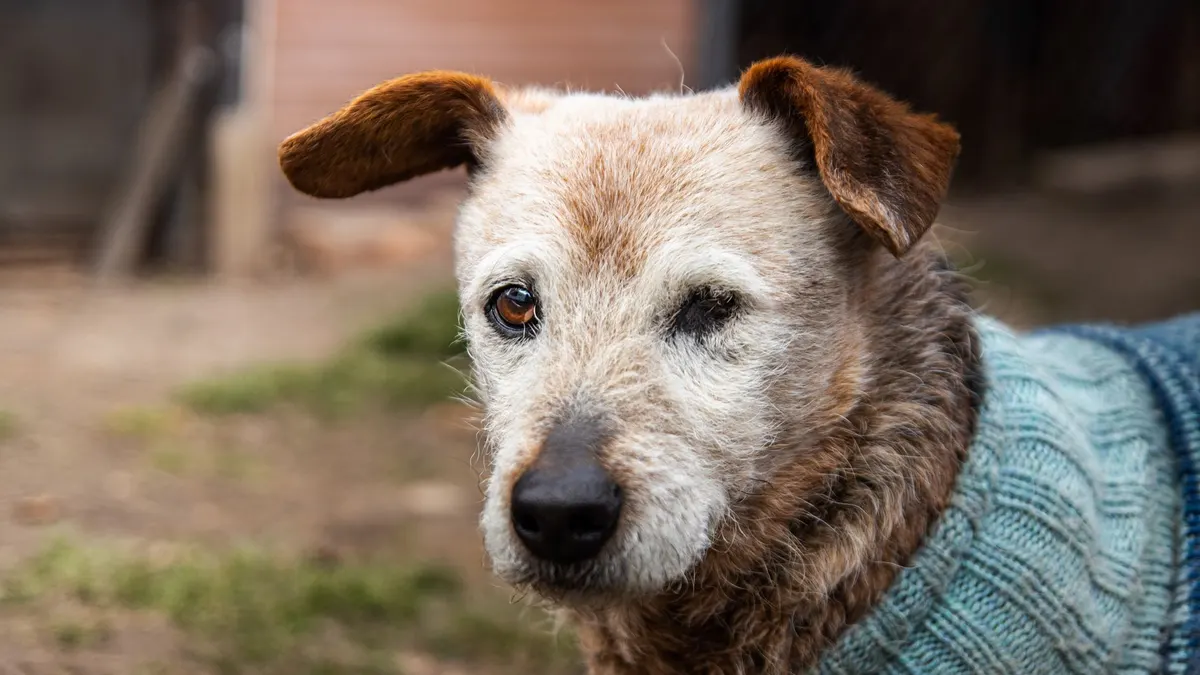
The tile was the favorite real estate all summer. Now it is avoided. The same dog presses into the warm corner by the kitchen vent, circles the laundry basket twice, and settles on a pile of folded towels like it is a five-star bed. Aging changes the thermostat: metabolism slows, muscle thins, and body heat leaks out faster than it used to. A good blanket is not a luxury for a senior dog — it is functional warmth that protects stiff joints, supports deep rest, and makes the chosen resting spot workable until the dog picks a new one.
The blanket rule, quickly
Choose a blanket that is lightweight, breathable, and easy for an unsteady dog to move across. Fleece, microfiber, and cotton blends are the practical core; thick faux fur and weighted blankets are usually too warm or too cumbersome. Avoid anything heavy, shaggy, or slippery — stiff legs tangle in thick pile and a sliding blanket is a fall risk. Washability is non-negotiable with older dogs who have accidents, spill water bowls, and shed year-round.
Why blankets matter more for older dogs
Thermoregulation weakens with age. Many senior dogs — especially small breeds, short-coated breeds, and those with arthritis — feel the cold more acutely than their younger selves. Cold muscles and joints are stiffer and more painful; warmth increases circulation and helps soft tissues stay flexible. Beyond the physical benefit, a familiar blanket can also provide a sense of security and predictability, which matters when cognitive changes make the world feel less certain.
The blanket is not just for the bed, either. It is for the couch they can no longer jump onto alone, the floor where they now rest because the bed is too high, and the crate or car where extra padding and warmth make the difference between stress and settling.
Four checks before you buy
Material and warmth
Fleece and microfiber are the sweet spot for most senior dogs. They trap warmth without much weight, dry quickly if licked or spilled on, and feel soft against thin skin. Cotton blends are cooler and work well in warm climates or for dogs prone to overheating. Sherpa is warm but can mat with heavy shedding; if your dog is a shedder, look for smoother textures that are easier to brush clean.
Washable fleece blankets with flat drape
Compare fleece throws in sizes that fully cover the bed or rest area. Check fabric weight for warmth without bulk, confirm the blanket lies flat instead of bunching, and verify it survives frequent machine washing without pilling or shrinking.
Avoid very thick, shaggy, or overly plush fabrics. They look cozy, but for a dog with joint stiffness or muscle weakness, thick pile can be hard to push through or stand up from. It also traps heat, and overheating in seniors can cause panting, restlessness, and poor sleep.
Weight and mobility
A senior dog should be able to nose the blanket aside or walk across it without catching a paw. I keep blankets that lie flat and never bunch — a bunched edge is the thing weak legs catch on. Weighted blankets are off the list entirely: too heavy for most dogs and able to restrict movement or breathing. If your dog drapes blankets around to shape a nest, choose one large enough to cover the resting surface with some overhang, so they can burrow without exposing bare floor.
Size and coverage
The blanket should be large enough to cover the dog's bed or rest area fully. If the blanket is too small, the dog ends up half on cold floor, and the point is lost. For a dog resting on a large orthopedic bed, a blanket of at least 50 by 60 inches is usually practical; for a smaller bed or crate, 30 by 40 inches may be enough.
Washability
Senior dogs have more accidents, more water-bowl spills, and more drool than most owners expect. A blanket that cannot be machine-washed and dried quickly becomes a hygiene problem. Look for fabrics that hold up to frequent washing without pilling or shrinking. Waterproof or water-resistant backing can be useful for incontinent dogs, but make sure the backing is quiet and does not rustle — that sound can unsettle an anxious senior.
Fabric choices that backfire
- Thick, heavy, or weighted blankets — hard to move, easy to overheat under, and potentially unsafe if your dog gets tangled.
- Blankets with tassels, fringe, or loose threads — tempting to chew and a choking or blockage risk.
- Fabrics that snag on dry skin or thin fur — rough wool or coarse weaves can irritate an old dog's delicate skin.
- Anything that slips and slides on the floor — if the blanket moves when your dog tries to stand, it can cause a fall. Pair a blanket with a non-slip mat or use it on carpet, not tile.
- Electric or heated blankets unless specifically designed for pets and supervised — the controls, cords, and uneven heat create burn and chewing hazards.
How to introduce a new blanket
Do not just drop a new blanket into the bed and expect enthusiasm. Senior dogs are often sensitive to change. My rule with every new blanket: it lives near the bed for a day before it touches the bedding, so the familiar scent stays underneath. If the dog has been using a particular worn blanket for years, keep a scrap of the old fabric on the new setup until the transition is smooth. Most dogs choose warmth and softness naturally once they trust it.
Where to place blankets in a senior dog's home
- On the bed or inside the crate for core warmth and cushioning.
- Over the couch or chair if your dog still gets up with help — the blanket protects furniture from accidents and gives the dog a soft, warm surface.
- On the car seat for vet visits or travel; the familiar scent reduces stress, and the padding eases joint pressure.
- On hard floors in favorite resting spots, paired with a thin foam mat underneath for true insulation from cold tile or concrete.
- Near the food or water bowl in drafty rooms — some senior dogs rest between meals, and a warm spot encourages them to stay comfortable.
How we narrowed the blanket shortlist
Warmth-to-weight ratio decided the ranking before softness or looks. Surviving repeated wash cycles came second, flat drape third. We did not put thermometers under these fabrics; the guidance leans on material properties, repeated owner reports, and what we watched wear out in our own house over two senior dogs.
Wearable blankets that stay put
If your dog kicks or slides loose blankets around, a wearable style with leg openings keeps coverage in place. Compare the sizing chart, the closure type, and how easily you can put it on and take it off a stiff, unsteady dog.
Signs your blanket choice is working
- Your dog settles more quickly and stays in one position longer.
- Less pacing or repositioning at night.
- The body feels warm, not cold, to the touch when you check on them during rest.
- No panting, restlessness, or kicking the blanket off — signs it may be too warm.
- Easy to stand up from; the blanket does not bunch or slide.
When to skip a blanket and see a veterinarian
If your dog is seeking warmth obsessively, shivering when the room is comfortable, or avoiding a previously loved blanket, the issue may be medical. Hypothyroidism, anemia, kidney disease, and chronic pain can all change how a dog experiences temperature. A blanket is comfort; it is not a treatment for an underlying condition.
Three blanket questions from owners
Should I get a heated blanket for my senior dog? Pet-safe heated pads are a better choice than human electric blankets. They run at lower temperatures, have chew-resistant cords, and usually include automatic shut-off. Even then, supervision matters — never leave a heated pad on for an unsupervised dog, and always test the surface temperature with your hand first.
My dog kicks blankets off. Should I keep trying? Possibly. The blanket may be too warm, too heavy, or too unfamiliar. Try a lighter weight, a cooler fabric, or a different placement. Some dogs prefer the blanket under them rather than over them, or they want a small throw they can shape rather than a large sheet.
Can I just use an old sweater or towel? You can, and for a dog in hospice or with severe incontinence, a stack of cheap, replaceable towels may be the most practical solution. For a long-term setup, though, a purpose-made blanket designed for washability, durability, and flat drape is usually worth the modest cost.
The fleece-and-floor rule
The right blanket for a senior dog is light, warm, washable, and easy to move across. It should lie flat, stay put, and keep the dog at a comfortable temperature without adding weight or heat. A simple fleece throw on a supportive bed, paired with a non-slip surface underneath, solves more comfort problems than most expensive specialty products. Warmth supports sleep, sleep supports healing, and a well-rested senior dog moves better and feels better the next day.