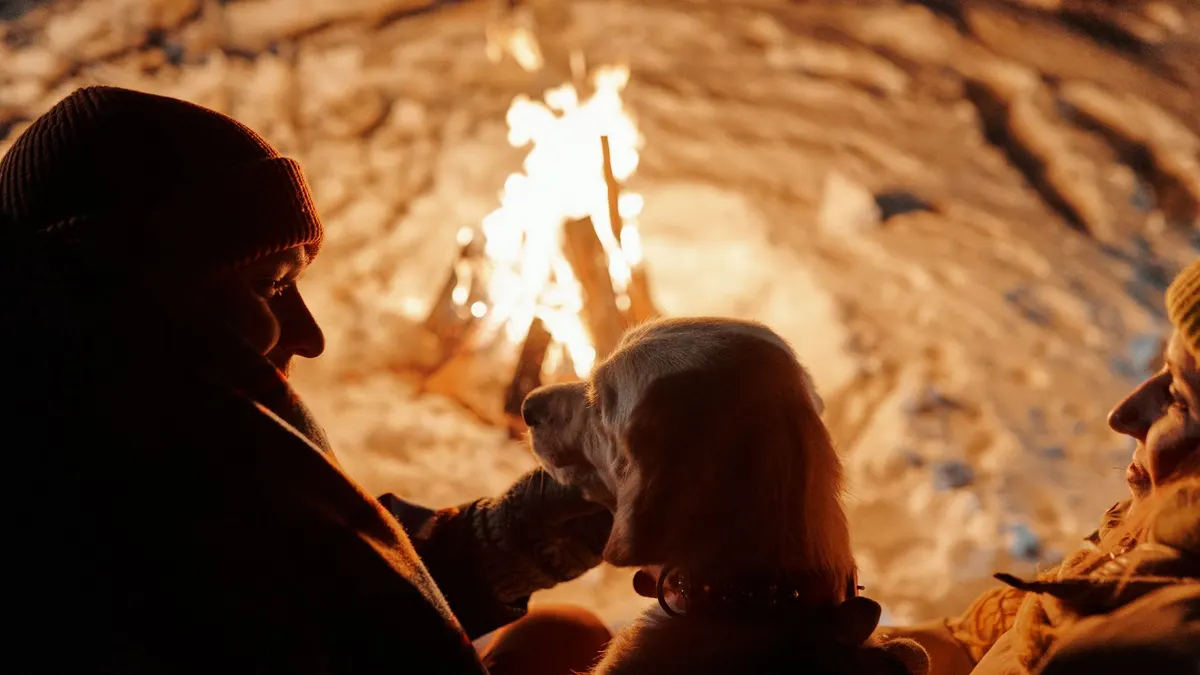
Frost on the path, and a twelve-year-old stops halfway, lifts one paw, and turns back toward the door. It looks like stubbornness. It is usually physics: joints stiffen in the cold, thin coats stop insulating, and circulation to the legs and paws slows. Shivering is the last stage of the problem, not the first. A small amount of extra warmth often decides whether a dog stands up willingly in January or spends the season hesitating, limping, and refusing the outdoors.
The warmth checklist, up front
Keep an older dog warm in winter by raising the bed off cold floors and away from drafts, adding a self-warming pad or fleece layer, and fitting a practical coat on short-coated, thin, or arthritic dogs for outdoor trips. Shorten walks in freezing or damp weather and keep indoor temperatures steady between roughly 18 and 22 degrees C (65 to 72 degrees F). Shivering, cold ears, and lifted paws mean the answer is more warmth today.
Why cold affects older dogs more
Several age-related changes stack up at once. Body condition shifts: many seniors lose muscle mass and the fat layer that once insulated the trunk. Coat quality declines too, especially in dogs with thyroid disease or Cushing's, both of which are common in older dogs and can thin the coat noticeably.
Circulation is the other half of the equation. Blood vessels near the skin constrict in cold conditions to preserve core heat, which is why a cold dog's paws and ears feel cold first. For a dog with arthritis, cooler tissue and reduced blood flow around the joints translate directly into tighter, achier movement — the classic stiffness that is worst on winter mornings and after lying down.
Dogs with kidney disease or heart disease, and dogs on some medications, also regulate temperature less efficiently. What feels like a mildly cool room to you can leave one of these dogs genuinely chilled.
Which dogs need the most help
Some seniors need intervention earlier than others:
- short-coated breeds such as Greyhounds, Whippets, and Dobermans
- very small dogs with low body mass, including many toy breeds
- thin dogs or dogs recovering from illness
- dogs with osteoarthritis or spine disease
- dogs with heart, kidney, or thyroid conditions
- dogs who spend time on tile, concrete, or ground-floor surfaces
A healthy, thick-coated dog in a well-heated home may need nothing more than a soft bed. A thin Greyhound with arthritis may need layers from November through March.
Warming the sleeping area
The bed is where an older dog spends most of winter, so start there.
- Raise the bed off the floor. Even a few centimetres of elevation separates the dog from cold drafts that travel along tile and hardwood.
- Move it away from doors, windows, and exterior walls. Drafts you do not feel while standing are noticeable at dog height.
- Add insulation from below. A memory-foam or orthopedic bed insulates as well as cushions. Place a folded wool blanket underneath for an extra layer.
- Use a self-warming pad. These reflect the dog's own body heat without electricity and are safe to leave overnight.
- Consider a covered or bolster bed. A cave-style or high-sided bed traps body heat and gives the dog a place to burrow, which many seniors appreciate.
If you use an electric heated pad, choose one designed for pets with a chew-resistant cord, place it under a blanket rather than against the skin, and only use it while you can supervise — burns and overheating are real risks in older dogs with reduced sensation.
Clothing: when it actually helps
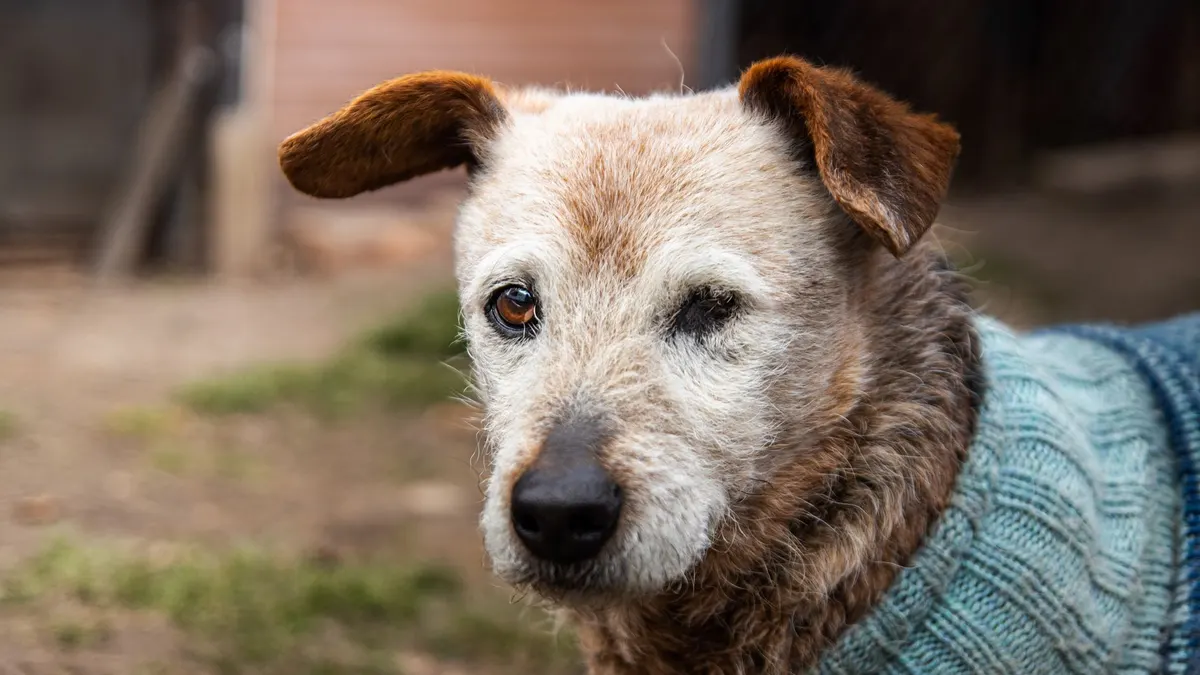
Coats and sweaters are not vanity items for the right dog. A coat helps most for short-coated, thin, or small dogs going outside in temperatures below roughly 7 to 10 degrees C (45 to 50 degrees F), and for any arthritic dog who stiffens outdoors.
Fit matters more than fashion. A good coat covers the neck, back, and upper thighs without wrapping tight around the chest or restricting urination. It should be easy to take on and off a stiff dog — wide Velcro closures beat tiny buckles. Remove damp coats immediately; wet fabric against the skin pulls heat out faster than no coat at all. Booties help with salted pavement and ice between the pads, but many seniors resist them, so practice indoors for short sessions first.
Outdoor routine adjustments
Winter walks should be shorter and more frequent rather than long endurance outings. Five to ten minutes out, a chance to toilet and sniff, then back inside, often works better than a single cold hour. Go out during the warmest part of the day and avoid early morning and evening walks when the temperature has dropped.
Towel-dry the legs, belly, and paws as soon as you come inside. Ice packs between the toes, road salt on the pads, and melted snow on the coat all continue to draw heat away. Check paws for redness or cracking, and rinse or wipe them to remove de-icing salts, which irritate the skin and can be toxic if licked.
Indoor temperature guidance
Most older dogs are comfortable at indoor temperatures of 18 to 22 degrees C (65 to 72 degrees F). Consistency matters as much as the number — a house that is warm during the day but drops sharply overnight can leave a dog stiff and cold by morning. If you lower the thermostat at night, add an extra blanket or move the bed to a warmer room rather than assuming the dog will simply "adjust."
Watch cold-room tile and basement areas where a dog may choose to lie. These surfaces hold significantly less warmth than carpet.
Signs your dog is too cold
Dogs signal cold loss progressively. Early signs include seeking warmth, curling tightly, tucking the tail, and cold ears or paws. Shivering is the obvious next sign. More concerning signals are slow or stiff movement, pale or grey gums, weakness, confusion, and very cold skin — these approach hypothermia and call for gradual warming and a call to your vet.
The first winter with a stiff-hipped shepherd taught me to read the paw-lift early; by January she would not cross frost at all, and the walk had to become a midday dash. Prolonged cold exposure can also trigger a flare of underlying disease, including urinary accidents from a dog who avoids going outside to toilet.
Winter shortcuts that backfire
- Heating pads at high settings or under unsupervised dogs.
- Hot water bottles applied directly to skin.
- Thick coats worn indoors or overnight — overheating is possible, especially in dogs who cannot move away from the heat source.
- Space heaters near bedding — burns, knocked-over heaters, and cord chewing are all hazards.
- Forcing a cold, stiff dog to walk to "warm up." Gentle indoor movement is fine; forced exercise on cold joints is not.
When the cold is not just the cold
Call your vet if shivering does not resolve with warming, if your dog seems unusually weak or confused after cold exposure, if cold intolerance appears suddenly, or if winter brings a marked increase in stiffness that does not ease once the dog is warm. Sudden cold intolerance can accompany illness, low thyroid, anemia, or worsening heart disease rather than just weather.
Three winter warmth questions
Does my senior dog really need a coat, or is that human thinking?
Depends on the dog. Short-coated, thin, toy, or arthritic seniors gain real warmth from a fitted coat below roughly 7 to 10 degrees C (45 to 50 degrees F). A thick-coated dog in a heated house does not. The test is behavior: if the dog hesitates, lifts paws, or comes in shivering, the coat is earning its place.
Is a self-warming pad safer than a heated one for overnight use?
For unsupervised nights, yes. Self-warming pads reflect the dog's own body heat, need no cord, and cannot overheat. Electric pads belong to supervised hours, on a low setting, under a blanket, with a chew-resistant cord and automatic shut-off.
My dog refuses to go outside in the cold. Should I force the walk?
No. Force on a stiff, cold dog builds dread and risks a slip. Shrink the trip instead: go at midday, use a coat and booties, aim for toilet-and-sniff only, and add short indoor movement between outings so joints do not lock up.
Warmth, repeated daily
Keeping an older dog warm is mostly about consistency: a draft-free, raised, insulated bed, steady indoor heat, a practical coat for the dogs who need one, and shorter, warmer walks with thorough drying afterward. Dogs who are kept warm in winter move more freely, toilet more reliably, and spend less of the season locked in a stiff, chilled posture. It is a small effort with a large payoff in daily comfort.