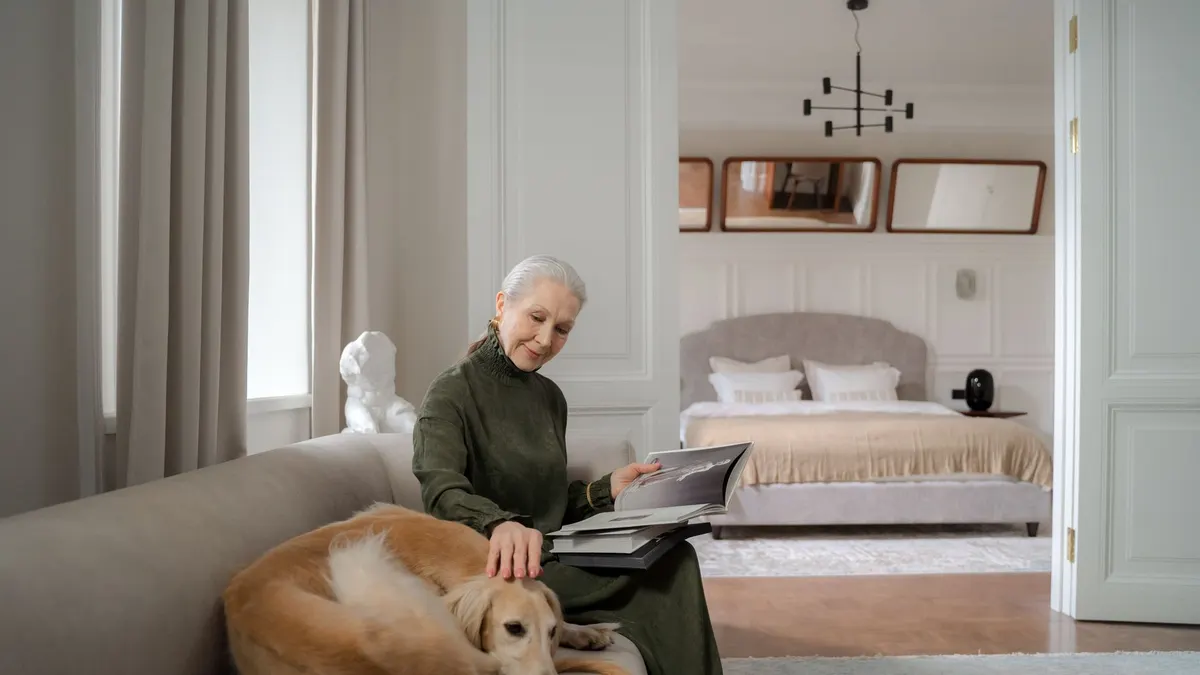
An aging dog often rests better when the sleeping area is warm, stable, and easy to reach. A comfortable rest space is not only about softness. It is also about how easy it is for the dog to settle, reposition, and get up again without strain.
Quick answer
To create a warm, restful space for a senior dog, use a supportive bed, keep the area away from drafts, and make sure the dog can move in and out without extra effort. Comfort works best when the dog feels secure and can choose a position that feels good.
What matters most in a rest area
Stable warmth
Older dogs often prefer a resting place that is neither cold nor overheating. A warm, dry area with stable temperature can help them settle while avoiding sudden discomfort.
If you use a heated bed or blanket, follow the product instructions exactly and make sure the dog can move away from the heat when it wants to. A safe, adjustable setup is much better than an improvised heating source.
Easy access to the bed
A bed that is difficult to climb onto can defeat the purpose of comfort. Low entry, a non-slip base, and a clear route all help the dog feel less hesitant about resting.
Room to move and reposition
A dog may shift positions many times during sleep. The bed should be large enough to let the dog curl up, stretch out, and turn without feeling cramped.
A simple setup that often works well
- supportive dog bed or orthopedic pad
- non-slip base or mat underneath
- quiet corner away from drafts
- clean, dry bedding
- easy path to and from the sleep space
This is one of the easiest ways to improve sleep without creating a stressful environment.
Do not overlook the route to the bed
The rest area is only as helpful as the path leading to it. If the dog has to navigate slick flooring, high steps, or clutter to reach the bed, the “comfort zone” may be more difficult than intended.
See senior-dog-home-safety-checklist and best-non-slip-mats-for-senior-dogs for ways to improve those pathways.
When a vet check matters
If your dog is restless at night, struggles to settle, seems uncomfortable, or has a sudden change in sleep patterns, it is worth discussing with a veterinarian. Rest issues can be tied to comfort, mobility, pain, or other health changes, and they are easier to evaluate early.
Bottom line
A senior dog’s best rest space is warm, stable, easy to access, and comfortable enough for repeated use. Small adjustments around the bed are often more helpful than waiting for the dog to “figure it out” on its own.
Related guides
- Best Orthopedic Dog Beds for Senior Dogs
- Senior Dog Joint Comfort at Home
- Senior Dog Comfort Checklist
- How to Help a Senior Dog Sleep Better
FAQ
How can I tell if my dog is cold or uncomfortable while resting?
Common signs include curling tightly, seeking warm spots, shivering, or appearing restless during rest. Repositioning and a better sleep area often help.
Is it safe to use a heated dog bed?
Yes, if it is built for pets and used according to instructions. Avoid anything that gets too hot or creates a hazard with cords.
Where should I put the bed for best comfort?
Away from drafts and busy traffic, but close enough for the dog to reach it easily. Calm placement usually helps more than a bed placed in a difficult area.
What if my senior dog still seems uncomfortable at night?
A vet evaluation may help if rest is consistently poor or if the dog seems painful, restless, or weaker than usual.