Comfort at home is shaped by the whole day: the type of floor beneath the paws, the effort involved in rising, the number of stairs the dog must use, and the steadiness of the dog's rest routine. For senior dogs, small adjustments can reduce a lot of strain.
This guide covers the changes that matter most for joint comfort at home — footing, movement, rest, warmth, and pain awareness — with a room-by-room plan.
Quick answer
To support a senior dog's joint comfort at home, make movement easier, reduce sudden strain, and give the dog a rest setup that feels gentle and predictable. The best setup is usually simple, consistent, and built around real daily habits.
Three fixes cover most of the gain: traction on the daily routes, a supportive low-entry bed, and shorter, steadier movement with real recovery time. If those are in place, the rest is refinement.
Focus on lower-strain routines
A dog does not need a dramatic change to feel noticeably better. It often helps to:
- keep movement calm and predictable
- avoid repeated high jumps or abrupt turns
- use traction on slippery surfaces
- reduce friction in the most-used routes
- give the dog time to rest between activities
This approach supports joint comfort without making daily life feel restrictive. Predictability is the secret — a dog that knows what is coming can brace, pace itself, and avoid the sharp turns and sudden stops that stress sore joints.
Make the home easier to move through
A senior dog may struggle when the home demands too much from sore joints in a single day. Look at the places the dog uses repeatedly:
- entry and exit routes
- stairs and thresholds
- the path to food, water, and bed
- the floor around rest spaces
A few well-placed mats or rug anchors can make a big difference. See best-non-slip-mats-for-senior-dogs and the home safety checklist.
📊Joint Comfort Fixes by the Daily Problem
| Problem at home | What helps | Why it works |
|---|---|---|
| Slipping on smooth floors | Long non-slip runner on the main route | Gives paws something to push against without twisting |
| Difficulty rising from rest | Low-entry orthopedic bed with grip beside it | Reduces the push-off load on stiff hips and stifles |
| Stairs becoming risky | Gate, treads, or relocate resources downstairs | Removes the highest-impact joint load of the day |
| Jumping onto furniture or into the car | Ramp or stable pet stairs | Replaces jarring landings with a gradual incline |
| Cold mornings, slow warm-up | Warm bed, draft shield, or a dog coat | Warmth reduces joint stiffness and improves first-step comfort |
| Long walks causing soreness after | Two shorter walks with rest between | Keeps joints moving without the inflammation spike |
| Restless, uncomfortable nights | Supportive bed and a pre-bed bathroom trip | Better sleep lets joints recover and reduces night pacing |
Click on any product to view full details and reviews
Rest matters as much as movement
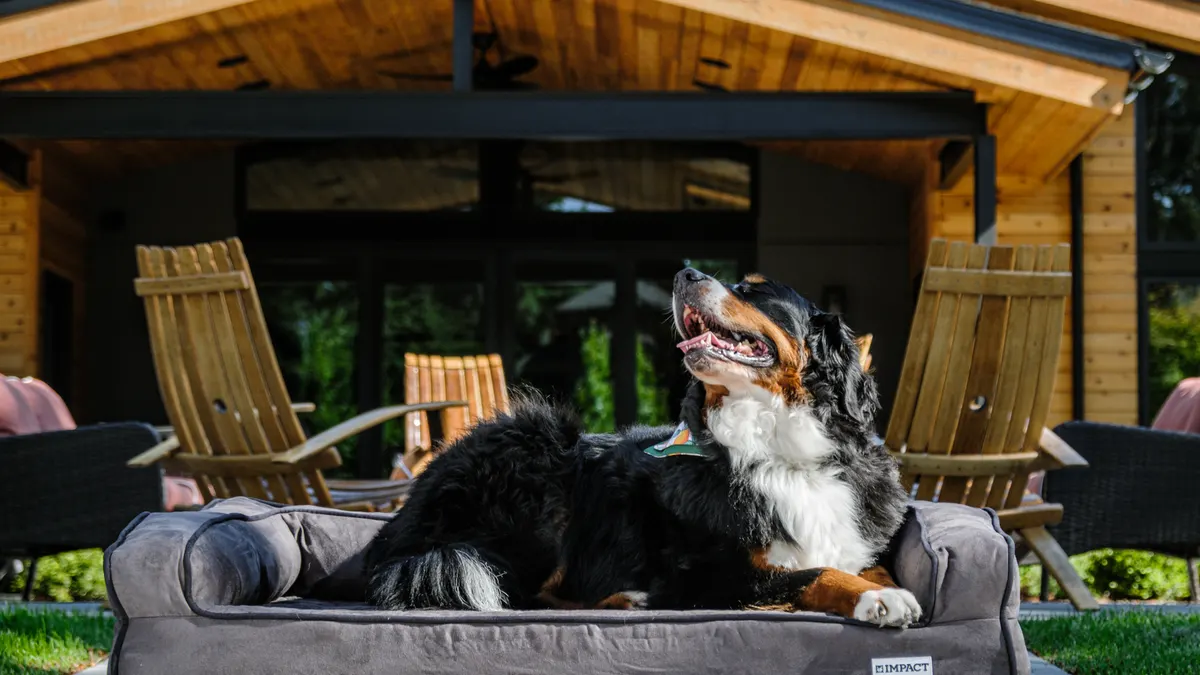
A supportive bed and a warm, easy-to-reach rest area can help a senior dog settle more comfortably and recover more naturally. The way the dog rests influences how the dog moves the next time it rises and walks.
What to look for in a bed for sore joints:
- foam density — memory or orthopedic foam distributes weight and reduces pressure points
- low step-in height — the dog steps in rather than climbing
- non-slip base — the bed does not slide when the dog pushes off
- supportive edges — some dogs lean or rest their head on a bolster; others need a flat surface
- washable cover — incontinence and accidents rise with age
See best-orthopedic-dog-beds-for-seniors and the warmth and rest guide for practical sleep and support ideas.
Gentle movement keeps joints healthier
Rest is essential, but too little movement makes stiffness worse. The goal is low-impact, consistent activity that keeps joints mobile without triggering inflammation.
- Two short walks beat one long one; see how often you should walk a senior dog.
- Add indoor exercises for older dogs with mobility problems on bad-weather days.
- Gentle movement ideas for senior dogs and low-impact home exercises keep joints warm without overloading them.
- Stop the session while the dog is still keen; pushing to exhaustion is what causes the soreness that starts the cycle of less movement, more stiffness.
Be careful with sudden changes
Avoid big jumps in exercise, rough play, or terrain difficulty. Weekend warriors get hurt; senior dogs are the same, just with less margin. If the dog is used to 15-minute walks, do not jump to 45 minutes on a good day — add five minutes at a time and watch how the dog moves the next morning.
If your dog seems increasingly uncomfortable, it is more useful to track patterns and talk to a veterinarian than to guess at a solution. The why does my senior dog seem stiff after resting guide explains what is normal and what is not.
Warmth and temperature
Warmth reduces stiffness for many older dogs, especially those with arthritis. Simple steps:
- keep the bed away from drafts, exterior walls, and air-conditioning vents
- add a warm blanket or dog coat in cold weather
- let the dog warm up indoors before a cold-morning walk
- in summer, prevent overheating — see keeping a senior dog cool, because heat stress also worsens joint comfort
Supplements, medication, and professional input
Home changes help, but they do not replace medical care. Joint supplements (omega-3 fatty acids, glucosamine, green-lipped mussel) may support some dogs; evidence is mixed and quality varies widely. Never start a supplement or human pain medication without veterinary guidance — several human drugs are toxic to dogs.
If the dog is suddenly less willing to rise, walk, or settle, or if there is limping, stiffness that lasts, or a clear change in routine, a vet exam is a good next step. A video of the dog walking or getting up can help a vet understand the pattern more clearly. Chronic joint pain is very treatable, and most senior dogs are more comfortable once a vet-designed pain plan is in place.
📋Joint Comfort at Home — Weekly Checklist
0/8 completed- Runner or mats cover the bed-to-bowl and bed-to-door routes
- Bed is low-entry, supportive, and sits on a non-slip surface
- Nails are short enough not to splay the paw on hard floors
- Walks are short, frequent, and recovery is watched for 24 hours after
- Stairs are gated, treadded, or no longer used by this dog
- Bed is in a warm, draft-free location
- A body check during grooming looks for painful spots and new lumps
- Pain signs (panting, trembling, reluctance to rise) are logged and shared with the vet
Bottom line
Joint comfort at home usually improves when the environment is easier to navigate and the dog's routines are gentle and predictable. The goal is to reduce unnecessary effort while supporting rest, stability, and daily confidence. Most dogs feel measurably better within a week of the right flooring, the right bed, and the right walk length — and stay better for much longer when a vet is part of the plan.
Related guides
- Best Orthopedic Dog Beds for Senior Dogs
- Senior Dog Warmth and Rest
- Senior Dog Mobility Exercise
- How to Help a Senior Dog Walk Better
- Best Non-Slip Mats for Senior Dogs
- Why Does My Senior Dog Seem Stiff After Resting?
FAQ
What is the simplest home change for joint comfort?
Improving traction and reducing high-strain movement in the dog's daily routes is often the easiest, most effective first step. A single long runner usually outperforms almost any other single change.
Does exercise help senior dogs with joint comfort?
Gentle, consistent movement can help many dogs feel more comfortable, but too much strain can do the opposite. The best routine is realistic and repeatable — two short walks usually beat one long one.
Why does a supportive bed matter?
Because rest is part of recovery. A dog that can settle comfortably is often better able to rise and move the next time it needs to, and the push-off zone beside the bed is where many stiff mornings begin.
Can I give my dog human pain medication for joints?
No. Several human pain relievers, including ibuprofen and acetaminophen, are toxic or unsafe for dogs. Always use veterinarian-prescribed medication; it is more effective and much safer.
Are joint supplements worth trying?
Some dogs benefit from omega-3s, glucosamine, or green-lipped mussel, but quality and evidence vary. Discuss options with your vet before starting anything, especially if the dog has kidney, liver, or digestive disease.
When should I talk to a vet?
If the changes are new, getting worse, or affecting daily movement and rest, a veterinary review is a good idea. Chronic joint pain is very treatable, and most seniors are more comfortable once a vet-designed plan is in place.