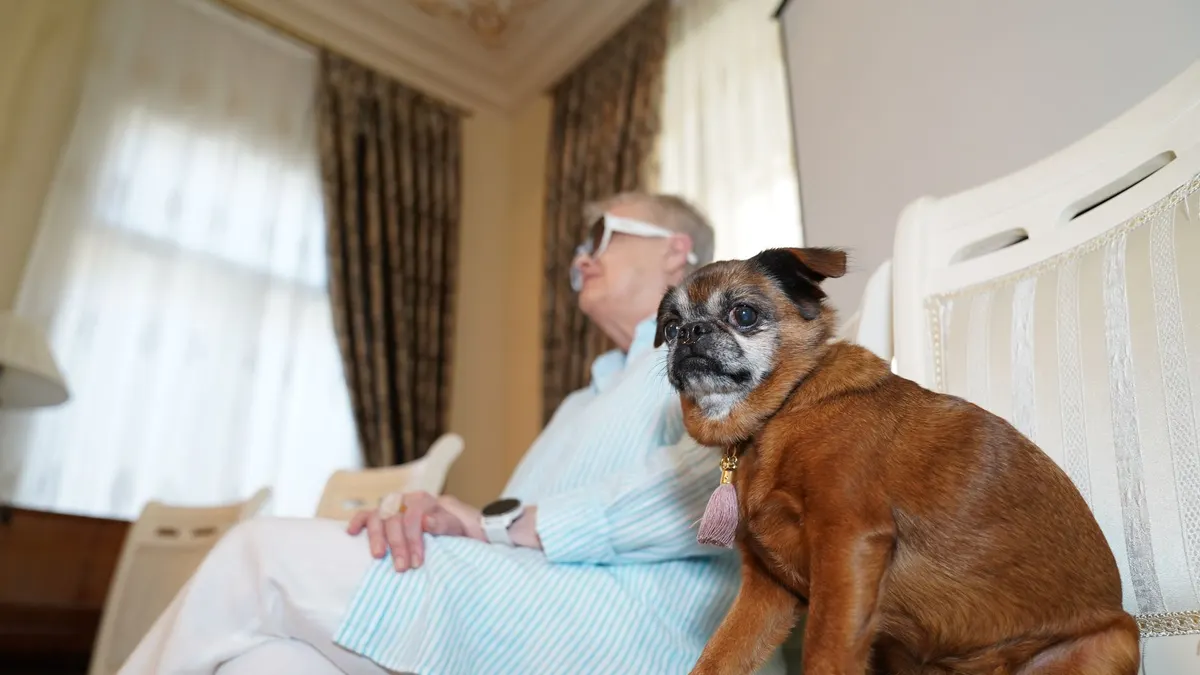
A room-by-room home safety review is one of the easiest ways to reduce everyday stress for an older dog. The goal is not to turn the home into a hospital environment. It is to remove small problems that make routine movement harder than it needs to be — slick floors, awkward transitions, poor lighting, and high jumps that strain aging joints.
This guide walks through the home zone by zone, lists the most common hazards, and ends with a single checklist you can run in one pass.
Quick answer
Walk through the home at your dog's normal height and follow the routes the dog uses every day. Look for slick flooring, awkward transitions, clutter, poor lighting, or access points that feel harder than they should. Most senior dogs move more confidently once the routes are predictable, grippy, and clear.
The most important areas to review
Floors and walking paths
Check hallways, kitchen areas, doorways, and the path between the bed, bowls, and favorite resting spots. If a dog slips, changes direction awkwardly, or hesitates at a specific route, that is often the first place to improve traction.
See how to make hardwood floors safer for dogs and best rugs for dogs that slip on hardwood floors for practical options.
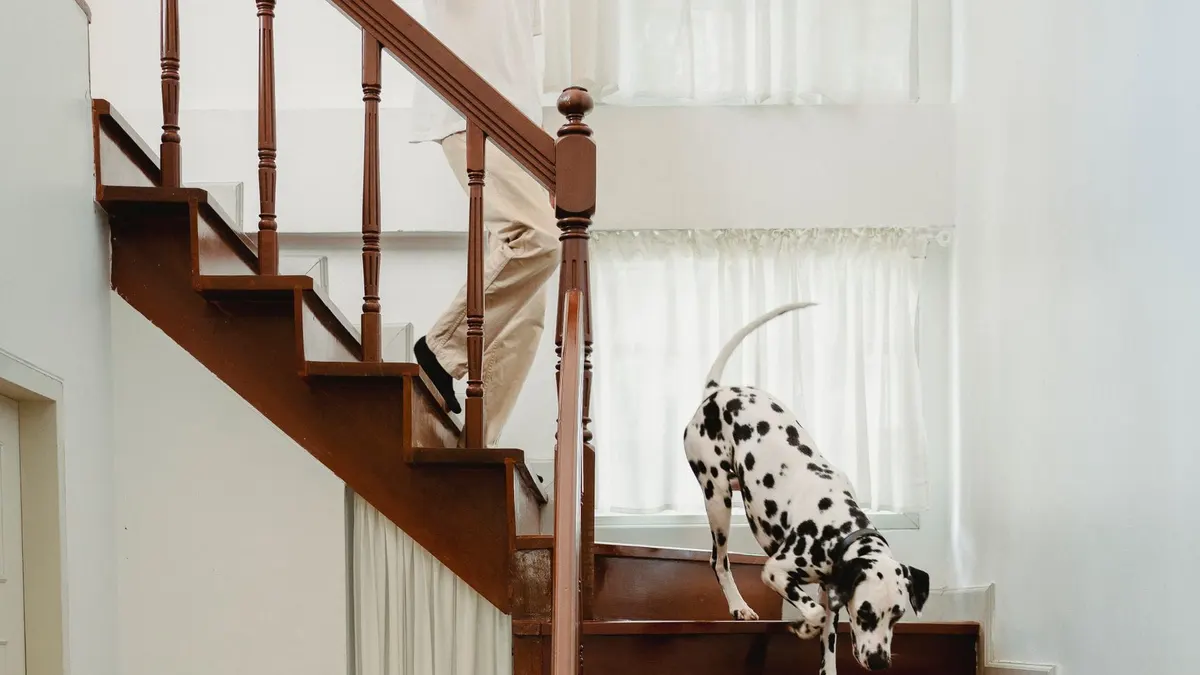
Stairs and steps
Look for loose treads, slippery edges, poor lighting, and areas where the dog must step awkwardly or turn sharply. A dog that has trouble on stairs may also benefit from one-floor routines for essential items like food, water, and resting space.
See how to make stairs safer for an older dog for more ideas, and best baby gates for senior dogs for restricting unsafe stair access.
Furniture and rest zones
Make sure the dog can get onto and off favorite spots without risky jumps or high landing points. A low-entry bed and a clear path can make a big difference to comfort and confidence.
See senior dog bedroom setup for a more detailed rest-area plan, and best orthopedic dog beds for senior dogs for supportive bed options.
Food, water, and daily routines
Review the dog's feeding and drinking setup. Bowls should be stable, easy to access, and placed where the dog can move without slipping or rushing. Small changes in layout can help a lot.
See how to make food and water easier for a senior dog and best non-slip dog bowls for senior dogs.
Car and outdoor access
Look at transition points such as porches, steps, garages, and vehicle entry. If the dog regularly needs to navigate a high step or slick surface, a more controlled plan may be safer.
See how to help an older dog get into a car and best dog ramps for senior dogs.
Kitchen and bathroom
Kitchens often combine slick floors, dropped food, and heat. Bathrooms often combine slick floors and noise. Both deserve a check for traction, safe footing, and a clear path the dog can use without weaving.
See senior dog kitchen safety for kitchen-specific guidance.
Nighttime navigation
Older dogs often hesitate in the dark, especially at the top or bottom of stairs. A soft night light along the dog's main route can reduce hesitation and falls.
See best night lights for senior dogs and how to help a senior dog navigate the house at night.
📊Home Safety Risk Zones for Senior Dogs
| Zone | Most common risk | First fix |
|---|---|---|
| Hardwood and tile floors | Slipping on smooth surfaces | Add flat, secured runners on main routes |
| Stairs and steps | Falls from slipping or hesitation | Add traction, lighting, and a gate if needed |
| Furniture and bed access | Jumps that strain shoulders and hips | Use a ramp or move to a low-entry bed |
| Food and water area | Bowls slide on slick floors | Add a non-slip mat under the bowls |
| Car and outdoor entry | High step-ups and slick driveways | Use a ramp for vehicle access |
| Kitchen and bathroom | Slick floors plus heat and noise | Add traction and keep a clear path |
| Nighttime navigation | Hesitation in the dark | Add a soft night light on main routes |
Click on any product to view full details and reviews
A few simple actions to start with
- secure loose rugs and mats
- add traction in high-use routes
- remove clutter from the dog's normal path
- improve lighting at stairs and entry points
- lower the effort required for meals, rest, and daily movement
- recheck the setup as the dog's mobility changes
📋Senior Dog Home Safety Checklist
0/14 completed- Main walking routes have flat, secured runners
- Rugs do not curl, slide, or catch paws
- Stairs have non-slip treads and clear lighting
- A gate blocks unsafe solo stair access if needed
- Food and water bowls are on a non-slip mat
- Bed is low enough for the dog to step onto without climbing
- A ramp is in place for car or high-step access
- Path to the bed is clear of clutter and obstacles
- A night light runs along the dog's main route
- Kitchen has traction and a clear walking path
- Bathroom floor is not slick or has a non-slip mat
- Outdoor entry points are free of slick or steep transitions
- Essentials (food, water, bed) are on one floor if the dog struggles with stairs
- A recheck is scheduled for 2-3 months from now
Common mistakes to avoid
- Covering every floor: Wastes money and creates edges to step over. Fix the routes the dog actually uses.
- A gate at only one end of the stairs: A top-of-stairs gate prevents falls going down, but a bottom-of-stairs gate also prevents risky attempts going up.
- Ignoring lighting: A dog that hesitates at the top of the stairs may be struggling to see, not to walk.
- A bed that is too high: A tall bed forces the dog to jump, which strains shoulders, hips, and spine.
- Sliding bowls: A bowl that moves across the floor is more stressful than helpful for an older dog.
- Assuming the dog will "get used to it": If the dog hesitates or slips on a route, the setup is the problem, not the dog.
When a home safety review may not be enough
A home safety checklist helps reduce environmental stress, but it does not replace a veterinary evaluation. If your dog is suddenly weaker, increasingly clumsy, limping, or more reluctant to move through familiar spaces, it is worth discussing with a veterinarian.
See why is my senior dog slipping on hardwood floors? and why are my senior dog's back legs weak? for related mobility guidance.
When to call your veterinarian
Monitor at home
- the dog moves more slowly but still confidently on the same routes
- hesitation only on stairs or slick floors, with no other changes
- the dog still walks, eats, and engages normally
Schedule a veterinary visit
- new hesitation or reluctance on routes the dog used to take easily
- the dog avoids familiar rooms or transitions
- stiffness that lasts longer than a few minutes after rest
Seek prompt veterinary care
- sudden inability to stand or walk
- a fall with limping, pain, or collapse
- sudden weakness in the back legs
- obvious pain, vocalization, or distress
Bottom line
A room-by-room review is most useful when it is practical and repeatable. The best senior dog home safety plan is the one that makes daily movement easier, safer, and more predictable without creating a stressful environment.
Related guides
- How to Make Hardwood Floors Safer for Dogs
- How to Make Stairs Safer for an Older Dog
- Senior Dog Bedroom Setup
- How to Make Food and Water Easier for a Senior Dog
- Best Baby Gates for Senior Dogs
- Best Non-Slip Mats for Senior Dogs
- Best Night Lights for Senior Dogs
- How to Help a Senior Dog Navigate the House at Night
- Senior Dog Kitchen Safety
- How to Help an Older Dog Get Into a Car
FAQ
Where do I start with a home safety review?
Start with the dog's core daily routes: bed, food, water, door, and most-used rooms. These are the spaces where small hazards show up first.
How often should I redo the checklist?
A good rule is to revisit it when a dog seems slower, less steady, or more hesitant on the same routes. It is also helpful to review it after major changes to home layout.
Does a home safety checklist replace a vet check?
No. It helps with environmental issues, but a new or worsening mobility pattern still deserves veterinary attention.
What is the biggest improvement I can make?
A predictable, grippy route through high-use spaces often has the biggest impact because it reduces uncertainty and friction in the dog's daily life.
Should I move my senior dog's essentials to one floor?
Often yes, if the dog struggles with stairs. Moving food, water, bed, and a favorite resting spot to one level reduces repeated strain and risk.