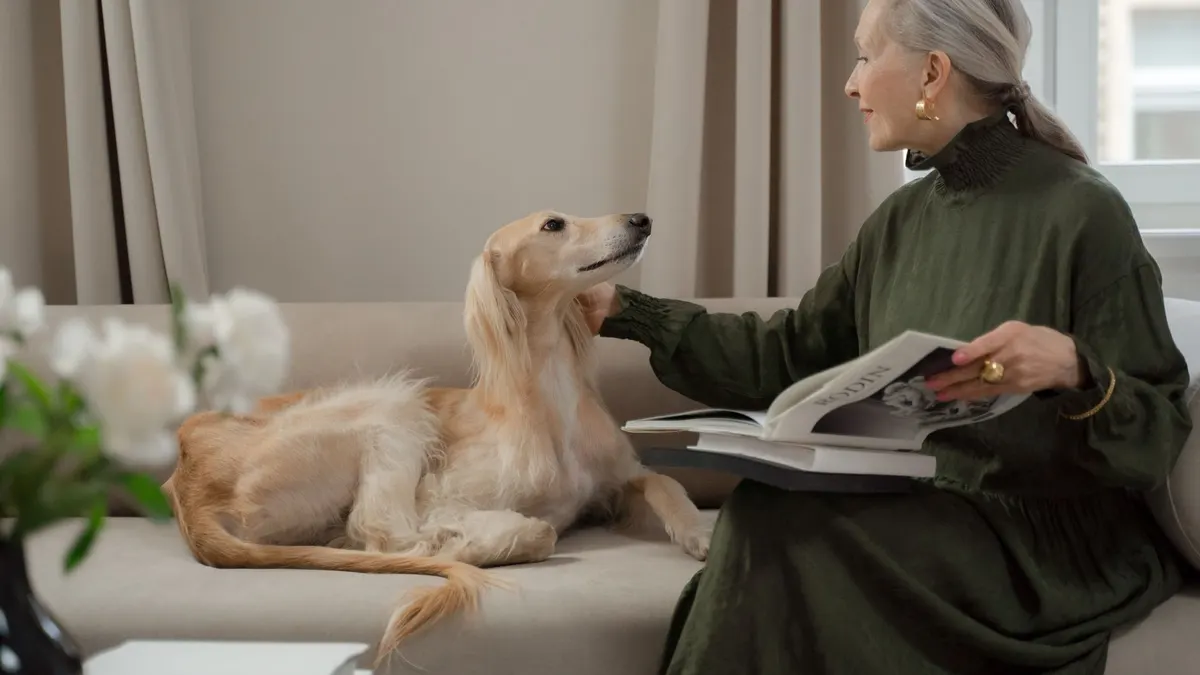
A safer home for a senior dog is usually built with a few practical changes, not a complete overhaul. Older dogs do best when the space feels predictable, easier to navigate, and less likely to create slips, hesitations, or awkward turns.
This guide walks through the daily routes that matter most, then goes room by room — floors, stairs, sleeping areas, feeding spots, doors, and the yard — so you can fix the high-impact spots in a weekend.
Quick answer
The best home safety plan for an older dog improves three things: traction, route clarity, and easy access to food, water, rest, and the door. Watch your dog move through one normal day, mark the spots where they hesitate, slip, or take a wide turn, and fix those first.
You usually do not need renovations. One long runner, a night light, a gate, and a relocated bed solve a large share of senior-dog household problems. If new weakness or repeated falls appear suddenly, environmental fixes are only part of the answer — book a veterinary exam.
Start by mapping the dog's actual day
Most problems happen in the places where a dog moves repeatedly: the bed, the bowls, the door, stairs, and the hallway between them. Before buying anything, spend ten minutes following your dog's real traffic pattern:
- Bed to the door (first trip out, last trip at night).
- Bed to food and water.
- The push-off zone right beside the bed.
- Any doorway threshold or corner that forces a tight turn.
- The stairs — up in the evening, down in the morning.
- Slick patches near the kitchen sink, fridge, or bath area.
Mark trouble spots with masking tape if it helps. You are auditing the dog's routes, not the house's décor.
Fix the floors first
Flooring is the single biggest contributor to a senior dog's confidence indoors. Hardwood, tile, laminate, and vinyl look stable to us but give weakening paws nothing to push against.
- Lay a long runner that covers the full route, not small mats the dog has to step between. Details live in the non-slip mat guide.
- Anchor every existing rug with a grip pad; test it with your foot. If it slides, it is a hazard, not a help. The rug guide for dogs that slip covers what to look for.
- Keep nails trimmed and paw fur clipped short — both reduce splay and skid even on good surfaces.
- Wipe water spills and drips near bowls immediately; a wet floor is where most slips happen.
More floor options, including paw wax and carpet runners, are compared in the guide to making hardwood floors safer for dogs.
Make stairs and thresholds boring
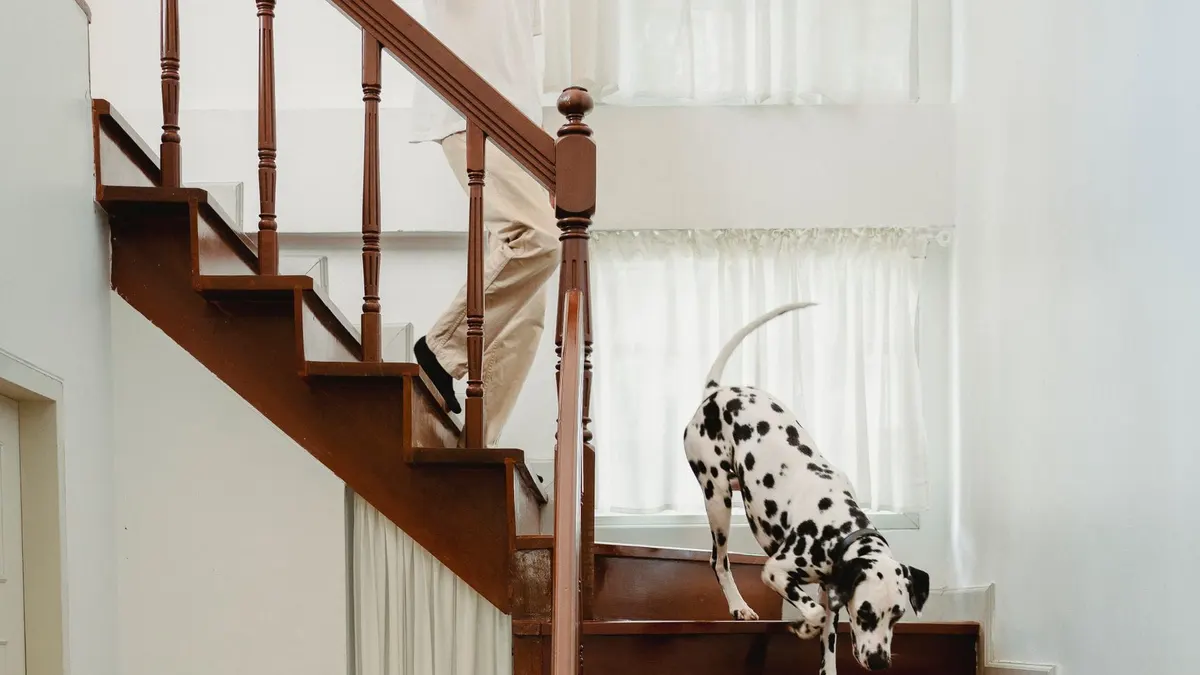
Stairs usually become the second big worry. Improvements should make each trip slower, straighter, and better lit:
- Add treads or a runner on the steps themselves; bare polished wood is the worst surface for descent.
- Install a secure gate if the dog should no longer use a particular staircase at all. See best baby gates for senior dogs and how to stop falls down stairs.
- Put a light at both the top and bottom.
- Consider whether the bedroom should move downstairs — the upstairs-or-downstairs decision removes several risky trips per day.
- If the dog still uses the car, a ramp protects the same joints indoors and out: helping an older dog into the car.
The full stair treatment is in the guide to making stairs safer for an older dog.
Room by room
Bedroom and rest areas
A senior dog spends more of life lying down, so the rest setup earns outsized attention:
- Place the bed where the dog already sleeps, away from drafts and the main foot-traffic lane.
- Use a supportive, low-entry bed the dog can step into rather than climb. The safe sleeping area guide and the bedroom setup guide cover placement and surroundings.
- Put traction directly beside the bed — the first three steps after rising are the wobbliest.
- Keep water reachable without a walk across slick floors if nights are restless.
Kitchen and feeding area
- Use a mat under bowls to catch spills and provide grip while eating.
- Make sure bowls are easy to reach without stepping around furniture; raised bowls help some dogs — see raised vs floor bowls and the broader food and water access guide.
- Move food storage and trash behind closed doors; a confused or hungry older dog gets into trouble in familiar ways.
Hallways, doors, and night routes
- Clear the floor of shoes, bags, pet toys, and cords.
- Add a soft night light on the bed-to-door path; navigating the house at night becomes much easier when the route is faintly visible.
- Keep one door and one route consistently available so the dog never has to guess.
Yard and entry points
- Check that outdoor surfaces are not algae-slick or muddy; a wipeable mat inside the door prevents wet paws on smooth floors.
- Ramps or stable steps help with porches and raised thresholds.
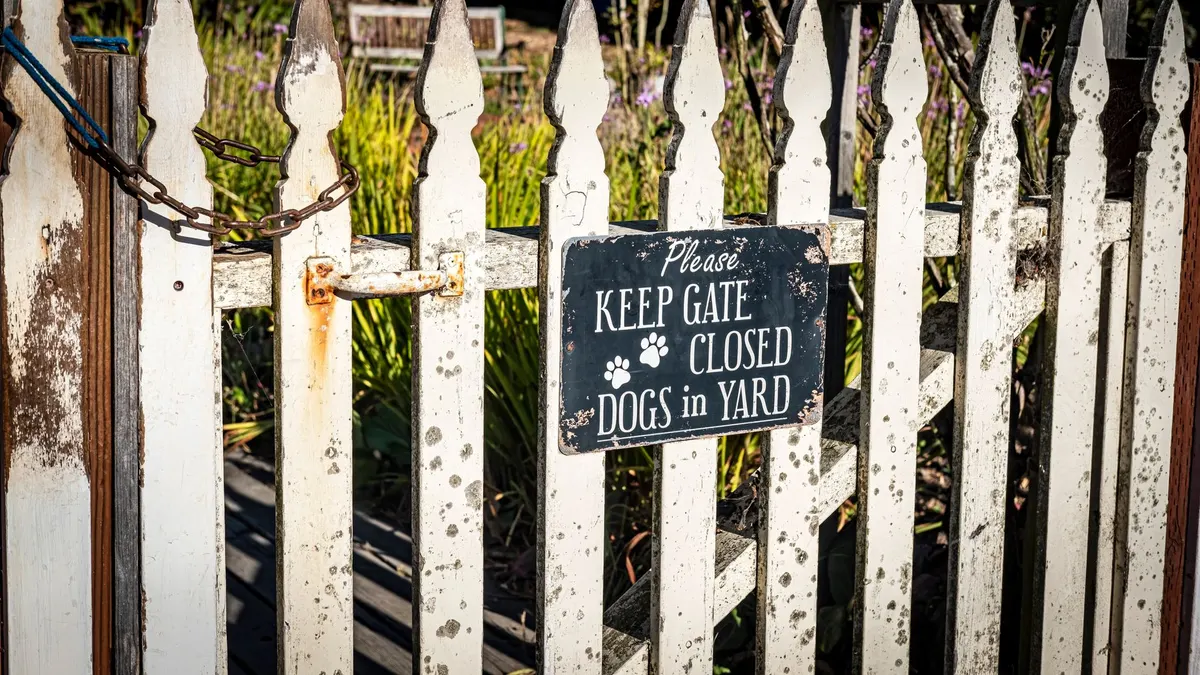
- The outdoor safety guide covers fencing, shade, and supervision for dogs that wander or startle.
📊Home Fixes by Effort and Impact
| Fix | Effort and cost | When it matters most |
|---|---|---|
| Runner on the main route | Low cost, one afternoon | Slipping or hesitation on hardwood or tile |
| Night lights on bed-to-door path | Very low cost, 10 minutes | Night pacing, confusion, or accidents after dark |
| Relocating the bed downstairs | Free, some habit adjustment | Stairs are slow, painful, or risky |
| Gate on a dangerous staircase | Low cost, 20 minutes | Any fall, near-fall, or uncontrolled descent |
| Low-entry supportive bed | Moderate cost | Difficulty rising, thin muscle, or restless sleep |
| Car ramp | Moderate cost | Regular vehicle trips with a dog that hesitates to jump |
| Flooring replacement or carpeting | High cost and disruption | Whole-house traction failure after cheaper fixes |
Click on any product to view full details and reviews
Reduce friction, not just hazards
A home can be "mostly safe" and still feel stressful to an older dog. The issue is often not one huge problem but a series of small frustrations — a curling rug, a dim corner, a tight squeeze past a chair — that make the dog hesitate or move more cautiously than necessary. Confidence compounds: a dog that trusts the floor walks more, and walking keeps muscle and appetite healthy.
Know when it is more than a home setup issue
A safer home helps comfort and confidence, but it does not replace a medical evaluation. Contact your vet promptly if you see:
- sudden weakness or a new limp, especially on one side
- repeated falls or inability to stand
- a new reluctance to use stairs the dog managed last month
- collapsing, painful yelping, or disorientation
- house-training accidents paired with increased thirst
These can be pain, neurological change, or internal disease, and weak back legs deserve assessment rather than more rugs.
📋Senior Dog Home Safety Checklist
0/10 completed- Watch one full day and mark every slip, hesitation, and wide turn
- Cover the bed-to-door and bed-to-bowl routes with a long runner
- Test every existing rug with your foot — slide means replace or anchor
- Add a night light on the night-time route
- Clear cords, shoes, and loose items from walking paths
- Move the bed or add a downstairs bed if stairs are struggling
- Gate any staircase with a fall history
- Put a mat and stable footing under food and water
- Check paw nails and paw fur this week
- Re-audit the house every few months — mobility changes quietly
Bottom line
The safest home for a senior dog is not necessarily the most expensive or renovated one. It is the one with good traction, easy routes, and a calm, predictable pattern that lets the dog move through daily life with less effort. Fix the routes the dog uses today, watch what changes, and re-check every few months.
Related guides
- Senior Dog Home Safety Checklist: A Room-by-Room Review
- Best Non-Slip Mats for Senior Dogs
- How to Make Stairs Safer for an Older Dog
- Best Baby Gates for Senior Dogs
- How to Help a Senior Dog Navigate the House at Night
- How to Create a Safe Sleeping Area for an Older Dog
FAQ
Do I need to replace everything in the home?
No. A few practical changes in the dog's highest-use paths usually matter more than big home upgrades. A runner, a night light, and a bed relocation often cover most of the gain.
How do I know if my home is stressful for my dog?
Look for hesitations, slips, repeated route avoidance, circling before lying down, or reluctance to move through spaces the dog used to handle easily.
Should I improve floors first?
Often yes. Flooring and route clarity are among the biggest contributors to a senior dog's comfort at home, and a runner is cheap compared with almost any other change.
Are puppy pads or rugs enough on slippery floors?
Pads are designed for absorption, not traction, and loose rugs slide. Use a proper non-slip runner or anchored rug pads for walking routes; reserve pads for incontinence management.
Can a gate make my dog unhappy?
Some dogs protest at first, but a gate usually replaces anxiety (a risky staircase) with safety. Pair it with a comfortable downstairs bed so the dog is not being denied anything except danger.
When should I ask a vet to weigh in?
If the dog has a sudden drop in confidence, repeated slipping, new weakness, one-sided limping, or falls, a vet review is the right next step — the home can be adjusted in parallel.