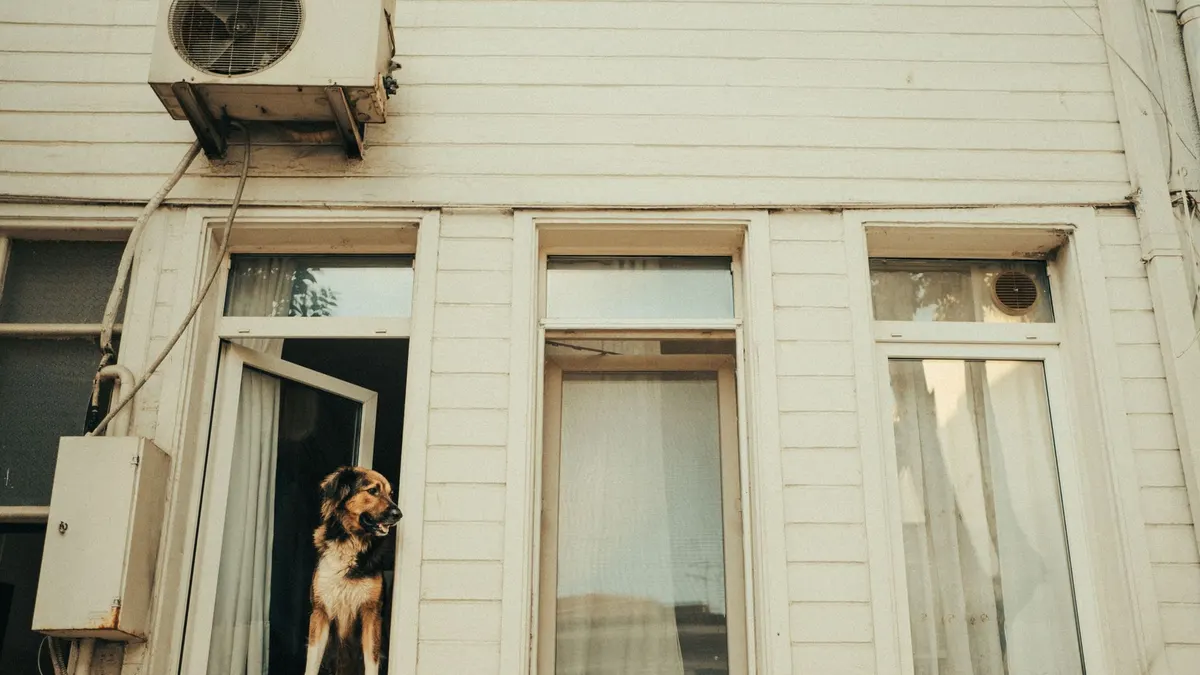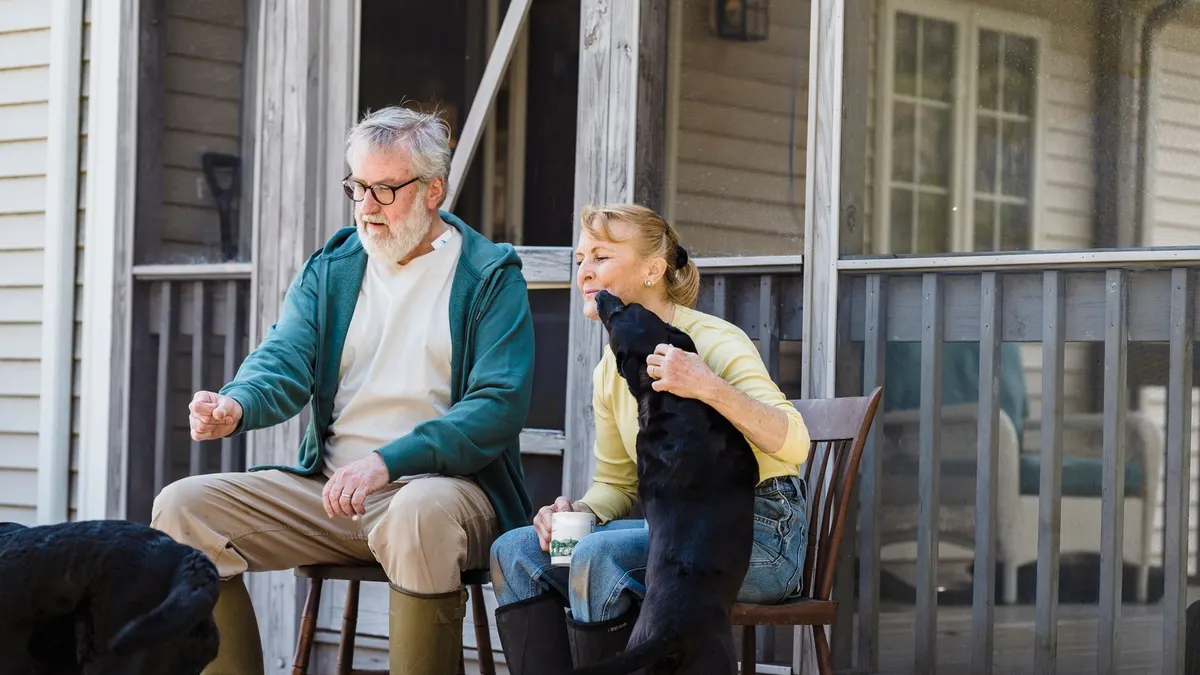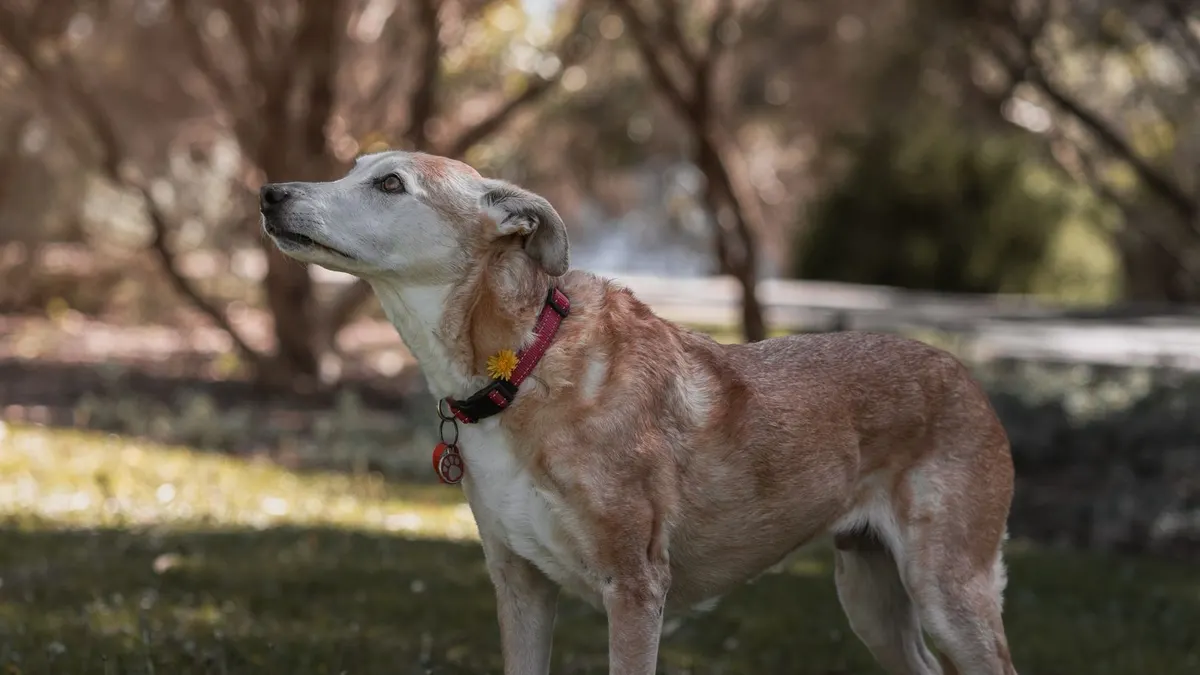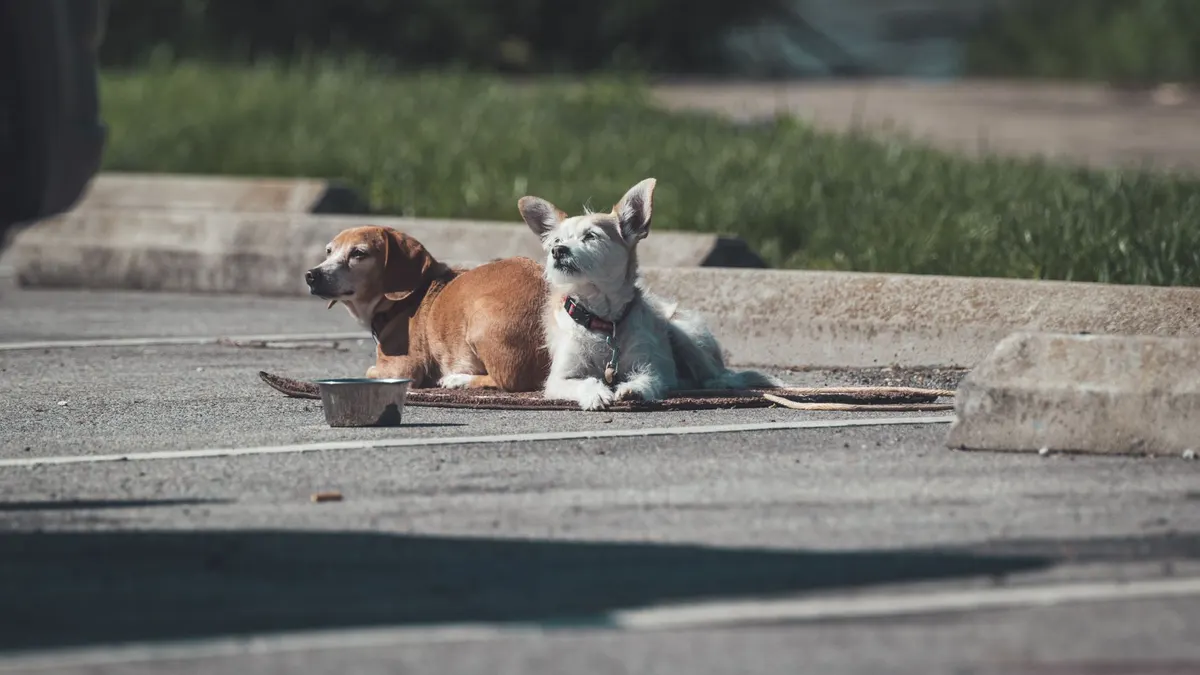
Get down on your hands and knees in your own hallway. At twenty inches, the baseboards loom, the floor gleams like ice, and the route to the back door is a dark tunnel with a charging cable stretched across it. This is what a fourteen-year-old dog actually sees. The fix is not a remodel. It is one room at a time, at your dog's pace, and this guide walks you through all of them.
The setup in one paragraph
A working senior dog home setup has four pieces: traction paths on every slick surface the dog crosses daily, light on the nighttime route from bed to door, gates at both ends of the stairs, and essentials — water, food, bed — on the floor where the dog actually lives. Then lock up anything toxic, tippable, or trippable, watch the dog move for a week, and adjust whatever still causes hesitation.
Entryways and hallways: build traction paths
The hallway is where many senior dogs fall first, because it combines speed (excitement at the door), smooth flooring, and turns. Dogs with arthritis or weakening hind legs cannot dig their nails into hardwood or tile the way they once did, and a single bad slip teaches a dog to fear that whole route.
Runners with a rubber or grip backing are the single best fix. Lay them in a continuous path along the routes your dog actually travels: bed to kitchen, kitchen to back door, couch to water bowl. Avoid loose area rugs that slide or curl — a rug that shifts under a weak rear end is worse than bare floor. If you rent or hate the look of runners, interlocking foam mats or even yoga mat off-cuts work surprisingly well in narrow corridors.
Lighting matters more than most owners realize. Senior dogs lose contrast sensitivity, and dogs with nuclear sclerosis or cataracts struggle badly in dim hallways. Plug in motion-activated night lights at dog height along the main routes; our guide to the best night lights for senior dogs covers what works. Finally, clear the floor: shoes, baskets, and charging cables are trip hazards for a dog whose feet no longer lift cleanly.
Living room: ramps, beds, and furniture access
If your dog is allowed on the couch or your bed, give them a way up that is not a jump. Repeated jumping is hard on arthritic joints, and a missed jump is a common cause of acute injury in old dogs. A stable ramp or wide, low pet steps with a grippy surface solves this; introduce it with treats on a leash and most dogs learn it in days.
Place at least one supportive bed in the room where the family spends evenings — orthopedic memory foam with a low entry edge and a non-slip bottom is the standard for a reason. Older dogs regulate temperature poorly, so keep beds away from drafts and hot sunny patches. If incontinence is part of life, a waterproof liner under a washable cover saves both bed and sanity. Anchor anything wobbly: a senior dog pushing off a rolling ottoman can bring it down.
Kitchen: the highest-risk room in the house
The kitchen concentrates three senior-dog hazards: slick flooring, dropped food, and toxins within nose range.
Put a large non-slip mat under and around the food and water station. A dog whose hind end slides outward while eating will start to avoid meals, and spilled water on tile is a fall waiting to happen. Anti-fatigue mats along the counter edge also help dogs who stand while you cook.
On the toxin front, the big offenders are xylitol (in sugar-free gum, peanut butter, and baked goods — potentially fatal in small amounts), grapes and raisins, onions and garlic, chocolate, macadamia nuts, alcohol, and cooked bones that splinter. A senior dog with fading impulse control or cognitive dysfunction may counter-surf or raid the trash for the first time in a decade. Use a lidded, latched trash can and keep human food off low tables. Our senior dog kitchen safety guide goes deeper.
Bathroom and laundry: lock up the chemistry
Keep the toilet lid down — toilet bowl cleaners and stagnant water are both bad news for a dog who still drinks there. Store medications, cleaning products, and laundry pods in closed cabinets, not on open shelves or the floor. Detergent pods are a particular risk: they look like treats and cause serious injury if chewed. Wipe up spills immediately; a slick bathroom floor is a hard fall on hard surfaces.
Stairs: gate both ends
Stairs deserve their own rule: block them unless your dog is accompanied. Dogs with weakening hindquarters can manage a step or two and still lose control on a full flight, and the descent is where most falls happen. Gate the top AND bottom to prevent unsupervised climbs and nighttime tumbles. If your dog must use stairs, add grip treads, light the flight, and consider a support harness. See how to stop an older dog from falling down stairs for the full approach.
Bedroom: safe sleep and a clear night route
Many senior dogs need a bathroom trip overnight, and a dark, cluttered path from bed to door is where accidents and falls cluster. Give your dog a low-entry orthopedic bed in a draft-free corner, a clear lane to the door, and dim night lighting along the way. If your dog wakes disoriented — a hallmark of cognitive dysfunction — a consistent room layout and a small night light reduce the panic. Details are in how to create a safe sleeping area for an older dog.
Yard access
The door to the yard should have traction on both sides, a ramp or low steps if there is a drop, and a light that lets you see your dog after dark. Senior dogs with cognitive dysfunction can get genuinely lost in a familiar yard, so fence checks and supervision matter more than they used to — especially for small seniors in areas with predators.
Changes that backfire
Do not rearrange furniture casually if your dog's vision is declining. Do not use loose rugs, steep ramps, wobbly steps, or gates your dog can push through or step over. Avoid isolating a dog with cognitive dysfunction in an unfamiliar room at night — confinement in a new space often triggers panic and pacing rather than rest. And do not assume hesitation is stubbornness: a dog avoiding a room or a route is usually telling you it hurts or it feels unsafe there.
Stop the walkthrough if you see these
Home setup helps comfort and prevention, but it does not fix medical problems. Call your veterinarian if you see new or worsening slipping on surfaces that used to be fine, a fall with any lameness afterward, reluctance to rise after rest, new nighttime pacing or distress, house-training accidents in a previously reliable dog, muscle loss over the hindquarters, or any sudden weakness, collapse, or pain. These patterns point to arthritis progression, neurological change, or other treatable conditions — and a short video of your dog moving through the house is genuinely useful diagnostic material to bring along.
Setup cost and logistics questions
How much does a senior-dog home setup cost?
Far less than most people fear. Runners, night lights, and a non-slip feeding mat might total $100–200; an orthopedic bed and ramp are the bigger purchases. Compare that to one emergency vet visit for a fall-related injury.
My dog is scared of the ramp. What now?
Go slower. Lay the ramp flat and feed treats on it, then raise the angle gradually over days. Never force the dog onto it — one scared experience sets training back weeks. A ramp with side rails helps anxious dogs.
Should the water bowl move to whichever floor my dog is on?
Yes. Arthritic dogs drink less if reaching water means a painful trip. One station per floor, each on a non-slip mat, is a reasonable rule.
Walk it again in three months
A senior-friendly home is not a remodel — it is traction where your dog walks, light where your dog travels at night, gates where falling is catastrophic, and essentials within easy reach. Walk each room at your dog's pace, fix the specific friction points you see, and re-check every few months. Small, boring changes add up to a dog who moves confidently through their own home again.