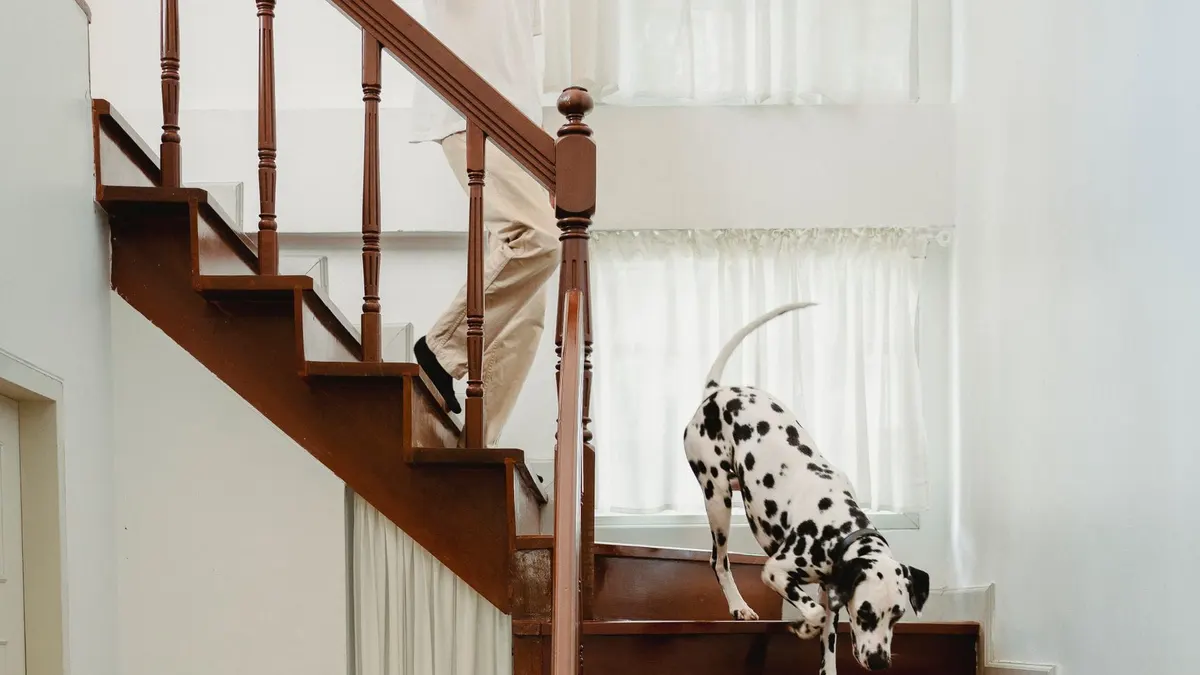
An older dog who falls on stairs may be dealing with poor traction, limited vision, weakness, pain, or a stair route that has become too demanding. The safest response is to prevent unsupervised access while you improve the setup and assess the broader movement change.
Quick answer
Block the stairs when you cannot supervise, improve traction and lighting, remove clutter, and guide your dog slowly rather than allowing rushed climbs. If your dog has already fallen, is suddenly unsteady, cries out, cannot stand, or seems painful, contact a veterinarian promptly.
What matters most
Stair safety depends on both the steps and the dog’s ability to control each movement. A dog may manage stairs in daylight but struggle at night, descend more cautiously than they climb, or lose footing when tired. Watch the entire route, including the floor at the top and bottom where a turn is often required.
Reduce the immediate risk
- Use a secure gate or closed door to prevent unsupervised access.
- Keep toys, laundry, cords, and other obstacles off every step and landing.
- Add even lighting without creating glare or deep shadows.
- Improve traction with secure stair treads or another surface designed to stay flat.
- Keep the top and bottom landings clear enough for a safe pause and turn.
Do not rely on a loose runner, curled mat, or improvised padding. A product that shifts beneath a paw can make a fall more likely.
What to do at home
If your dog must use the stairs, keep the pace slow and allow one step at a time. Stay beside rather than pulling from above or below. Avoid carrying a large dog unless you have been shown a safe technique; a struggling dog can injure both itself and the caregiver.
Consider whether the dog can use a safer route, a ramp, or a downstairs arrangement. The Senior Dog Home Safety hub and How to Make Stairs Safer for an Older Dog provide broader setup guidance.
Watch for red flags
Pay attention to hesitation, slipping, toe dragging, wobbling, a shortened stride, repeated pauses, or a change that appears only while descending. Note whether the problem is new, getting worse, or also present on level ground. A short video from a safe distance can help your veterinarian understand the pattern.
When to call a veterinarian
Seek prompt veterinary guidance after a fall, especially if your dog has pain, swelling, limping, unusual breathing, weakness, or difficulty standing. Arrange an evaluation for repeated stair trouble, new reluctance to move, or a decline in balance. Home changes can reduce risk, but they do not determine whether pain, joint disease, or another health problem is involved.
Bottom line
The safest stair plan combines prevention, stable footing, clear visibility, and supervision. If your dog is no longer confidently controlling the route, prevent access and ask for professional guidance instead of trying to train through repeated falls.