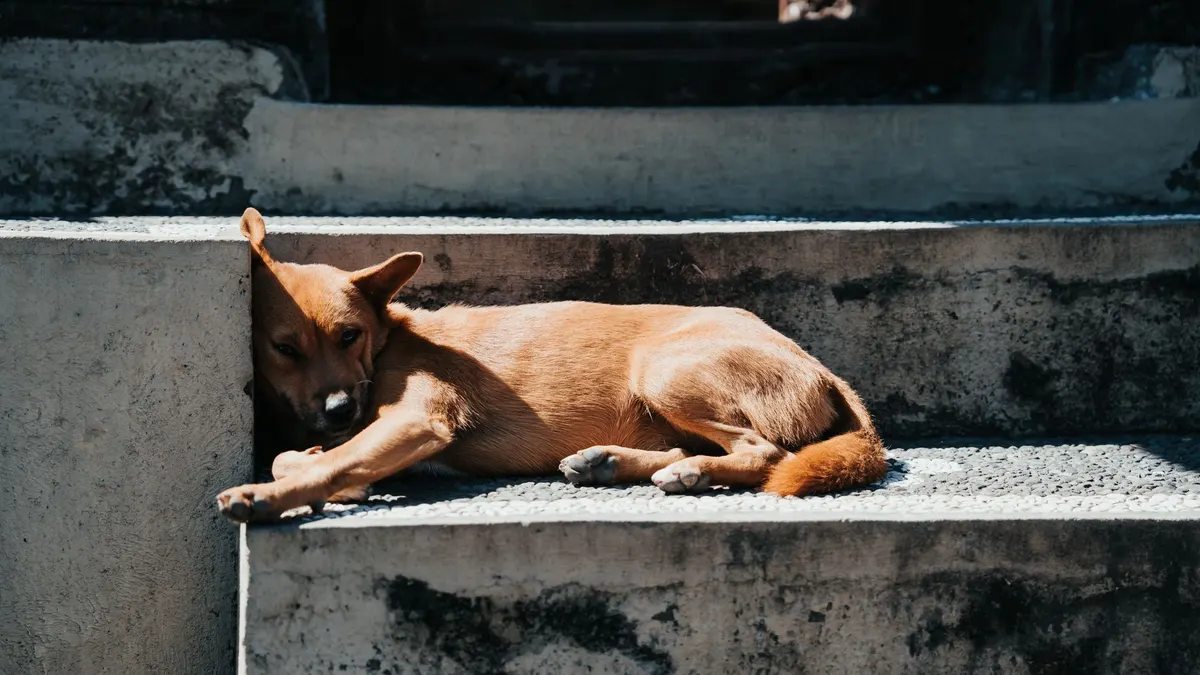
Stairs can become a high-stress barrier for an older dog even when the dog is still trying to stay with the family. A staircase asks the dog to manage height, footing, balance, and timing all at once, and many senior dogs are less steady than they used to be.
Quick answer
To help an older dog climb stairs safely, focus on traction, visibility, predictable pacing, and reducing risky daily stair use whenever possible. The goal is not to force confidence. It is to create a route that feels easier and less physically stressful for the dog.
If the dog is hesitating, slowing down, or sliding even on familiar steps, the safest fix is usually to make the route simpler and less demanding rather than asking the dog to push through discomfort.
What makes stairs harder for senior dogs
Older dogs may struggle on stairs because of a mix of things:
- reduced joint comfort
- slower balance and reaction time
- fear of slipping on smooth or worn steps
- more hesitation when the route feels crowded or uncertain
- a general drop in confidence after a difficult step
The dog may not be “refusing” the stairs. It may simply be trying to avoid a more difficult or uncomfortable motion.
Best changes to make first
1. Add traction to the steps
Use secure stair treads or runners that stay flat. The dog should not have to worry about sliding underfoot or catching a paw on a loose edge.
2. Improve lighting at the top and bottom
A dog may hesitate when the step pattern is unclear. Better light helps the dog judge distance, footing, and timing.
3. Remove clutter and distractions
Toys, shoes, laundry, and other objects near the stairs can make each step feel less predictable. Clear stairs are easier for older dogs to negotiate.
4. Slow down the routine
Walk beside the dog instead of calling from above or below. Give the dog time to assess each step. Pressure and speed often make the problem worse.
When the home setup matters more than practice
If the dog is struggling with a daily routine, it may be smarter to reduce stair use than to keep repeating a difficult habit. Moving food, water, and the resting area to a lower level can relieve a lot of daily strain.
This is especially helpful when the dog is already showing signs of slowing down or feeling less steady in general. You can also reduce risk around the home by checking out how-to-make-stairs-safer-for-an-older-dog and senior-dog-home-safety-checklist.
Support tools can help—but only when used carefully
A harness may be useful in some situations, but it should never be used to drag a dog up the stairs. That kind of support can increase fear and create a new injury risk. If the dog needs help, use a calm, controlled routine and ask your veterinarian or a canine rehab professional for guidance.
When to stop and call a vet
Do not keep pushing a dog through the stairs if they are:
- slipping repeatedly
- showing pain, crying, or hesitation
- suddenly avoiding stairs they used to manage
- wobbling, stumbling, or struggling to stand after climbing
A sudden change is not the time to force practice. A short video of the dog approaching or using the stairs can be very helpful if you need to discuss the issue with a veterinarian.
Bottom line
Helping an older dog climb stairs is usually about reducing risk and making the route more predictable, not forcing the dog to “push through.” Better traction, calm pacing, and fewer risky daily climbs often create the biggest improvement.
Related guides
- How to Make Stairs Safer for an Older Dog
- Why Is My Senior Dog Slipping on Hardwood Floors?
- Senior Dog Home Safety Checklist
- How to Help an Older Dog Get Into a Car
FAQ
What is the first thing I should fix on stairs?
Start with traction and visibility. A stable, grippy path and clear lighting reduce hesitation and slipping before the dog ever starts climbing.
Should I keep practicing stairs if my dog is struggling?
Not if the dog is slipping, freezing, or showing pain. Repeated risky attempts can reinforce fear. It is often better to lower the daily strain and use a safer route.
Is a harness a good idea?
Sometimes, but only with careful handling and supervision. A harness is not a substitute for a safe path or a good routine.
When should I call a vet?
If the dog is suddenly worse, seems painful, is weak, or develops a new wobble, a professional evaluation is the right next step.