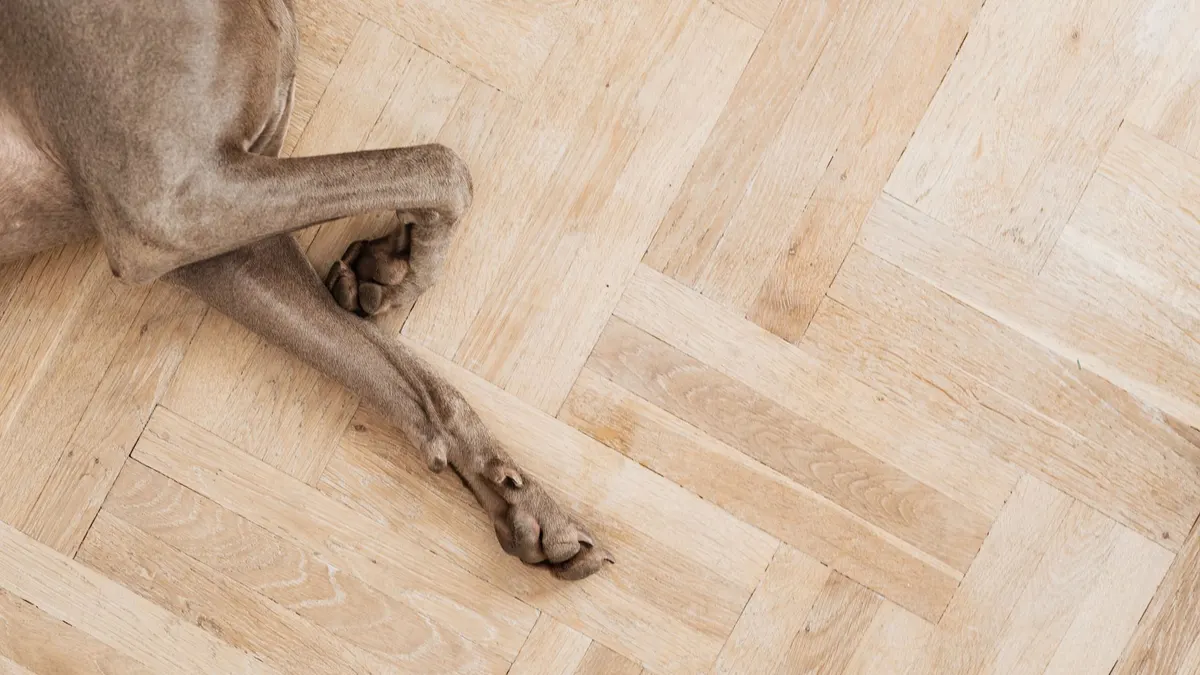
Hardwood floors can look beautiful and clean, but they often feel slippery or uncertain to older dogs. If your dog is hesitating near the kitchen, hallway, or favorite resting area, the problem may be the floor surface more than the dog’s mood or willingness to move.
Quick answer
To make hardwood floors safer for dogs, improve traction in the dog’s main walking routes, remove clutter, and keep movement predictable. A few well-placed rugs or mats can reduce slipping without turning the home into a risky maze.
Why this matters more for senior dogs
Older dogs often move more carefully and may be less steady when they change direction or slow down on smooth flooring. A dog that seems hesitant or off-balance on hardwood may simply be reacting to a surface that feels unstable or slick.
Common problem points include:
- hallway turns
- entryways
- kitchen and dining area transitions
- the route between bed and door
- places near the water bowl or resting area
Start with the dog’s actual route
Instead of treating the whole home at once, look at the paths your dog uses every day. The most helpful solution is usually the one placed where the dog walks most often, not a broad covering across every room.
This often means:
- a runner in the hallway
- a textured mat by the door
- a stable rug near the bed or kitchen
- a clear path with no clutter or sudden obstacles
Add traction without creating a new risk
A rug can help, but it should stay flat and secure. A rug that curls, slides, or bunches up underfoot can become a trip hazard. A low-profile, textured rug with a good backing is usually a safer choice than a soft, fluffy one that shifts under the dog’s paws.
See best-rugs-for-dogs-that-slip-on-hardwood-floors for more on traction-focused rug choices.
Keep walking routes calm and predictable
A dog that feels unsure on smooth floors does better when the route is simple and steady. Avoid clutter, cords, toys, and sudden furniture placement in the path the dog uses most. A clear route can be more valuable than a big product purchase.
This is especially helpful if the dog is moving more slowly or seems a little less confident than before.
Don’t overlook other home-safety issues
A slippery floor is sometimes just one part of a bigger problem. If your dog is also struggling to get to the bed, food, or door, the route may need a broader redesign. For a room-by-room review, see senior-dog-home-safety-checklist.
When to bring in a vet
Home changes can reduce stress and improve comfort, but they do not replace a medical evaluation. If your dog is suddenly slipping more, seems weak, or appears uncomfortable on smooth surfaces, a veterinary review is a smart step.
Bottom line
The easiest way to make hardwood floors safer for a senior dog is to improve traction on the exact routes the dog uses most and keep those paths predictable. A few small changes often reduce slipping and help older dogs move through the home with more confidence.
Related guides
- Best Rugs for Dogs That Slip on Hardwood Floors
- Senior Dog Home Safety Checklist
- How to Make Stairs Safer for an Older Dog
- How to Make Food and Water Easier for a Senior Dog
FAQ
Why does my senior dog slip more on hardwood floors?
Smooth surfaces can feel less stable for senior dogs, especially if they are slower to adjust or less confident when turning.
Is a rug the best solution?
Often one of the simplest fixes, but it needs to be stable and low-profile. A flat rug with a good backing works better than a loose, curling one.
How do I know if I need a bigger change than a rug?
If the dog keeps slipping even with a stable rug, or if the issue is worsening, it is worth looking at mobility and comfort more broadly and discussing it with a veterinarian.
What else should I check?
The routes to the bed, food, door, and other high-use areas often matter just as much as the floor itself.