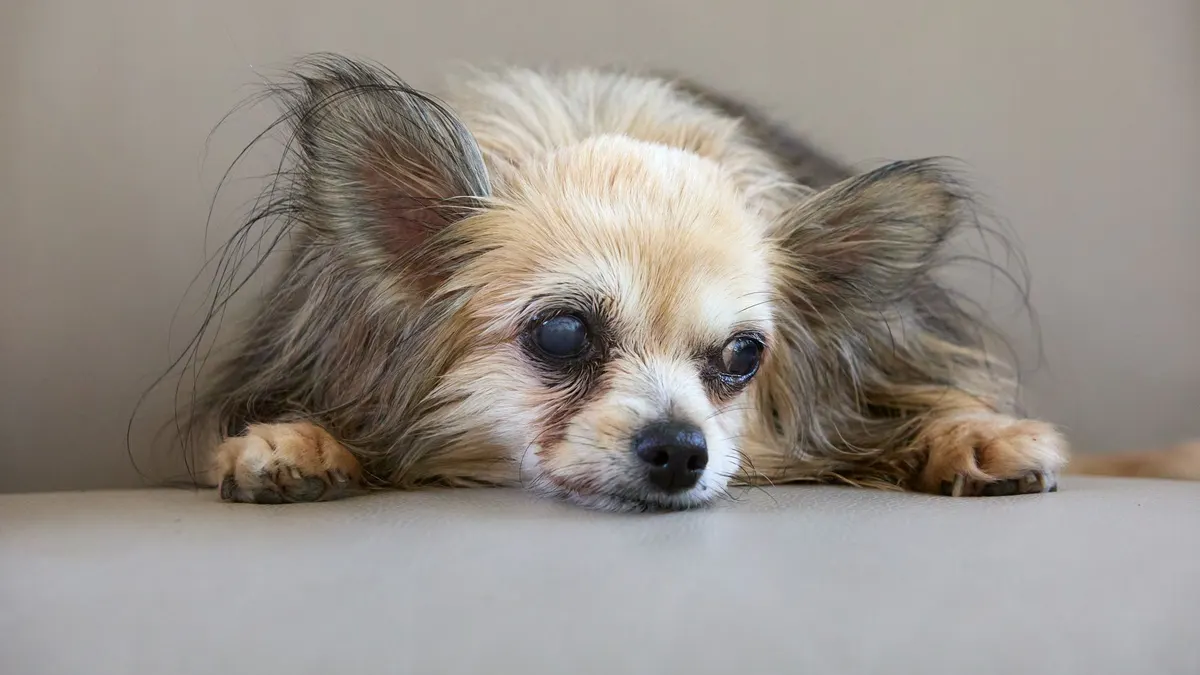
A non-slip mat is one of the simplest upgrades for a senior dog, especially when the home has hardwood, tile, laminate, vinyl, or polished concrete. The goal is not to cover every floor in the house. It is to create a few safer, more stable routes where your dog already walks, rests, eats, or turns.
The best purchase is usually not the thickest mat or a large set of small rugs. It is the mat that stays flat, covers the right route, and gives an older dog enough confidence to keep moving.
This guide covers what to look for, where to place mats, how to compare categories, how to maintain traction, and when a mat is not enough.
Quick answer
The best non-slip mats for senior dogs are low-profile, secure, textured, washable, and placed where the dog moves most often. A long runner is usually the best first purchase for a hallway or main living-area route; a smaller mat makes sense around food and water.
If the mat shifts, curls, or creates a raised edge, it is not safe. If slipping comes with new weakness, pain, dragging paws, or repeated falls, mats are only one support step and a veterinary evaluation is important.
Do a 20-minute floor audit first
Before shopping, watch the dog move through a normal day and identify the exact trouble spots.
- Mark the route from the bed to the door.
- Mark the route from the bed to food and water.
- Watch the first three steps after rising.
- Watch turns in the kitchen, hallway, and near the couch.
- Look for spills, water splashes, long nails, or paw hair that may reduce grip.
- Press any existing rug with your hand or foot; if it slides, it needs a grip pad or replacement.
You are looking for repeated locations, not every smooth floor in the home. A common setup needs one runner, one bowl-area mat, and a small mat beside the bed — not a house filled with loose rugs.
Where to place traction mats
A dog does not need a mat in every room. It helps more to place them in the routes that matter:
- beside the bed or favorite resting area, including the push-off zone
- near food and water bowls where spills collect
- just inside or outside the main door
- in the hallway or kitchen where the floor is slick
- in front of a ramp or car-entry area if the landing surface is smooth
- around any corner where the dog slows down or takes a wide turn
The mat should start before the slippery section and continue past it. A tiny square in the middle of a long hallway forces the dog to step off the traction just when they are trying to turn or speed up.
What makes a mat good for an older dog
Look for a mat with:
- a strong non-slip backing that grips hardwood, tile, or sealed concrete
- a low profile so it does not catch a paw or toenail
- a textured top surface that gives paws something to push against
- a stable shape that stays flat over time
- materials that can be cleaned easily
- enough length to cover the full movement pattern
- finished edges that lie flat after washing
If the mat shifts when the dog steps on it, it is not creating safety. It is becoming a new obstacle.
📊Non-Slip Mat Buying Criteria for Senior Dogs
| Criterion | Why it matters | What to check |
|---|---|---|
| Backing grip | A smooth-backed mat slides on hardwood just like the floor | Look for rubberized or grippy backing and test it on your floor |
| Profile height | A thick mat creates a tripping edge | Pick a low-profile mat with edges that stay flat |
| Top texture | A smooth top does not give paws anything to grip | Look for a textured or looped surface that is not rough |
| Shape stability | Curling corners catch paws and create new hazards | Pick a mat that stays flat after unrolling and washing |
| Washability | Mats collect dirt, water, and pet hair that reduce grip | Make sure the mat is machine-washable or easy to wipe and dry |
| Size and route coverage | A mat that is too small forces the dog to step over edges | Pick a runner long enough to cover the full route |
Click on any product to view full details and reviews
Choose by the dog’s actual problem
| Problem | Best first option | What to avoid |
|---|---|---|
| Slips down a hallway or open living room | One long secured runner | Several small rugs with gaps |
| Slips after standing from the bed | A firm mat beside the bed covering all first steps | A tiny bath mat that slides |
| Water spills near bowls | Washable, quick-dry feeding mat | A thick rug that stays damp |
| Slips at the door when excited | Durable mat with grip on both sides | Decorative mat with slick backing |
| Travel, vet visits, or surfaces you cannot cover | Paw grips or toe grips introduced gradually | Using them as the only fix at home |
| New weakness or repeated falls | Mats plus veterinary advice and mobility support | Treating flooring as the full solution |
Non-slip mat categories worth comparing
The right mat depends on where it goes and how the dog uses the space. Below are three categories worth comparing.
Non-slip runners for hallways and main routes
A runner covers a long stretch of floor with a single, stable surface. This is usually the best first step for a dog that slips on hardwood or tile in the hallway, kitchen, or living room.
Non-Slip Runner Rugs for Senior Dogs on Hardwood Floors
Compare low-profile runners with strong non-slip backing for hallways and main walking routes. Check the backing material, total length, washability, and whether the edges stay flat after rolling.
Look for:
- backing that grips your specific flooring, not just the product label
- a low profile so the dog does not have to climb onto the mat
- a length that covers the full route, including turning and landing zones
- edges that stay flat after rolling, washing, or being stepped on
- a surface texture that remains comfortable for older paws
If a regular rug is already in the right place, a separate non-slip rug pad may solve the movement problem. The rug must still be low-pile and free of curling corners.
Non-slip mats for food and water areas
A short, washable mat placed under food and water bowls catches spills before they make the floor slick. This category is especially useful for senior dogs that drool, drop food, splash water, or have a slightly unsteady drinking stance.
Non-Slip Mats for Senior Dogs Near Food and Water
Compare short, washable, low-profile mats for placing under food and water bowls. Prioritize quick-dry material, non-slip backing, ease of cleaning, and a size that catches spills without creating a new tripping edge.
Look for:
- a quick-dry material that does not stay damp
- a backing that still grips after repeated washing
- a size just larger than the bowl footprint
- a low profile so the dog can stand and eat without balancing on an edge
- a surface that is easy to wipe after dropped wet food
Paw grips and toe grips for portable traction
When rugs alone are not enough, or for travel and vet visits, paw grips and toe grips add traction directly to the dog’s paws. These are usually a second step, not a first fix, because some dogs resist them and they need regular replacement or maintenance.
Paw Grips and Toe Grips for Senior Dogs
Compare paw grips, toe grips, and adhesive traction pads for senior dogs. Useful when rugs alone are not enough or for travel. Check sizing range, expected wear time, and whether the dog will tolerate them.
Look for:
- a sizing range that fits the paws snugly without squeezing
- grip material that stays on for the expected wear time
- a design that does not interfere with normal paw movement
- a gradual introduction so the dog does not freeze or chew at the product
- clean, dry paws before application when the product instructions require it
Long nails and fur between the pads can reduce grip on any surface. Keep up with gentle nail care for senior dogs, or ask a groomer or veterinarian for help if the dog cannot stand for long.
Installation and placement tips
A good mat can still fail if it is placed incorrectly.
- Cover the push-off and landing zones. Put enough mat beside the bed for all four paws, not just the front feet.
- Leave no gaps on a route. A dog may slip between two small mats.
- Secure corners. Rug tape can damage some floors, so check flooring guidance before using it. A non-slip pad is often safer.
- Avoid busy door swings. A mat should not bunch under a closing door.
- Check wet areas. Water near bowls and outside doors can make even a textured top feel slick.
- Make the route obvious. A runner should lead toward the bed, bowls, or door rather than ending in an awkward corner.
Let the dog approach the mat calmly. Some older dogs are wary of a new surface. Do not pull them across it; let them sniff and try it at their pace.
Maintenance keeps traction working
A mat that was safe when new can become slick after weeks of dirt, oil, water, and pet hair.
- vacuum or shake out loose debris regularly
- wash according to the label and dry the mat completely
- wipe spilled water or food away promptly
- check the backing after washing
- flatten curled corners immediately
- trim nails and check paw hair if scuffing increases
- re-test the mat on the floor after each cleaning
If the backing begins to crumble, the corners repeatedly lift, or the mat slides after cleaning, replace it. A worn traction product is not worth keeping for appearance.
What to avoid
A few mat choices tend to cause more problems than they solve:
- glossy or smooth surfaces that still slide
- thick shag edges that catch claws or toes
- loose rugs that move underfoot
- mats that are too small for the actual route
- rough textures that are uncomfortable for sensitive paws
- rubber backing that discolors or damages flooring
- mats placed on top of wet floors without cleaning first
- a collection of tiny mats that creates an obstacle course
A good mat helps the dog feel more stable, not more uncertain.
Common mistakes to avoid
- Covering every floor: Wastes money and creates many edges to step over. Fix the routes the dog actually uses.
- Too many small mats: A series of small mats creates tripping edges between them. A single runner is usually safer.
- Loose or curling rugs: A rug that moves underfoot can be more dangerous than the slick floor itself.
- Ignoring paw and nail care: Long nails and paw hair reduce pad grip on any surface.
- Assuming the dog will “get used to it”: If a dog hesitates or slips on a mat, check the texture, backing, height, and placement before blaming the dog.
- Forgetting cleanup: A mat covered in spilled water, dust, or wax is no longer a traction mat.
When mats matter most
A mat is especially useful when a dog is:
- hesitant on slick flooring
- slowing down when turning or changing direction
- struggling to rise from a resting spot on a smooth surface
- walking through the same high-traffic route every day
- recovering from an injury but still allowed controlled movement
- confident on carpet but unsure on hardwood or tile
This kind of support can be especially helpful in the home and around doorways, feeding areas, ramps, and sleeping spots.
When a mat is not enough
Mats improve footing, but they do not treat weakness, joint pain, balance disorders, or neurological changes. Seek a higher level of support if the dog is:
- falling repeatedly even on secured routes
- dragging or knuckling the back paws
- suddenly unable to stand or walk
- showing pain, panting, vocalization, or severe hesitation
- becoming weaker despite safer flooring
- slipping everywhere rather than only on smooth surfaces
See why are my senior dog's back legs weak? for guidance on weakness that goes beyond the floor. A support harness, ramp, or one-level living setup may be more useful than adding more mats.
Bottom line
For a senior dog, a non-slip mat works best when it is placed intentionally, stays flat, matches the dog’s actual routine, and is kept clean. Start with the one route that causes the most hesitation — often beside the bed or between the bed and door — then add coverage only where you see a repeated need.
Your first purchase should usually be a quality runner rather than a set of scattered small rugs. Observe the dog for several days: fewer skids, wider confidence, and easier turns are the signs that the placement is working.
Related guides
- Why Is My Senior Dog Slipping on Hardwood Floors?
- How to Make Hardwood Floors Safer for Dogs
- Best Rugs for Dogs That Slip on Hardwood Floors
- Senior Dog Home Safety Checklist
- How to Help a Senior Dog Walk Better
- Why Are My Senior Dog's Back Legs Weak?
FAQ
Where is the best place to put a senior dog mat?
The most useful locations are where the dog already spends time or moves repeatedly — near the bed, bowls, favorite resting spot, and main entry routes. Cover the push-off and landing area rather than placing one small square in the middle of the floor.
What type of mat is safest?
A low-profile mat with a secure backing and textured top is usually safer than a thick, loose, glossy, or curling mat. The safest mat is the one that does not slide on your specific flooring.
Can regular rugs work?
Yes, but only if they are low-pile, stay flat, and use a secure non-slip pad underneath. A decorative rug that slides or bunches can be more dangerous than the bare floor.
How do I know if my mat is helping?
The dog should seem more confident, less hesitant, and less likely to skid or slip when moving across that route. Give it several days and watch the exact spots that were previously difficult.
Should I use a runner or several small mats?
A runner on the dog’s main route usually works better than several small mats, because small mats create edges and gaps that catch paws. Use a smaller mat mainly under food and water.
Do I need a mat if my dog’s problem is pain or weakness?
A mat can still improve traction, but it does not treat the underlying medical issue. If weakness, pain, dragging paws, or repeated falls are new or worsening, arrange a veterinary evaluation as well.