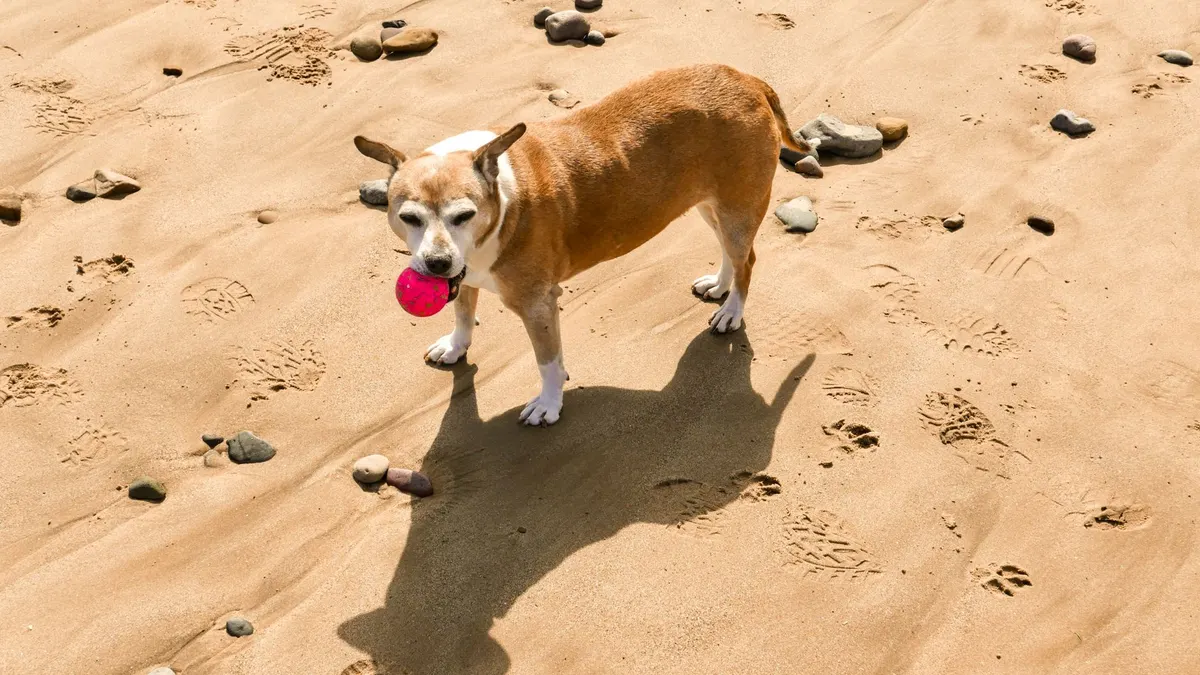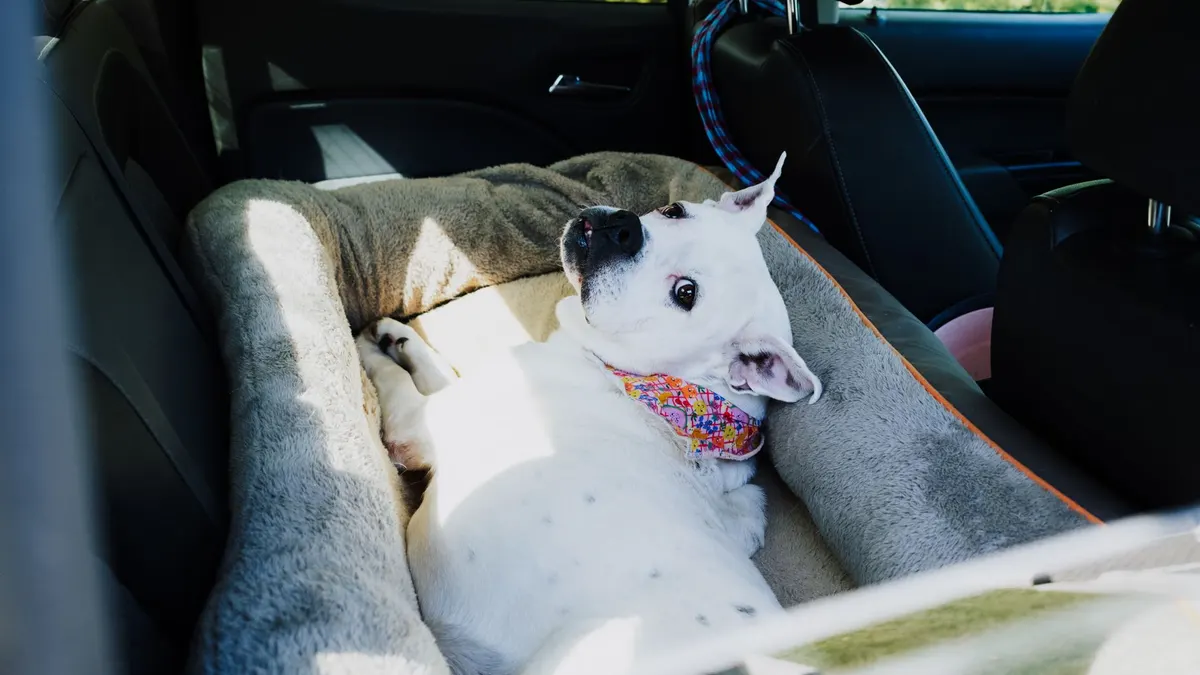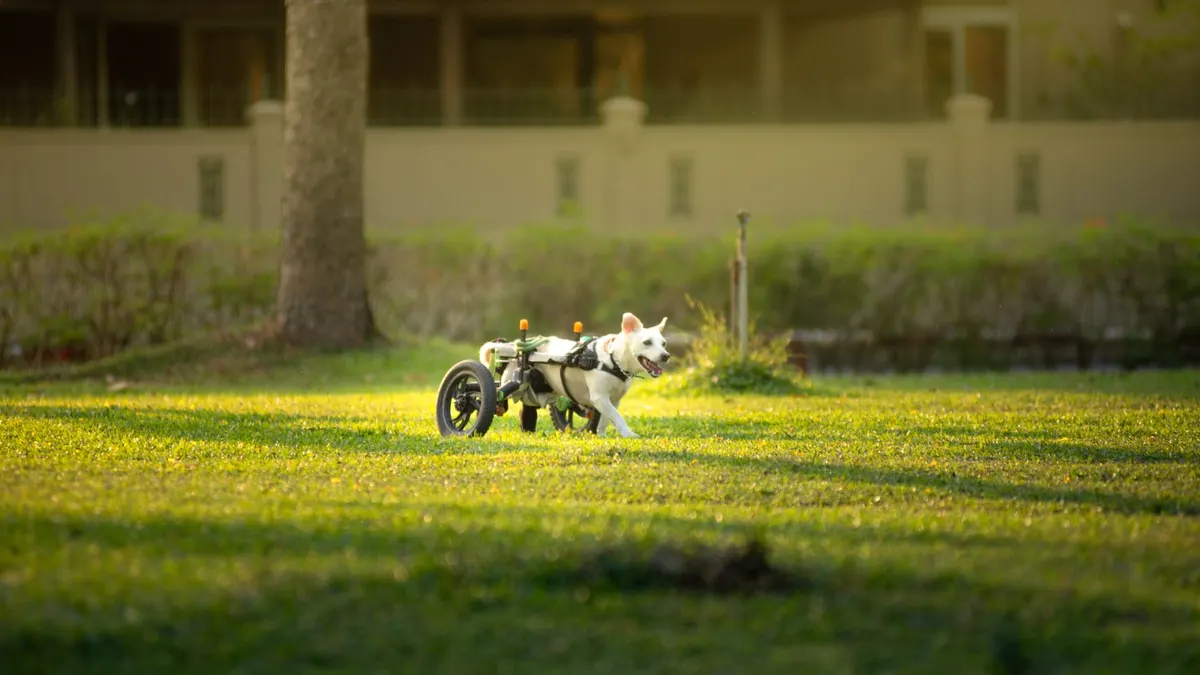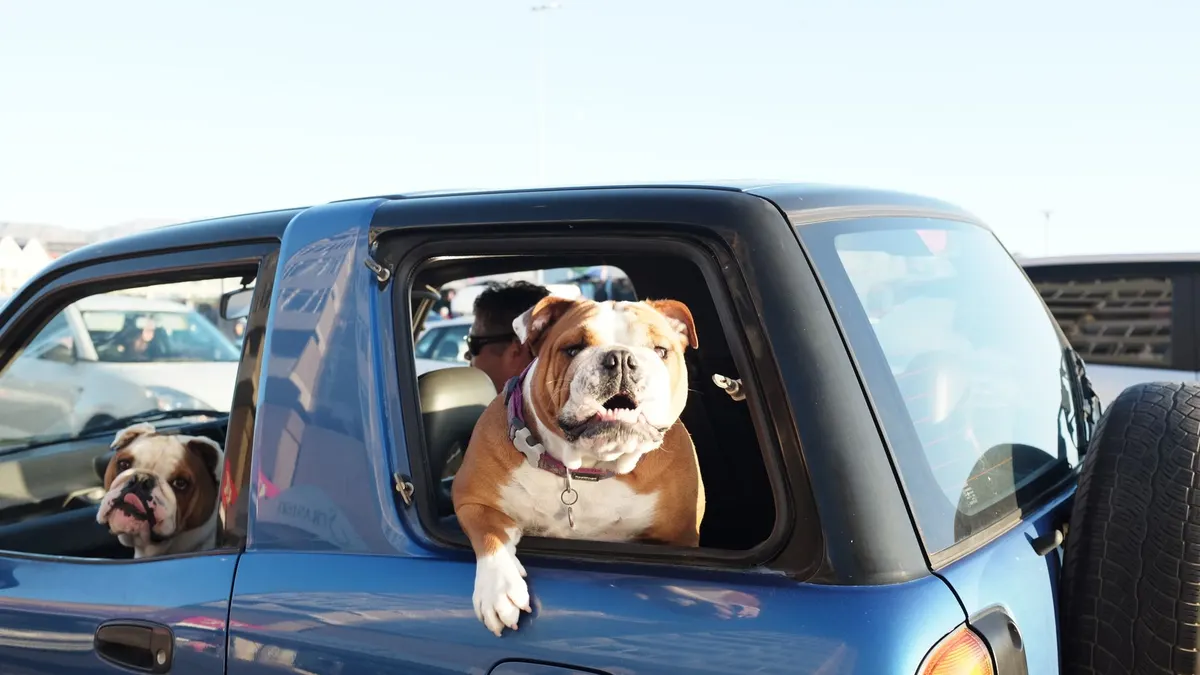
Getting into a car can become much harder for an aging dog.
A jump into an SUV that once took one second may become a major effort when a dog has weaker back legs, reduced confidence, stiffness after resting, or difficulty maintaining balance.
A dog car ramp replaces the jump with a gradual walking surface. For many older dogs, that can make getting into and out of the vehicle feel more controlled.
But the longest or most expensive ramp is not automatically the best choice.
The right ramp needs to match your dog's size, mobility, confidence, and your vehicle's height.
This guide explains what to look for, how to measure your vehicle, which ramp style may fit different situations, and how to introduce a ramp without making your dog nervous.
Quick answer: What is the best car ramp for a senior dog?
For most senior dogs, look for a ramp that is:
- Long enough to avoid an unnecessarily steep climb
- Wide enough for your dog to walk comfortably
- Textured or non-slip for reliable paw traction
- Stable when the dog steps onto it
- Strong enough for your dog's weight
- Easy to secure to the vehicle
- Practical to store and carry
- Compatible with your vehicle's loading height
A longer ramp is often helpful for a tall SUV because it can create a gentler incline.
A wide folding ramp may be a better choice if your dog needs extra room to balance.
A telescoping ramp can be useful when you want to adjust the length or need a ramp that stores more compactly.
The best choice is ultimately the ramp your dog can use confidently and consistently.
Best car ramp types for senior dogs
There is no single ramp design that works for every dog.
The main options are folding ramps, telescoping ramps, and extra-long heavy-duty ramps.
Folding dog ramps
Folding ramps usually have one or more hinges and become shorter for storage.
They can be convenient if you use the ramp frequently and want something relatively quick to set up.
Best for:
- Regular car trips
- Owners who want simple setup
- Dogs comfortable walking on a wider surface
- Vehicles with moderate loading heights
Potential drawbacks:
- Hinges can add weight
- Some models are bulky when folded
- The folded size may still be too large for a small trunk
Check the folded dimensions, not just the ramp's open length.
Telescoping dog ramps
Telescoping ramps slide or extend to create a longer walking surface.
Their biggest advantage is flexibility.
A longer setting may work better for a taller SUV, while a shorter setting can be more practical for a lower vehicle.
Best for:
- SUVs and taller vehicles
- Owners who need adjustable length
- People with limited storage space
- Dogs that need a gentler incline
Potential drawbacks:
- Sliding sections can add weight
- The locking mechanism needs to be reliable
- Some dogs may dislike seams or changes in surface texture
Always check that the ramp locks securely before your dog steps onto it.
Extra-long heavy-duty ramps
Heavy-duty ramps are designed for larger dogs or situations where a stronger frame is important.
They may also be wider and longer than lightweight travel ramps.
Best for:
- Large senior dogs
- Tall SUVs
- Dogs that need a wide walking path
- Frequent use
The trade-off is usually weight.
A ramp that is excellent for your dog but too heavy for you to safely position is not a practical solution.
How long should a senior dog car ramp be?
Ramp length is one of the most important things to consider.
A short ramp may look convenient, but when it is placed against a tall SUV, the resulting incline can be difficult for an older dog.
A longer ramp creates a more gradual route.
You can use this simple calculation to compare setups:
Incline ratio = vehicle loading height ÷ ramp length
For example:
- 24-inch vehicle height ÷ 60-inch ramp = 0.40
- 24-inch vehicle height ÷ 72-inch ramp = 0.33
The second ramp produces a lower ratio and therefore a gentler climb.
This is not a universal veterinary safety formula. It is simply a useful way to compare ramp configurations.
Your dog's body size, leg strength, confidence, and traction still matter.
A simple rule
If your dog struggles with climbing, start by considering a longer ramp rather than simply buying a shorter, lighter model.
However, do not buy the longest ramp available without checking your vehicle.
You need enough room behind the vehicle to place it at a usable angle.
Measure your car before buying
Do not choose a ramp based only on the product title.
Measure your vehicle first.
Step 1: Measure the loading height
Park the vehicle on the type of surface where you normally load your dog.
Measure from the ground to the point where the ramp will meet the vehicle.
For an SUV, this may be considerably higher than the entry point of a sedan.
Step 2: Measure the available space
Check how much space you have behind the vehicle when the ramp is deployed.
A 72-inch ramp may be useful in one driveway but impractical in a tight parking space.
Step 3: Check the vehicle entry width
Make sure the ramp can meet the vehicle securely without interfering with the door or hatch.
Step 4: Check storage dimensions
Compare the folded or collapsed dimensions with your trunk or cargo area.
A ramp that is excellent on paper is not useful if you leave it at home because it is difficult to store.
What features matter most?
1. Traction
For a senior dog, traction should be one of your first considerations.
Look for a surface that gives the paws something to grip without creating sharp edges or deep gaps.
Avoid smooth surfaces that become slippery when wet.
A dog that already has difficulty walking may become much less confident when a ramp moves underneath its paws.
2. Stability
The ramp should remain stable when the dog steps onto it.
Before using it, check:
- Top contact point
- Bottom feet
- Hinges
- Locking mechanisms
- Support legs
- Side rails
- Any straps or attachment points
Put weight on the ramp yourself before allowing your dog to use it.
If it flexes dramatically, rocks from side to side, or slides across the ground, reconsider the setup.
3. Width
Width matters more than many owners expect.
A narrow ramp may be manageable for a confident young dog but intimidating for an older dog with reduced balance.
A wider ramp can give your dog more room to place its paws naturally.
Extra width can be especially helpful for:
- Large breeds
- Dogs with weak rear legs
- Dogs that sway while walking
- Dogs that are nervous about heights
Do not judge a ramp by weight capacity alone.
A ramp can support a 150-pound dog and still be too narrow for that dog to use comfortably.
4. Weight capacity
Check the manufacturer's stated weight capacity.
Your dog's current body weight should be comfortably within the stated limit.
Do not assume that a ramp rated for a particular weight will feel equally stable for every dog at that weight.
Frame construction, width, support design, and ramp length can all affect how the ramp feels under load.
5. Side rails
Some ramps include raised edges or side rails.
These can provide useful visual and physical boundaries for dogs that tend to drift toward the edge.
They are not a substitute for proper supervision, but they may make the walking path feel more defined.
6. Portability
Think about who will actually be moving the ramp.
A 20-pound ramp may be easy for one owner and awkward for another.
Consider:
- Ramp weight
- Carry handles
- Folding mechanism
- Storage size
- Setup time
For frequent trips, ease of use matters.
Which ramp is best for different senior dogs?
| Your situation | Ramp features to prioritize |
|---|---|
| Tall SUV | Longer or telescoping ramp |
| Large senior dog | Wide, heavy-duty construction |
| Weak back legs | Long ramp with good traction |
| Nervous dog | Wide surface and stable frame |
| Small dog | Lower, lighter ramp with manageable width |
| Frequent travel | Easy folding and quick setup |
| Limited trunk space | Telescoping or compact folding design |
| Slippery paws | High-traction walking surface |
| Two-person assistance | Wider, rigid ramp with secure contact points |
The important point is that the best ramp depends on the problem you are trying to solve.
Dog ramp vs. dog stairs for a car
Some owners wonder whether stairs might be better than a ramp.
The answer depends on the dog.
A ramp may be preferable when:
- Your dog struggles with individual steps
- Your dog has reduced rear-leg strength
- Your dog is nervous about jumping
- You want a continuous walking surface
- Your vehicle has a relatively high entry
Stairs may work when:
- Your dog is comfortable stepping up
- Storage space is very limited
- The vehicle entry is relatively low
- Your dog prefers steps to a sloped surface
Watch your dog's behavior rather than assuming one design is automatically better.
If your dog repeatedly stops, backs away, scrambles, or tries to jump off, the setup may not be appropriate.
Best car ramps to compare
When shopping, it is useful to compare products by use case rather than simply choosing the highest-rated or most expensive model.
Best type for tall SUVs: telescoping ramps
Telescoping Dog Ramps for Tall SUVs
Compare adjustable-length ramps when you need a longer walking path for a taller vehicle. Check the fully extended length, locking mechanism, usable width, surface traction, and collapsed size before buying.
Look for:
- Long usable length
- Secure locking mechanism
- Good traction
- Enough width
- Reasonable carrying weight
Best type for everyday travel: folding wide ramps
Wide Folding Dog Ramps for Everyday Car Trips
A practical category for owners who want a stable ramp that folds for storage. Prioritize usable width, surface grip, frame stability, and how easily one person can deploy it.
Look for:
- Wide walking surface
- Strong hinges
- Non-slip feet
- Simple setup
- Convenient folded dimensions
Best type for large senior dogs: heavy-duty ramps
Heavy-Duty Dog Ramps for Large Senior Dogs
Compare heavy-duty ramps when your dog is large or your vehicle has a high loading point. Check the manufacturer's weight rating, usable width, frame construction, support points, and ramp weight.
Look for:
- High weight capacity
- Wide walking surface
- Rigid frame
- Reliable support points
- Good traction
MyAgingPet may earn a commission when you purchase through links on this page. This does not increase the price you pay. We focus on practical features and fit rather than promising that any particular product will work for every dog.
How to teach a senior dog to use a car ramp
Do not wait until you are already late for a veterinary appointment.
Practice at home first.
Step 1: Let your dog investigate
Place the ramp flat on the floor.
Let your dog sniff it and walk around it.
Reward calm behavior.
Do not immediately ask your dog to climb.
Step 2: Walk across the flat ramp
Encourage your dog to walk across the ramp while it is still flat.
Use treats, praise, or another reward your dog enjoys.
Keep the session short.
Step 3: Introduce a small incline
Once your dog is comfortable walking across the flat ramp, raise one end slightly.
Continue rewarding calm movement.
Step 4: Practice at the vehicle
When your dog understands the ramp, practice using it with the vehicle.
Keep the car stationary.
Secure the ramp carefully before your dog steps on it.
Step 5: Keep practicing
Short, successful sessions are better than one long stressful session.
Never drag a dog up the ramp.
If your dog refuses to use it, stop and make the setup easier.
The problem may be the incline, surface, width, movement, or your dog's physical comfort.
How to use a car ramp safely
Before every trip:
- Park on level ground when possible.
- Put the vehicle in park.
- Secure the ramp at the vehicle end.
- Make sure the bottom of the ramp cannot slide.
- Check the walking surface for water, mud, or debris.
- Keep the landing area clear.
- Stay beside your dog while it uses the ramp.
- Use a harness or lead for guidance if appropriate.
- Never pull a hesitant dog up the ramp.
- Check the ramp again if the dog uses it on the return trip.
Remember that dogs can become more tired after a walk, outing, or veterinary visit.
A ramp that felt easy on the way out may feel harder on the way home.
What if my dog still cannot use the ramp?
Do not assume your dog simply needs more training.
If a senior dog suddenly refuses a ramp that it previously used, look for a change in the dog's physical comfort or confidence.
Watch for:
- New limping
- Trouble standing
- Repeated slipping
- Sudden weakness
- Dragging a paw
- Crying during movement
- Reluctance to climb
- Difficulty getting up after resting
- Repeated falls
If these changes are new or getting worse, contact your veterinarian.
A ramp can reduce the need to jump, but it cannot solve an underlying mobility problem.
How to make the car easier for an aging dog
A ramp is only one part of a senior-dog travel setup.
You can also consider:
Use a stable surface inside the vehicle
A non-slip mat or stable bedding can help your dog maintain footing after entering the vehicle.
Keep the landing area clear
Do not place bags, blankets, or other objects where your dog needs to step.
Avoid unnecessary jumping
If your dog is struggling with the vehicle entry, do not repeatedly ask it to jump while you decide what to buy.
Consider the entire travel route
Think about the complete journey:
house → driveway → ramp → vehicle → destination
A dog may manage the ramp perfectly but struggle on slippery flooring at home or at the destination.
This is why car-ramp decisions often work best as part of a broader senior-dog mobility plan.
Common mistakes when buying a dog car ramp
Choosing a ramp that is too short
A short ramp may be easier to store but create a steep climb.
Choosing based only on weight capacity
Weight rating does not tell you whether the ramp is wide enough, stable enough, or comfortable enough.
Ignoring traction
A slippery ramp can undermine the entire purpose of buying one.
Forgetting the owner's needs
If the ramp is too heavy or difficult to deploy, you may stop using it.
Not measuring the vehicle
Always check the vehicle height and available deployment space before ordering.
Introducing it for the first time during a trip
Practice at home first.
Assuming a hesitant dog is being stubborn
Hesitation can mean the dog does not feel secure.
Try changing the angle, surface, width, or training approach.
Frequently asked questions
Is a longer dog ramp better for a senior dog?
Not automatically, but a longer ramp can create a gentler incline when the vehicle height stays the same.
The trade-off is increased storage space and weight.
Choose the longest ramp that you can safely deploy and realistically carry.
What is better for an SUV: a folding or telescoping ramp?
Both can work.
A telescoping ramp can be useful when you need extra length for a tall SUV and want more compact storage.
A folding ramp may be simpler if you prefer quick setup and have enough storage space.
How wide should a senior dog ramp be?
There is no single width that works for every dog.
The ramp should allow your dog to walk naturally without constantly approaching the edges.
Large dogs and dogs with balance problems often benefit from more usable width.
Can a dog ramp help a dog with weak back legs?
A ramp can reduce the need for jumping and may make vehicle entry less demanding.
However, new or worsening weakness should be discussed with a veterinarian rather than managed only with a product.
Should I use a leash on a dog ramp?
A leash or harness can provide additional guidance, but it should not be used to pull the dog up the ramp.
The goal is controlled movement, not forcing the dog forward.
Related senior dog mobility guides
If your dog is having more trouble getting into the car, you may also want to review:
- [Best Dog Ramps for Senior Dogs: Safer Car + Bed Access]
- [Dog Ramp vs Dog Stairs for Senior Dogs]
- [Best Support Harnesses for Senior Dogs]
- [Best Non-Slip Mats for Senior Dogs]
- [Why Is My Older Dog Having Trouble Walking?]
- [Why Are My Senior Dog's Back Legs Weak?]
- [How to Help Older Dogs Climb Stairs Safely]
- [How Much Walking Is Too Much for a Senior Dog?]
These topics work together because car access is often only one part of a larger mobility challenge.
Bottom line
The best car ramp for a senior dog is not necessarily the longest, widest, or most expensive model.
It is the ramp that gives your dog a stable, non-slip, manageable path into the vehicle while also being practical for you to use.
Before buying, measure:
- Vehicle loading height
- Available deployment space
- Ramp length
- Ramp width
- Folded or collapsed dimensions
- Dog's weight
Then prioritize:
traction → stability → manageable incline → width → weight capacity → portability
For a tall SUV, start by comparing longer or telescoping ramps.
For a large dog, prioritize width and a strong frame.
For a nervous or unsteady dog, focus on stability and traction rather than flashy features.