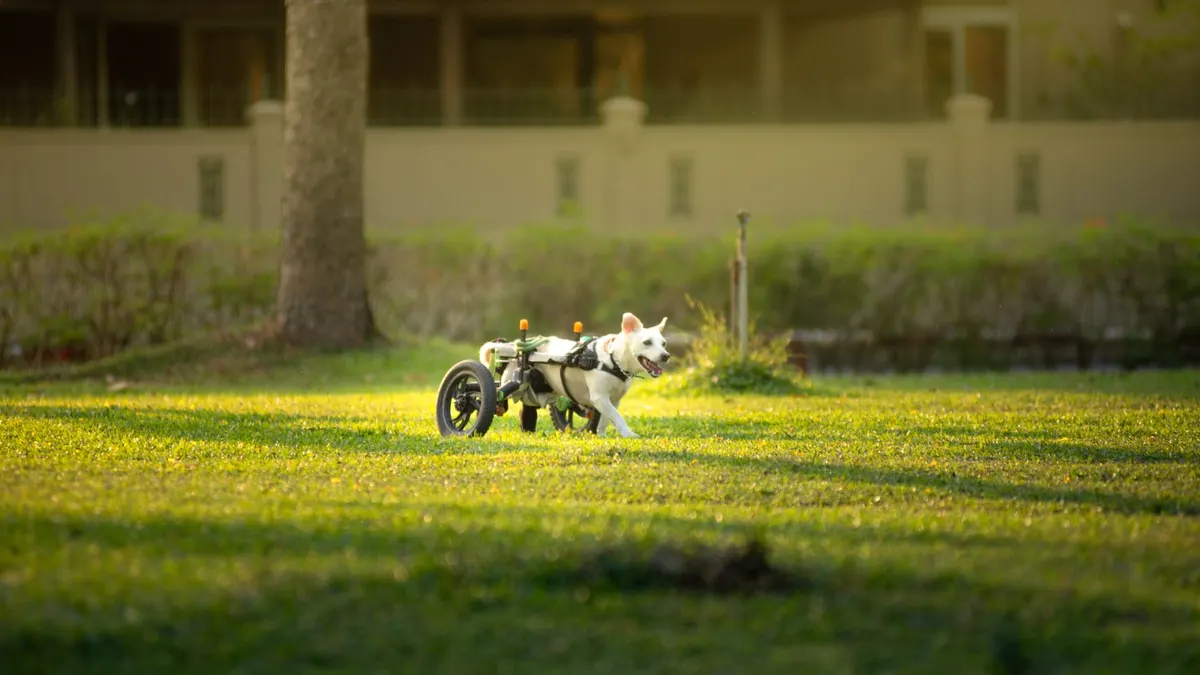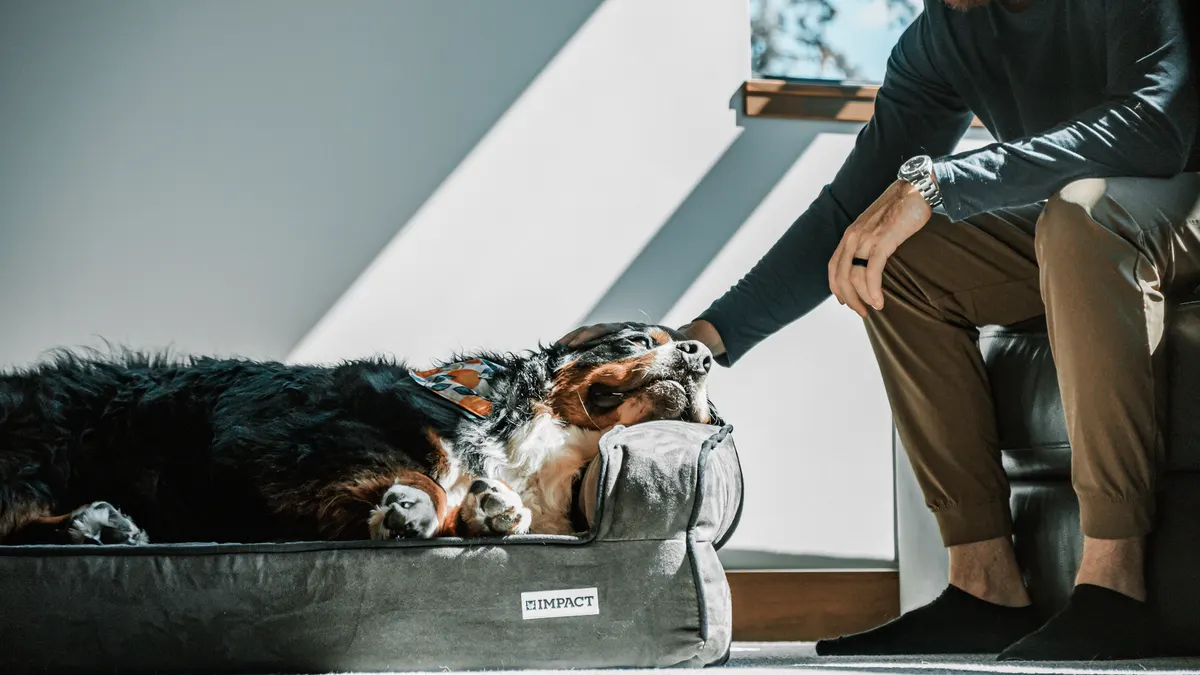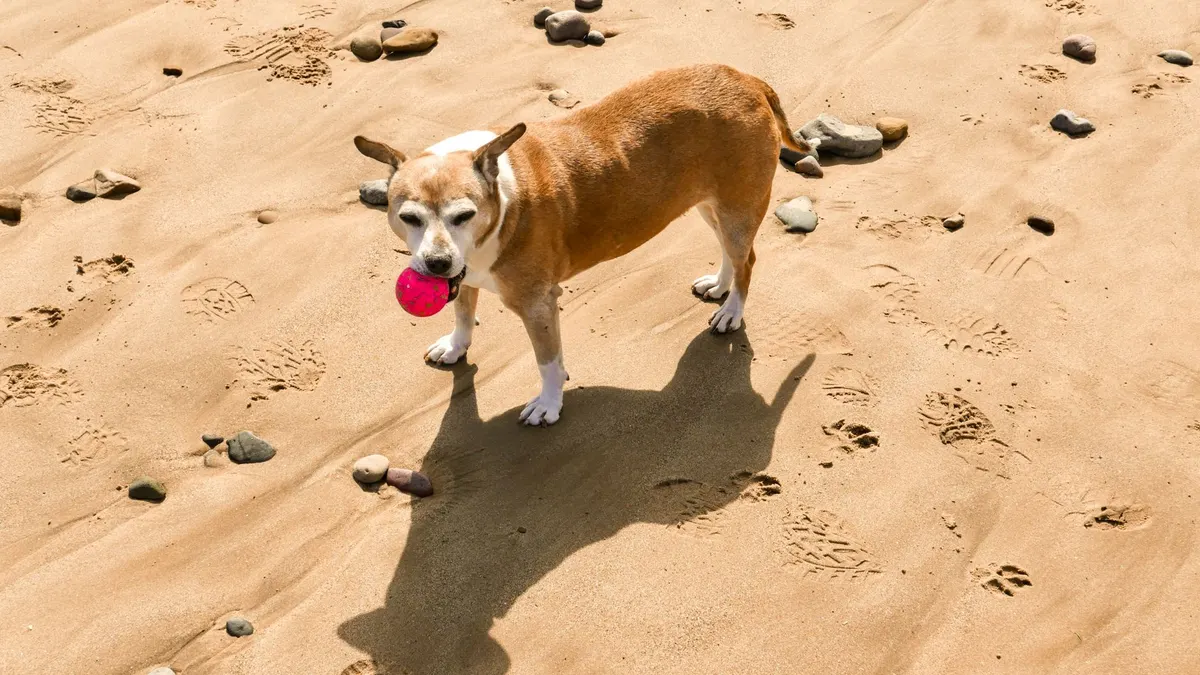
Weak back legs in an older dog can feel alarming because the change is so visible in movement. A dog that used to push up from the floor in one motion may now pause, wobble, sit down halfway, or need a moment to steady itself. Often the dog is not in immediate danger, but the change deserves attention — both at home and with a veterinarian.
This guide explains what weak back legs can mean, how to observe the pattern, what helps at home, and when to schedule a veterinary visit or seek prompt care.
Quick answer
Weak back legs in senior dogs are often linked to muscle loss, joint discomfort, arthritis, pain, neurological changes, or a combination of those factors. Slippery floors can make an underlying change look and feel much worse.
The most useful first step is to observe whether the change is gradual or sudden, one-sided or bilateral, and whether it improves after rest. Do not force stairs, jumping, or long exercise while you are assessing it.
Weakness, stiffness, or slipping?
These words are often used together, but they point to slightly different support needs.
| Pattern | What it may look like | First support step |
|---|---|---|
| Weakness | Wobbling, sagging hindquarters, sitting down during a walk, difficulty pushing upward | Shorten activity, support transitions, track the pattern |
| Stiffness | Slow first steps after rest, then improvement after gentle movement | Warmth, supportive rest, gentler activity |
| Slipping | Splayed paws, hesitation, skidding mainly on smooth floors | Secured runners and traction near key spots |
| Pain-related guarding | Favoring one side, reluctance to move, panting or pulling away | Avoid forced exercise and seek veterinary advice |
| Neurological change | Dragging paws, knuckling, poor balance, sudden one-sided weakness | Prompt veterinary assessment |
A dog can have more than one pattern at the same time. For example, mild weakness may become obvious only when the dog walks across a slippery kitchen floor.
What weak back legs can mean
In older dogs, rear-leg changes may be related to:
- arthritis or joint discomfort in the hips, knees, or spine
- reduced muscle mass from less activity or slower recovery
- neurological changes affecting coordination, balance, or paw placement
- pain when pushing off, turning, climbing, or moving uphill
- slippery surfaces that increase instability and hesitation
- weight gain adding pressure to joints and reducing confidence
- long nails or fur between the pads, which can reduce normal traction
These are possible reasons, not a diagnosis. A dog may walk fine at the start of a walk and then begin to lag, wobble, or struggle to push off from a stand. That pattern is often more useful to a veterinarian than one isolated moment of weakness.
A safe five-minute movement check
You can gather useful information without turning the home into an examination room. Choose a flat, non-slip surface and do not encourage the dog through pain.
- Rising after rest: Watch whether the dog pushes up smoothly, pauses, shifts weight forward, or tries several times.
- Standing still: Look for shaking, sagging hindquarters, feet placed unusually wide, or one paw tucked under.
- Walking away: Watch from behind for a limp, bunny-like movement, lowered hips, or one side working harder than the other.
- Turning: Notice whether the dog takes wider turns, stumbles, or seems less sure when changing direction.
- Paw placement: Check whether the tops of the back paws drag or knuckle under.
Film these movements in daylight for 10–20 seconds. A short video can show your veterinarian exactly what happens at home, especially if the dog seems steadier in the clinic.
How to observe the pattern
Before assuming the cause is age, take a few days to watch and write down what you see. Note:
- when the weakness shows up (morning, after rest, after exercise, late evening)
- whether it affects one leg, both back legs, or one side of the body
- whether it improves after a few steps or stays the same
- how long the dog can walk before tiring
- whether the dog's appetite, energy, sleep, or mood has changed
- whether the dog hesitates before standing, walking, or using stairs
- whether the back paws are scuffing, dragging, or knuckling over
- whether symptoms appear more on hardwood, tile, wet grass, or slopes
Also note recovery time. If a normal walk leaves the dog stiff for the next day, the routine may need adjustment even if the walk itself seemed enjoyable.
What you can do at home
Home changes do not replace a veterinary evaluation, but they can make daily movement easier while you wait for an appointment.
Improve traction on smooth floors
A dog with weak hindquarters slips more often on hardwood or tile. Add flat, secured runners on the dog's main routes — by the bed, food, water, and door. The mat should cover both the push-off spot and the landing spot. See best non-slip mats for senior dogs for practical options.
Loose bath mats and curling rugs can make things worse. If the rug moves when you press it firmly with your hand, it is not stable enough for a dog that is already unsteady.
Lower the effort for daily movement
- move food, water, and the bed to one level if the dog currently uses stairs
- use a ramp for the car and a low-entry bed for sleeping
- shorten walks to a length the dog can complete comfortably
- avoid asking the dog to jump onto furniture or into vehicles
- place a secure mat beside the resting spot so the first steps have grip
Add support for the right transition
A rear-lift harness can reduce strain during standing, walking, or climbing stairs. It is most useful for short, focused help rather than all-day wear. A collar is not a safe lifting point for a dog whose hindquarters are weak. See best harnesses for senior dogs for supportive options.
| Situation | Support that usually fits |
|---|---|
| Slips on the way to the door | Secured runner or non-slip path |
| Needs help rising from the floor | Rear-lift harness or mobility sling |
| Car entry has become risky | Dog ramp with good surface grip |
| Stairs are slow but still possible | Traction, light, supervision, and a slower pace |
| Stairs cause falling or panic | Vet advice plus a gate or one-level setup |
Keep up gentle movement
Rest helps after a hard day, but complete inactivity can speed muscle loss. Short, calm walks on flat ground — at the dog's pace — can help maintain strength and confidence. Two short outings may work better than one long walk. See how much walking is too much for a senior dog and how to help a senior dog walk better.
Avoid slippery indoor games, sudden turns, high jumps, and long steep routes while the weakness is new or worsening.
📋Daily Support Checklist for Weak Back Legs
0/8 completed- Add traction on the dog's main indoor routes
- Move food, water, and bed to one level if possible
- Use a ramp or low-entry bed to reduce jumping
- Keep walks short and at the dog's pace
- Use a rear-lift harness instead of lifting by the collar
- Track the weakness pattern for 3-5 days
- Record a short video of standing, walking, and turning
- Schedule a veterinary visit if the pattern persists or worsens
Common mistakes to avoid
- Waiting for the dog to collapse before seeking help. Gradual hesitation, repeated sitting on walks, or trouble rising should not be ignored.
- Forcing the dog through stairs. Confidence is part of mobility. If the dog is frightened, repeated attempts can make the route more stressful.
- Lifting by the collar or front legs. This does not support the hindquarters and can strain the neck, shoulders, or back.
- Treating mats as a cure. Traction helps environmental slipping; it does not treat pain, neurological change, or significant weakness.
- Switching suddenly to complete rest. Short, comfortable movement is usually preferable unless a veterinarian has advised restricted activity.
- Starting medications or supplements without advice. Some over-the-counter products are unsafe or interact with existing medication.
How to prepare for a veterinary visit
Bring the movement video and a short timeline. It helps to describe:
- when the change started and whether it was sudden
- which movements are hardest: rising, walking, turning, stairs, jumping, or settling
- whether symptoms are worse after rest, activity, or particular flooring
- current medications and supplements
- appetite, thirst, urination, bowel habits, and recent weight changes
- any vocalization, licking a joint, panting, or reduced interaction
A veterinarian may observe gait and examine the joints, spine, paws, muscles, and nervous system. Your notes help them focus the examination, but it is best not to decide the diagnosis in advance.
When weakness is more than age
Some signs point past normal aging and deserve a closer look:
- weakness that develops over hours or days, not months
- one leg or one side noticeably weaker than the other
- back paws dragging, scuffing, or knuckling over
- sudden reluctance to stand or walk at all
- pain that the dog shows by whining, panting, guarding, or pulling away
- weakness paired with appetite loss, weight loss, vomiting, or behavior change
- loss of bladder or bowel control along with movement changes
These signs do not tell you the diagnosis. They tell you that a veterinary visit is the right next step.
When to call your veterinarian
Monitor at home
- weakness only after unusually long activity, with quick improvement
- the dog still walks, eats, drinks, and engages normally
- no pain, dragging, falls, or behavioral changes
- the problem happens mainly on a known slippery surface
Schedule a veterinary visit
- weakness that persists or worsens over weeks
- the dog hesitates before standing or walking
- the dog tires quickly on routes that used to be easy
- stiffness lasts longer than a few minutes after rest
- you notice muscle thinning, uneven nails, or repeated paw scuffing
Seek prompt veterinary care
- sudden inability to stand or walk
- dragging or knuckling the back paws
- sudden weakness, especially on one side
- obvious pain, vocalization, collapse, or severe imbalance
- weakness paired with appetite loss, vomiting, distress, or trouble urinating
Related guides
- Why Is My Senior Dog Slipping on Hardwood Floors?
- Best Harnesses for Senior Dogs
- Best Non-Slip Mats for Senior Dogs
- Senior Dog Mobility Checklist: 15 Things to Check at Home
- How to Help a Senior Dog Walk Better
- How to Make Stairs Safer for an Older Dog
FAQ
What is the first thing I should look at when my senior dog's back legs seem weak?
Check whether the change is gradual or sudden, affects one side or both sides, and whether it changes with rest or activity. A clear pattern gives you useful information for a veterinarian.
How do I know if I need urgent help?
Sudden collapse, severe pain, repeated falling, dragging the back paws, inability to urinate, or an inability to stand comfortably should prompt prompt veterinary attention. Worsening weakness or difficulty walking should also be checked sooner rather than later.
What daily adjustments help a senior dog with weak back legs?
Add supportive flooring, lower the effort for jumping and stairs, shorten walks to a comfortable length, and use a rear-lift harness on routes that need extra stability. Small, consistent changes tend to work better than one big correction.
Can a harness help a dog with weak back legs?
A supportive rear-lift harness can reduce strain when standing, walking, or climbing stairs. It is most useful when fitted properly and used for short, focused help rather than all-day wear. Avoid lifting the dog by the collar.
Is weakness in the back legs always arthritis?
No. Arthritis is one possible cause, but weakness can also come from muscle loss, neurological changes, injury, pain, or other conditions. A veterinarian can help sort out the most likely cause.
Should I keep walking my dog if the back legs seem weak?
Usually yes, but at a shorter length and gentler pace. Complete rest can speed muscle loss, while forced exercise can worsen strain. Use flat, non-slip routes and talk with a veterinarian if the dog struggles, seems painful, tires abruptly, or cannot recover comfortably.