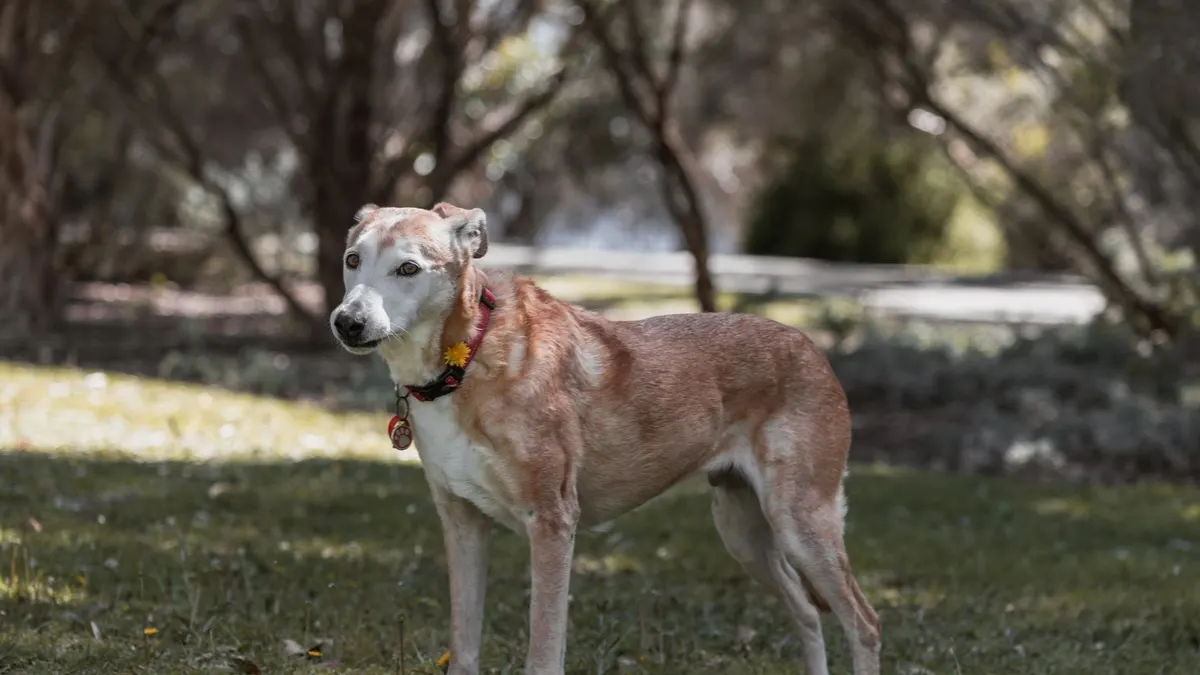
If your senior dog seems to walk less smoothly than before, the first goal is not to “fix the gait.” It is to reduce strain, improve comfort, and make movement easier in the dog’s everyday life. Many older dogs do better when the route and routine are adjusted around them.
Quick answer
A senior dog often walks better when the route is safer, the pace is gentler, and the walk does not force a lot of strain at once. A shorter, calmer walk on a stable surface can be more helpful than a longer route that leaves the dog sore, uncertain, or overly tired.
The best first step is usually to reduce daily effort, not to push through discomfort. If the dog moves with more confidence after a slower, easier route, that is usually the right direction.
Start with the environment
Older dogs often struggle when the walking route is awkward or the surface is slick. Check the path from the door to the yard, along the sidewalk, or through the home if the dog moves between spaces on a daily basis.
Look for:
- slippery flooring or wet transitions
- uneven terrain that changes suddenly
- narrow spaces that force tight turns
- too much excitement before the walk begins
A dog that feels safe and steady is more likely to move with confidence.
Shorter, slower walks usually work better
When a dog is aging, the goal is not to win a distance challenge. It is to keep movement comfortable and sustainable. A calm route with gentle pacing often helps more than a long walk that pushes through fatigue or discomfort.
Try to:
- start with shorter sessions
- slow the pace and avoid rushing
- let the dog stop and sniff or rest as needed
- choose a route that is easy to navigate
- end on a positive note before the dog feels worn out
Watch the dog for early signs of strain
If your dog slows down, limps, hesitates before stepping, or seems uncomfortable after a brief activity, take note of what happened. Some dogs worsen with prolonged movement, while others are more uncomfortable after a fast start or a fast turn.
This kind of pattern matters and can help guide the next routine. If you want more practical safety ideas, see why-is-my-senior-dog-slipping-on-hardwood-floors and how-to-help-older-dog-climb-stairs.
Support tools and home changes can help a lot
Some small changes make a big difference:
- non-slip mats in key rooms
- easier access to the door or yard
- a predictable route rather than sudden changes
- fewer repeated stair climbs or difficult surfaces
- a calm routine before and after the walk
These adjustments reduce effort without turning every walk into a challenge.
When a vet check is worth it
If your dog’s walking is getting worse over time or suddenly feels different, it is worth talking with a veterinarian. Difficulty walking can reflect simple strain, joint discomfort, or a broader health issue. A short video of the movement pattern can be useful when describing the concern.
Bottom line
Helping a senior dog walk better usually means lowering daily strain and supporting confidence, not simply trying to “push through” discomfort. Safer footing, slower routines, and realistic expectations often create the best results.
Related guides
- Why Is My Senior Dog Slipping on Hardwood Floors?
- How to Help an Older Dog Climb Stairs Safely
- Senior Dog Mobility Exercise
- Senior Dog Home Safety Checklist
FAQ
How can I tell if my dog is tired or uncomfortable?
A dog that is comfortable often keeps a steadier pace and reacts more normally to the route. If the dog slows down, hesitates, or changes gait after a brief walk, discomfort is worth paying attention to.
Should I shorten the walk or stop completely?
Shorter, gentler walks are often the better choice when the dog is slowing down or seeming less steady. The goal is not to maximize distance but to maintain comfortable movement.
Are safer surfaces really that important?
Yes. A dog that is slipping or hesitating because of floor quality is likely to feel more strained before the walk even begins. Route quality matters a lot.
When should I get a vet opinion?
If the walking pattern is clearly changing, seems painful, or affects daily movement, a veterinary review is a good idea.