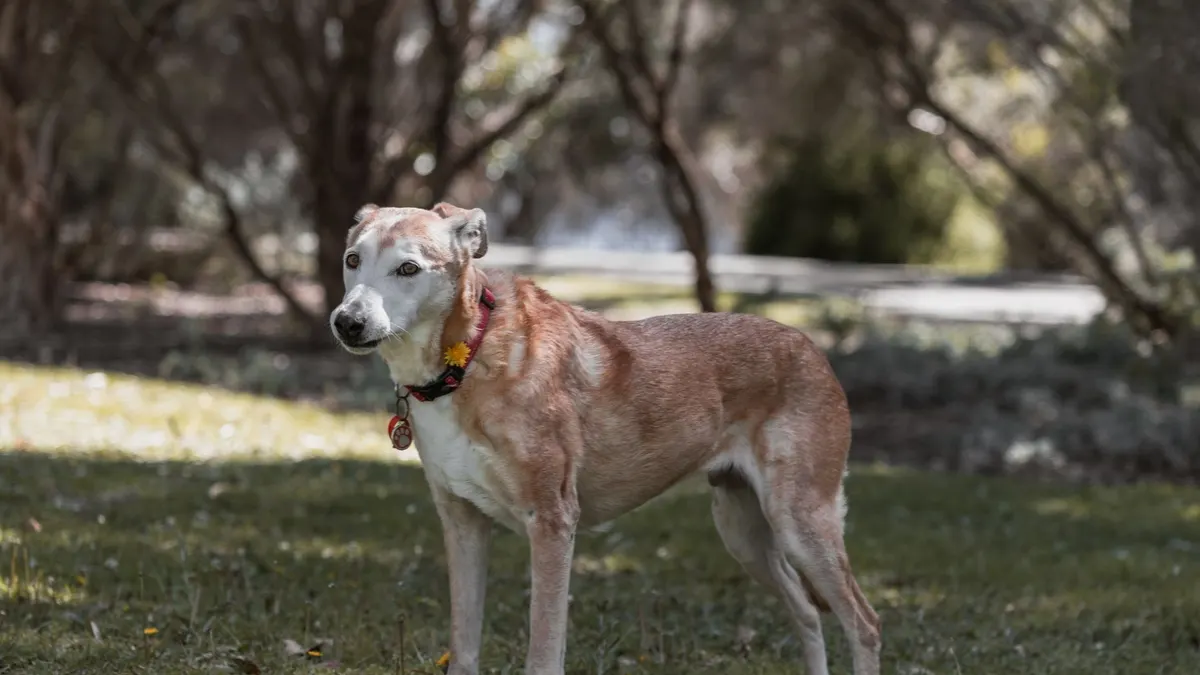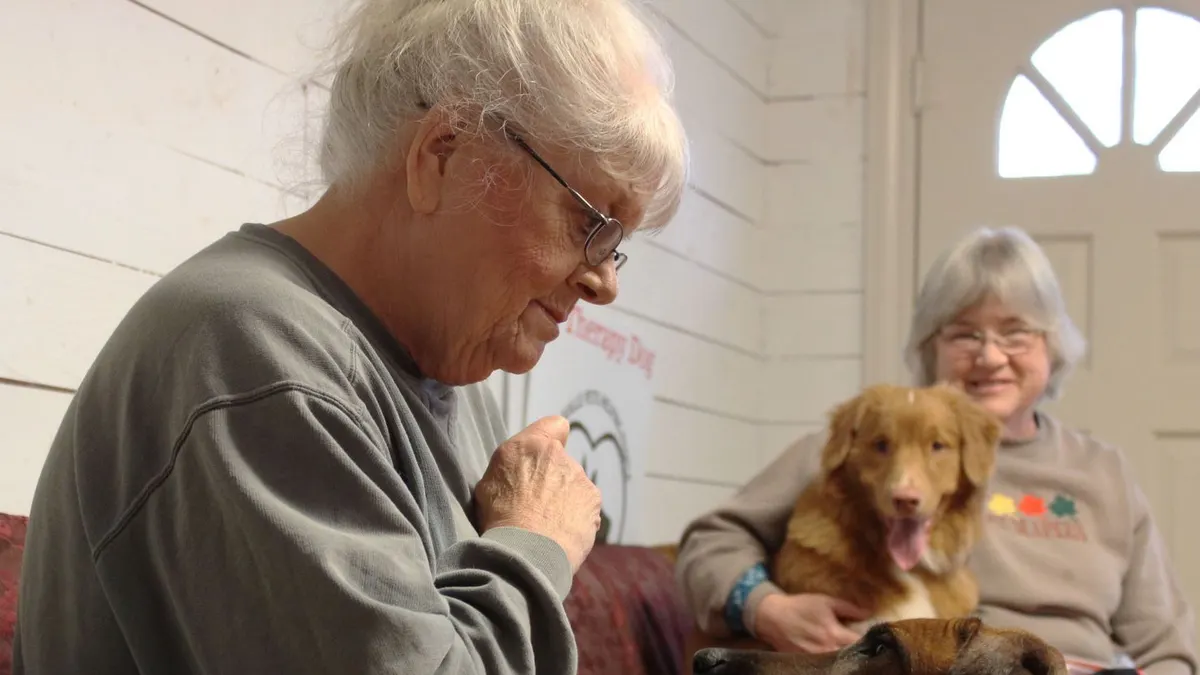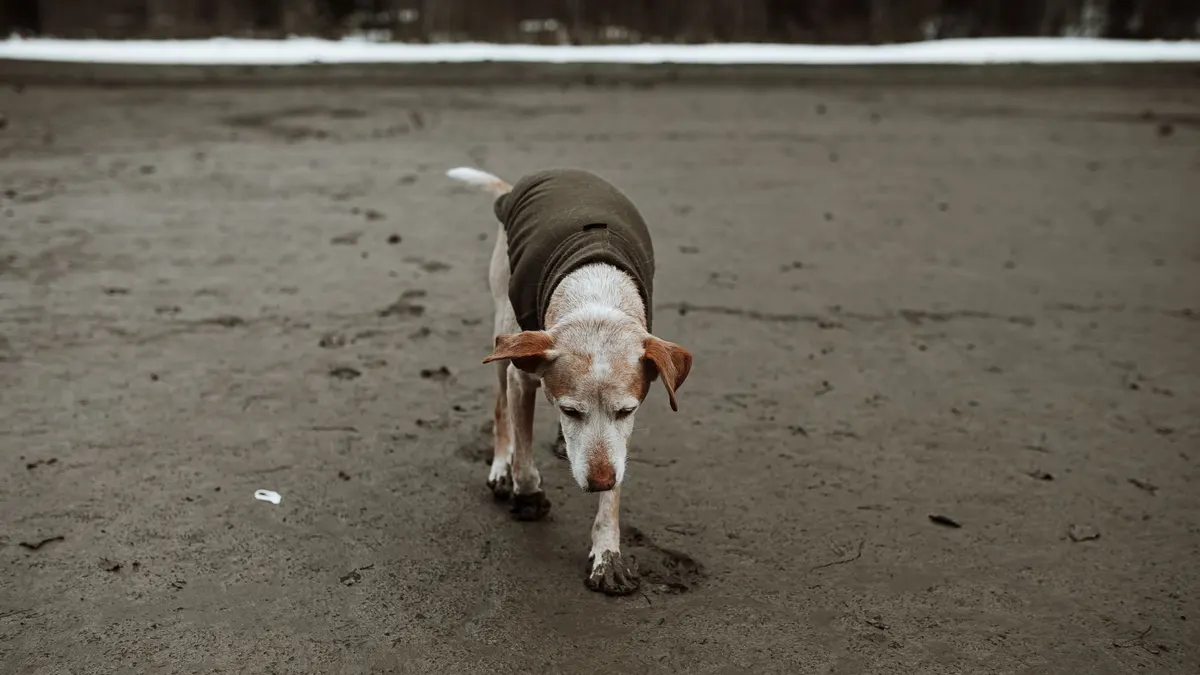
The question "how much walking is too much?" comes up for almost every senior dog owner, usually right after a walk the dog seemed to enjoy but paid for the next day. Enthusiasm is a terrible measuring tool. The last lab mix I walked with wagged the whole lake loop, then could not rise from her bed the next morning. Over-walking is not kinder than under-walking. Both erode quality of life — one through boredom and stiffness, the other through inflammation, injury, and lost confidence.
The ceiling, in brief
Too much walking for a senior dog is anything it cannot fully recover from within 24 hours. For most, that means more than 30 to 45 continuous minutes is too much; a safer shape is several 10 to 20 minute outings. Limping, prolonged panting, collapse-like fatigue, or a stiff next morning all mark the walk as too long regardless of the clock. The real ceiling is individual — set it by recovery, not distance.
Why "too much" depends on the dog
There is no universal senior dose because the factors that set the ceiling vary enormously. Body size and breed matter: large and giant breeds carry more weight through fewer joints and age earlier, while many small dogs remain capable of surprisingly long, slow walks. Conformation matters too; short-legged and flat-faced breeds reach fatigue on different timelines.
Existing disease is the dominant factor. Osteoarthritis lowers tolerance for continuous impact; heart and airway disease lower the oxygen ceiling; neurological and balance problems make any stumble costly; and dogs recovering from surgery operate within a prescribed envelope. Fitness, weight, and the temperature and terrain of the walk then modify everything else.
The warning signs during the walk
Watch the dog, not the route timer.
- lagging behind, stopping repeatedly, or sitting and refusing to continue
- heavy panting with a wide-open mouth, noisy breathing, or a blue-tinged tongue
- a shortened stride, limping, bunny-hopping, or holding a paw up
- dragging or scuffing the hind toes, wobbling, or crossing the hind legs
- disorientation, glazed expression, or collapse
- trying to lie down, refusing to get back up, or resisting the direction of travel
Many owners misread stopping to sniff as a cute habit when it is actually a dog buying recovery time. Repeated plant-and-sniff behavior mid-route is a signal.
The signs that show up hours later
The most reliable evidence of an excessive walk comes after the fact. Watch the rest of the day and the following morning for stiffness that is worse than the usual baseline, difficulty rising from a sit or bed, a gait that improves only after long warming up, reluctance at the next walk invitation, swelling or warmth around a joint, sore paws, torn nails, or appetite loss. In dogs with heart or airway disease, a persistent cough or restless panting overnight after exertion is an important warning.
The ceilings set by disease
How long each individual walk should be for a given size, age, and breed is the frequency question, and it is answered outing-by-outing on the walk-schedule page. A diagnosis, on the other hand, can clamp a hard lid on what any body type tolerates. These are starting points for planning, not prescriptions:
- Arthritic seniors: 5 to 15 minutes of slow, flat walking, several times a day, with pain medication timing considered.
- Heart or airway disease: very short, slow outings as agreed with the vet; heat and humidity may force toilet-only trips.
- Post-surgical or neurological dogs: follow the written rehabilitation plan exactly; duration and leash length are usually specified.
Terrain and weather can halve the safe dose
The same dog tolerates twice as long on cool grass in mild weather as on hot pavement or icy, slippery ground. Concrete and asphalt add impact and heat; hills load the hind legs; sand and deep snow demand far more effort per step; stairs should never count as exercise. In summer, humidity reduces how well panting sheds heat, so a walk that is fine at 18 degrees C can be dangerous at 28 degrees C even at identical duration. Treat weather and surface as multipliers on the base dose.
What to do when you overdo it
If a walk clearly went too far, let the dog rest in a warm, comfortable spot, offer water, and skip or shorten the next outing. Do not massage a joint that is hot or swollen. Gentle indoor toilet trips continue, but the regular program pauses until the dog moves normally again. When normal movement returns, restart at roughly half the previous duration and rebuild slowly. A single over-long walk can cause days of inflammation in an arthritic dog, so the correction is patience rather than pushing through.
Balancing under-exercise too
The opposite mistake deserves a mention because it is easy to make after one bad experience. Dogs who are walked too little lose muscle, gain weight, sleep poorly, develop more stiffness, and can become anxious or bored. Under-walked seniors often have worse mobility than their disease alone would cause. Short, frequent, positive walks remain medicine even when the total looks small.
Agree the limits with your vet
Agree on exercise limits after any new diagnosis and at each senior check-up. Seek specific advice for a heart murmur, cough with exercise, fainting or collapse, significant limping, recent surgery, worsening hind-end weakness, or a sudden loss of stamina. A rehab assessment with a graded plan is often the best solution when the safe dose is hard to determine at home.
Limits and overdoing it questions
My dog seems fine during the walk but is stiff the next day. What does that mean?
Stiffness the next morning is the clearest sign that the walk was too long. The dog's joints and muscles were overloaded during the walk, but the pain and inflammation did not peak until hours later. Shorten the next walk by about a third, keep the terrain level, and watch the recovery closely. If stiffness persists for more than a few days, consult your veterinarian.
Can I use a fitness tracker to measure my dog's activity?
Fitness trackers can be useful for tracking total daily movement, but they do not tell you whether the movement was safe or appropriate. A dog who walks 10,000 steps in a day but is stiff and limping the next morning has overdone it. Use the tracker as a general guide, but always judge by the dog's recovery, not the step count.
Can my senior dog's walking limit improve over time?
Often, yes. Rebuilding hind-limb muscle and returning to a healthy weight raise the amount of walking a senior tolerates, and the ceiling lifts as fitness does. The gains come from the same dose-then-check loop: add a few minutes, watch the next morning, and build only on top of a clean recovery. Conditions like heart disease or advanced arthritis set harder limits that training will not move, which is why the veterinary conversation matters.
Recovery is the referee
There is no single number that defines too much walking for a senior dog, but there is a reliable test: the walk is too long if the dog does not fully recover from it within 24 hours. Build the routine from frequent short outings on gentle ground, treat heat and hills as dose multipliers, and let recovery rather than enthusiasm set the schedule. When the question shifts from daily limits to whether the occasional big outing is still on the table, the long-walk verdict takes that case apart. Walked at a dose they can recover from, senior dogs keep walking — which is the outcome everyone actually wants.