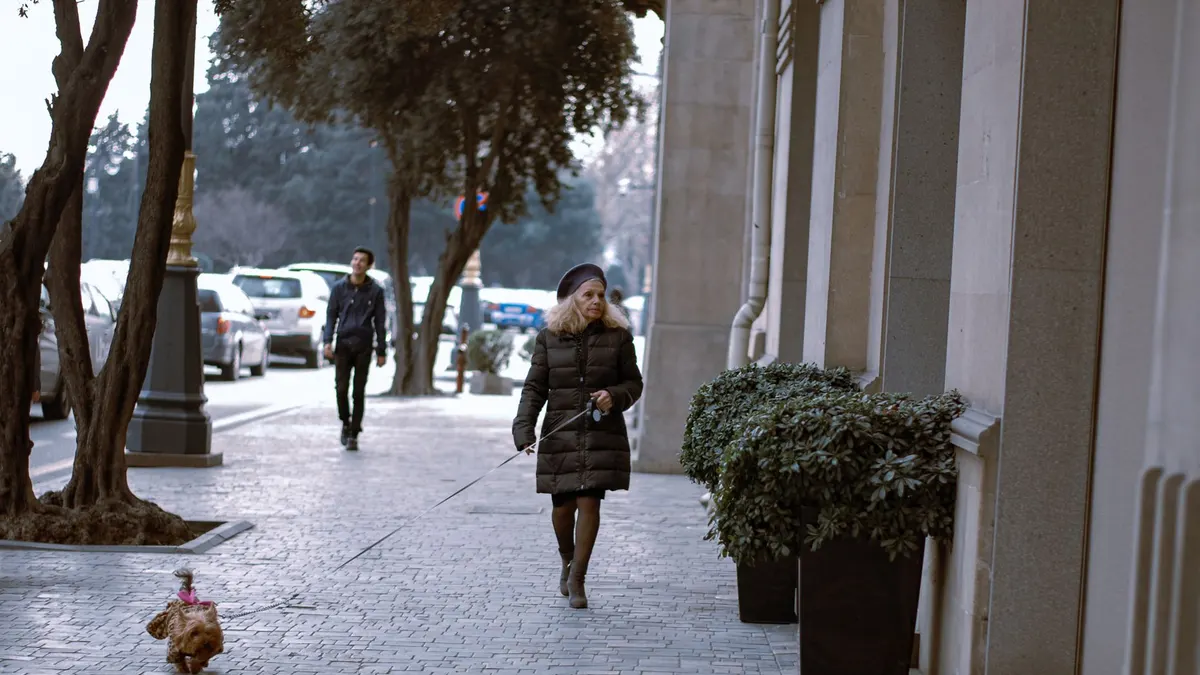
For six years, Saturday morning meant the four-mile loop with my border collie — until the day she could not get off the bed afterwards. One of the hardest habits for owners to change is the long daily walk. For years it was the backbone of your dog's routine, so when a 10-year-old starts lagging, limping the next morning, or refusing the second half of the route, it feels like giving up on something important. The goal never changes — regular movement, sniffing, and time outside — but the format has to evolve. A senior dog on a young dog's walking schedule is one of the most common causes of the stiffness owners later blame entirely on age.
The direct answer
Most senior dogs should not keep the same long, uninterrupted walks they had as adults. Replace one long outing with two or three shorter, slower walks of 10 to 20 minutes, timed around the dog's best hours and the gentlest terrain. Stop before the dog is tired, not at a fixed distance. Heart disease, collapse episodes, or significant arthritis mean the plan gets written with your veterinarian.
Why long walks stop being helpful
The walking itself is not the problem — duration and intensity on aging joints are. Osteoarthritis wears the cartilage in elbows, hips, stifles, and shoulders, so a single hour of continuous impact on pavement produces inflammation that peaks hours later. That is why many dogs look fine on the walk itself and cannot rise comfortably the next morning.
Other systems also lower the ceiling. Heart and lung efficiency decline, so an older dog reaches aerobic fatigue sooner. Muscle mass decreases, which reduces joint support and endurance together. Sensory changes can make a familiar long route overstimulating, and overweight seniors carry extra load every step. A walk that used to build fitness now creates recovery debt.
Willingness is not the same as tolerance
Day-to-day frequency and length — how many outings and how long each, adjusted for age, size, and breed — are settled on the daily-frequency page. For the long-walk question, the useful rule is narrower: breed baseline matters, and working and sporting breeds in particular stay willing well beyond what their joints tolerate. Body language beats the clock — the dog should finish still wanting to continue and should walk out normally the next morning.
The one signal that settles it
The full catalog of during-walk and next-day warning signs belongs to the warning-sign catalog. For deciding whether a long outing is still on the table, one rule is enough: any limping or morning stiffness beyond the usual baseline means the last walk was too long. Shorten the next outings for several days and rebuild slowly.
How to restructure the daily routine
Splitting distance is the single most effective change. A 45-minute walk becomes a 15-minute morning walk, a 10-minute midday toilet and sniff trip, and a 15-minute evening walk. Total enrichment and exercise stay similar while continuous joint loading drops.
Other practical adjustments:
- walk during the warmest, driest part of the day in winter and the cooler morning or evening in summer
- choose grass, packed earth, or trails over concrete and asphalt
- avoid steep hills and long stair sections
- keep a steady slow pace and let the dog sniff — sniffing is low-impact mental work
- use a well-fitted harness instead of a neck collar, both for control and for gentle assistance
- carry a phone and choose routes with resting spots for longer excursions
When a senior still genuinely enjoys longer outings
Some older dogs remain fit, lean, and enthusiastic, especially small and medium dogs who have walked lifelong. Longer slow walks can remain appropriate if the dog recovers well: no limping during or after, normal movement the next day, and no underlying disease that limits exertion. Periodic check-ups, reasonable terrain, and your willingness to turn back early preserve this option. Think of it as a privilege earned by good recovery, not a fixed entitlement of the calendar.
What to do instead of distance
When walks shorten, fill the gap with things that tire a dog without pounding the joints. Sniffing walks in a new location, gentle indoor exercises such as cookie stretches and sit-to-stands (the nine-move indoor set has the full list), short training games, puzzle feeders, and social time with calm dogs all maintain the rhythm of the day. Many seniors also benefit from canine rehabilitation programs, including underwater treadmill sessions, where they walk with buoyancy and warmth supporting the joints.
Run these past your vet before redesigning
Check with your vet before redesigning the routine if your dog has a heart murmur, coughs with exertion, faints or collapses, has had recent surgery, shows significant weakness in the hind legs, or is in clearly worsening pain. Sudden refusal to walk, crying out, or a dramatic drop in stamina also deserves an appointment rather than simply shorter walks.
Long-walk questions
My dog gets very excited for the long walk. Is it cruel to shorten it?
Excitement before a walk is anticipation, not evidence that the body tolerates the distance. Many senior dogs pull with the same enthusiasm for the first ten minutes regardless of how stiff they will be that night. You preserve what they love — smells, outside time, and time with you — by splitting the walk and varying the routes. A short walk to a new sniffing spot often satisfies an older dog more than a long trudge along a familiar pavement.
Can an off-leash hike replace the structured walk?
Controlled off-leash time in safe, enclosed terrain can be gentler because the dog sets the pace and stops freely, but it also tempts seniors into sudden sprinting, jumping, and chasing, which are the movements most likely to flare joints. If you use it, choose flat, familiar ground, keep the session short, avoid games that trigger high-speed turns, and be honest about whether your dog self-regulates or simply overdoes it.
Do joint supplements mean long walks are fine again?
Supplements and pain medication improve comfort but do not restore worn cartilage or fully remove the inflammation from repeated impact. A dog on effective treatment may walk more comfortably, but medication can also mask the warning signs of overexertion, so judge distance by next-day recovery rather than by how enthusiastic the dog seems during the walk itself.
My verdict
Senior dogs do not need less of the world; they need it delivered in gentler portions. Two or three short, slow, sniff-rich walks on soft ground beat one long pavement march for nearly every older dog, and the best measure of a good walk is how the dog rises the morning after. Adjust early, keep the routine joyful, and a senior dog can keep exploring comfortably for years past the point where the old long walk would have stopped them.