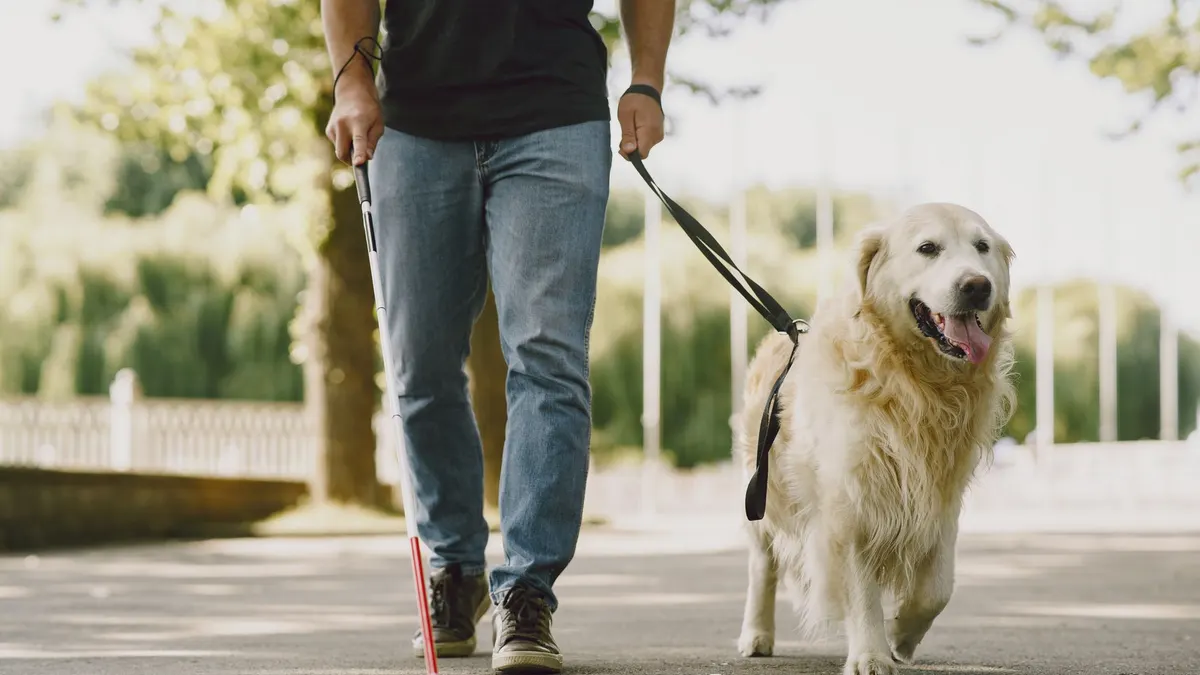
A support harness can make a transition easier for some dogs, but it is not automatically right for every dog or every movement problem. Choose it for a specific task and make sure the dog can still breathe, balance, and move naturally.
Quick answer
Use a walking-support harness when the goal is steadier guidance on ordinary walks. Use a lift-assistance harness or sling only when the design is made to bear weight and the caregiver has learned how to use it. A rear-support design may help a dog who needs brief assistance, but sudden or worsening weakness should be assessed by a veterinarian before relying on equipment.
Match the harness to the task
Walking support
A well-fitted walking harness can give a caregiver more control without putting pressure on the neck. It may help with direction, short walks, or a dog who is less steady but can still bear weight independently. It should not be used to drag a dog forward or force a pace.
Lift assistance
A lifting handle or sling is intended for brief help with standing, car entry, a step, or another transition. Read the manufacturer’s instructions carefully. Never assume that a leash attachment, ordinary chest harness, or collar is designed for lifting. Keep the dog’s body supported and avoid twisting the spine or pulling one limb.
Rear or full-body support
These designs differ in how they distribute weight and where they contact the dog. A rear-support model may not be suitable if the dog cannot control the front end, while a full-body model may be unnecessary for a dog who only needs walking guidance. The product description should state its intended use, weight rating, and measurements.
Fit is the foundation
Measure the dog according to the manufacturer’s instructions rather than choosing by breed or weight alone. Check the fit while the dog is standing, turning, and walking. The harness should be snug enough to prevent slipping but loose enough to allow normal breathing and shoulder movement.
Look for:
- adjustable chest, girth, or rear straps
- padding at contact points
- enough clearance behind the front and rear legs
- a handle that the caregiver can hold securely
- washable material and clear care instructions
- a return policy in case the shape does not suit the dog
After each early session, check for redness, hair loss, dampness, or pressure marks. A harness that rubs is not a safe long-term solution.
Introduce it gradually
- Let your dog sniff the harness while it is on the floor.
- Reward calm contact before fastening anything.
- Fasten it indoors for a few seconds and check breathing and posture.
- Practice a few steps on a stable, non-slip surface.
- Increase time slowly and stop before the dog becomes tired or distressed.
Do not first test a new harness on stairs, near traffic, or during a rushed car transfer. The Senior Dog Mobility Products guide covers how to compare harnesses with ramps, mats, and other support tools.
Use support without masking a problem
The harness should assist a movement the dog can partly perform, not conceal a sudden loss of function. Watch for dragging toes, knuckling, collapse, repeated falls, severe pain, rapid breathing, or an inability to bear weight. Stop the session and seek veterinary guidance if these signs appear.
If the dog needs regular lifting, ask a veterinarian or rehabilitation professional to demonstrate the safest technique. A short video of the movement pattern and notes about when support is needed can make that discussion more useful.
When to ask a veterinarian
Contact a veterinarian promptly for sudden weakness, collapse, severe pain, inability to stand, or a rapid change in walking. Arrange an evaluation for persistent instability, repeated stumbling, new reluctance to move, or a dog who needs increasing physical support. Equipment can improve access, but it cannot identify the cause of a mobility change.
Bottom line
The best support harness is matched to the task, fitted to the individual dog, and introduced slowly on a stable surface. Use walking harnesses for guidance and purpose-built lifting aids for brief assistance, and involve a professional when weakness is new, worsening, or difficult to manage safely.