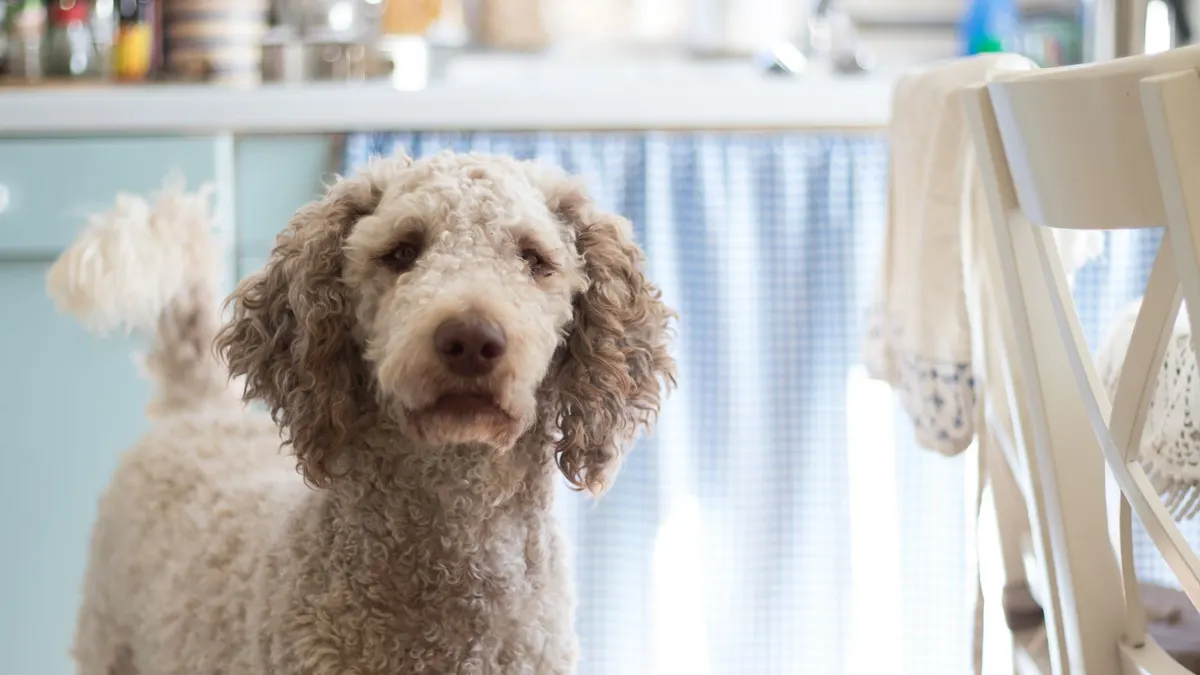
The kitchen is one of the most common places where a senior dog runs into daily friction. It is full of movement, noise, hard surfaces, and sudden changes in footing. For an older dog, even a small bit of clutter or a slippery patch can make feeding time harder than it needs to be.
Quick answer
The safest kitchen setup for a senior dog is one that reduces slips, keeps the feeding area predictable, and makes it easy to stand, eat, and leave without strain. A calmer layout matters as much as the actual bowl choice.
Start with the feeding area
Create a dedicated space where your dog can eat and drink without being rushed by foot traffic or sudden movement. If possible, keep the dog’s water and food in a low-traffic zone so the dog does not have to squeeze past people, chairs, or doorways just to reach the bowl.
A good senior dog feeding area usually has:
- stable, non-slip bowls
- enough room to stand without crowding
- a clear path in and out
- good lighting so the dog can see the floor
- no mats or rugs that can curl or slide
See best-non-slip-dog-bowls-for-senior-dogs and senior-dog-home-safety-checklist for practical feeding and home setup ideas.
Reduce trip and slip risks
Kitchens often have smooth floors, small puddles, and shiny surfaces. That can be a problem for older dogs who are already more sensitive to slipping or uneven footing.
Helpful adjustments include:
- cleaning spills immediately
- keeping cords and cleaning tools out of the walking path
- using non-slip rugs only if they stay flat and secure
- avoiding sudden door swings or crowded walkways near the feeding area
A dog does not need a perfect setup to feel more comfortable. Even a few simple changes can make the room feel much less stressful.
Keep the room calm, not chaotic
Senior dogs often do better when the environment feels predictable. If the kitchen is busy during meal times, the dog may hesitate, slow down, or seem less willing to approach the food. That is not necessarily stubbornness. It can simply be the dog trying to avoid discomfort or chaotic movement.
Try to time feeding when the room is quieter. If the dog is eating in the same spot each day, it becomes easier to track routines and notice when something changes.
Watch for signs the kitchen layout is causing stress
If your dog hesitates before eating, walks around the bowl, slips on the floor, or avoids the area after a while, that is an important signal. It may mean the dog is uncomfortable with the surface, the route, or the pacing of the room.
Also pay attention to whether your dog seems less steady or more cautious after eating. For some older dogs, even the act of lowering the head or turning around can be harder when the floor or bowl setup is not ideal.
When a medical issue may be part of the problem
A kitchen setup can make daily living easier, but it cannot solve pain, weakness, balance changes, or an underlying health issue. If your dog is suddenly more hesitant, more wobbly, or less interested in food, a veterinary conversation is the right next step.
A dog that is slipping more often or struggling to move through familiar spaces may benefit from a broader review of mobility and home safety. That can include flooring improvements, better pathways, and a professional look at whether pain or joint discomfort is involved.
Bottom line
A safer kitchen for a senior dog is not about making the room perfect. It is about reducing everyday stressors: slippery feet, tight routes, crowded spaces, and awkward feeding setups. Small, repeatable improvements can make a big difference in comfort and confidence.
Related guides
- Best Non-Slip Dog Bowls for Senior Dogs
- Senior Dog Home Safety Checklist
- How to Make Hardwood Floors Safer for Dogs
- Senior Dog Mealtime Routine
FAQ
What matters most in a senior dog kitchen setup?
A stable feeding area, clear paths, non-slip floor surfaces, and fewer distractions matter most.
Should I use mats under food bowls?
Sometimes, but only if the mat stays flat and does not curl or slide. A mat that moves can create a new hazard.
Is a dog avoiding the kitchen a sign of a health issue?
It can be. If the dog is hesitant, slipping, or less interested in eating, a veterinary evaluation can help rule out pain or weakness.
Do I need to change the entire kitchen?
No. Small, targeted changes are often enough. A calmer, easier feeding zone is usually more effective than a large renovation.