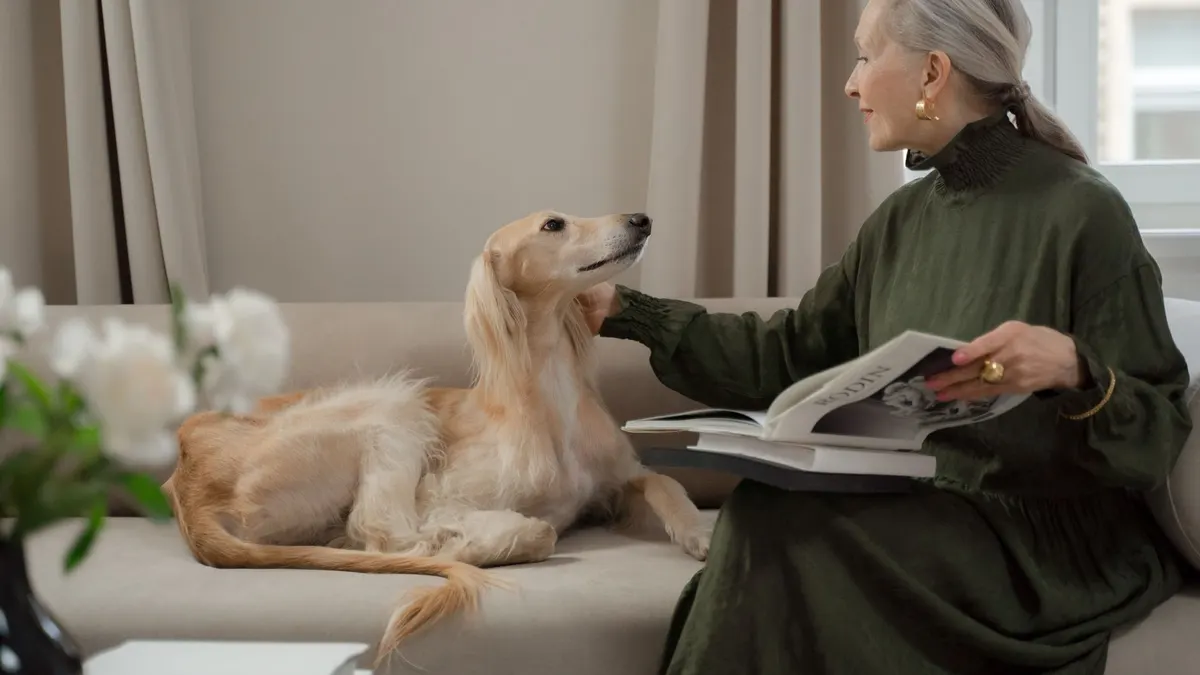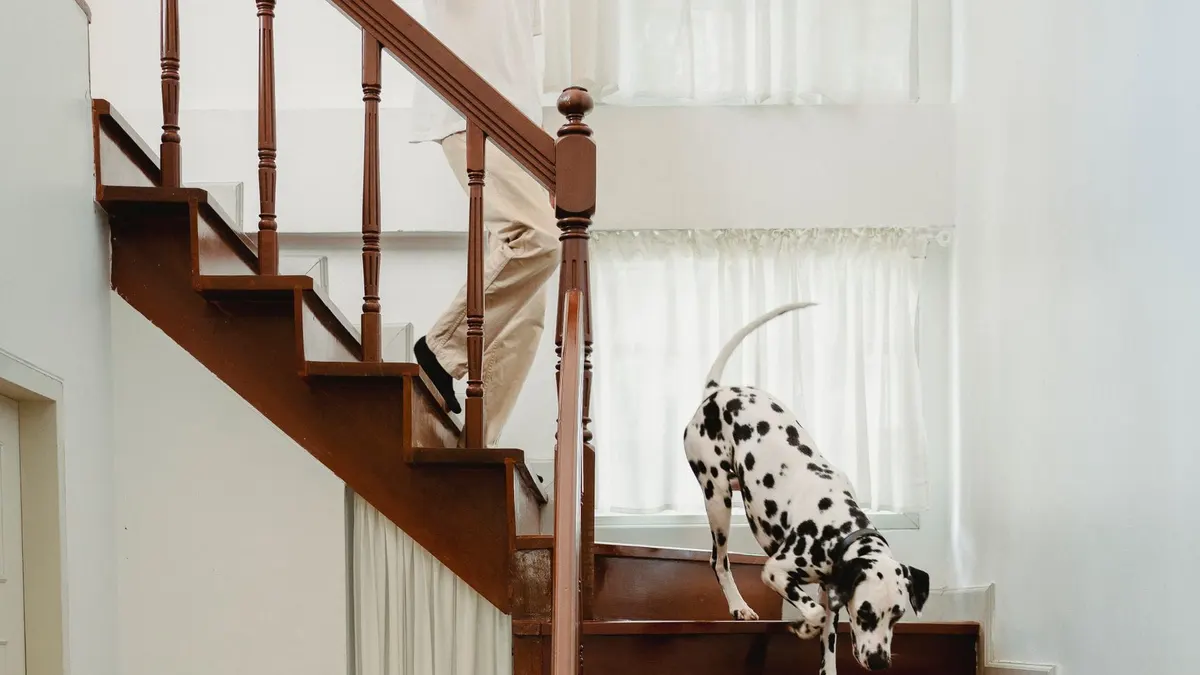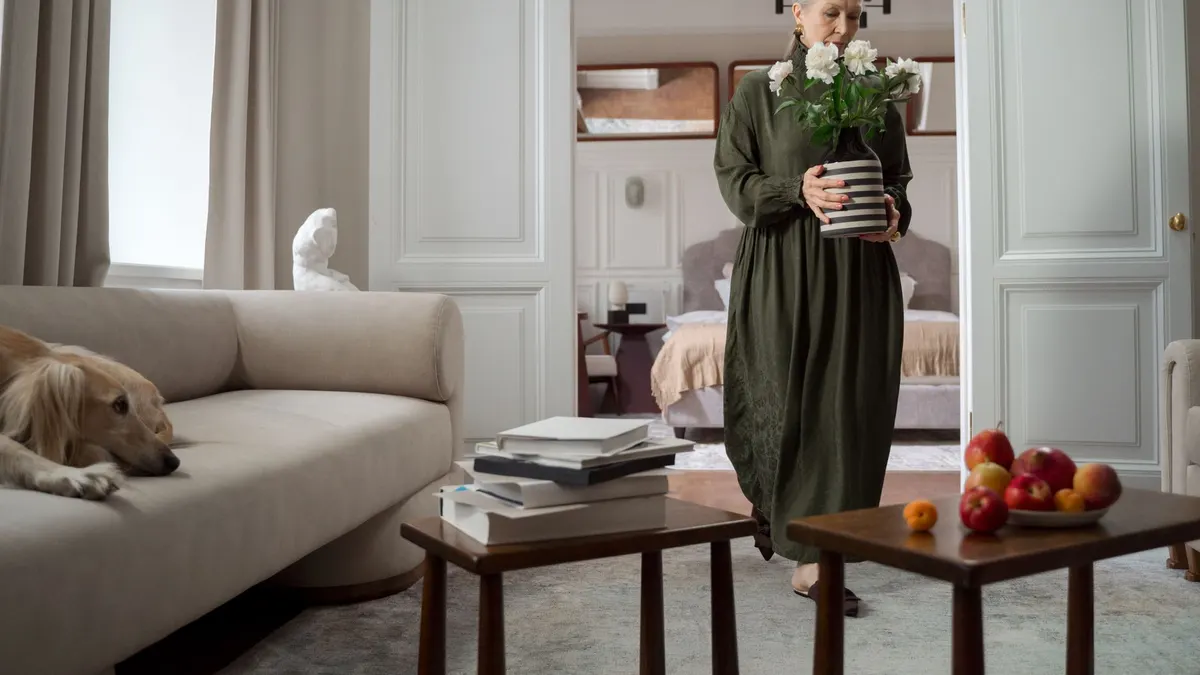
The bedroom should offer rest without creating a difficult obstacle course. A senior dog may need to get up for water, a bathroom break, or reassurance at night, so the route from the bed to the door matters as much as the bed itself.
Quick answer
Place a stable, low-entry bed on a dry surface; keep a clear path to the door and water; add gentle lighting; and remove jumps, loose rugs, cords, and clutter. Watch how your dog enters, turns, settles, rises, and leaves. New difficulty, pain, repeated falls, or marked nighttime confusion deserves veterinary advice.
Choose the resting spot first
Put the bed where your dog already wants to rest, but away from drafts, direct heat, loud appliances, and the main walking route. The dog should be able to see or hear the household without being repeatedly stepped around. If the bedroom is upstairs and stairs have become difficult, compare whether a safe downstairs setup would reduce daily strain. The Senior Dog Home Safety hub offers a room-by-room framework.
Select a bed that supports movement
The entry should be low enough to step over without a jump, and the sleeping surface should not collapse so deeply that standing becomes difficult. A non-slip base helps prevent the bed from sliding as the dog turns or rises. Measure the dog while lying down and leave room to reposition.
For more detailed buying criteria, see Best Low-Entry Dog Beds for Senior Dogs and How to Create a Safe Sleeping Area for an Older Dog.
Build a clear nighttime route
Walk the route at the dog’s pace and check it in low light. Remove baskets, shoes, cords, and furniture corners that narrow the path. Secure or remove loose rugs, particularly where the dog turns after standing. Keep water accessible, but place the bowl where it will not block the route or create a wet, slippery patch.
Use a low night light near the bed, doorway, or any change in floor level. Avoid bright lights that may make the room feel unfamiliar. If your dog has reduced vision, keep important furniture in consistent positions.
Make getting up easier
Give the dog enough space to extend their legs and turn without hitting a wall or furniture. A bed pushed tightly into a corner can make rising awkward for a stiff dog. If the dog needs help, approach slowly and allow time to orient before walking.
Do not pull a dog by the collar or lift them suddenly. A support harness may help some dogs, but new weakness or repeated difficulty standing should be evaluated before relying on equipment.
Check the setup at bedtime and morning
Look for dampness, displaced bedding, curled mat edges, and signs that the dog has been pacing or unable to settle. In the morning, note whether the dog rises easily, seems stiff, has had an accident, or avoids a particular part of the route. These observations can help you decide whether a small home change is enough or whether to call your veterinarian.
When to call your veterinarian
Contact a veterinarian promptly for collapse, severe pain, repeated falls, trouble breathing, inability to stand, or sudden disorientation. Arrange a visit for persistent nighttime pacing, new accidents, repeated difficulty rising, reluctance to enter the bedroom, or a clear decline in walking confidence. A short video of the dog moving through the room can be useful.
Bottom line
A senior dog bedroom should make three actions easy: resting, standing, and reaching the next destination. Stable bedding, secure footing, consistent lighting, and a clear route can reduce nighttime strain without turning the room into a complicated project.