Outdoor spaces change with weather, moisture, leaves, uneven ground, temperature, and lighting. A senior dog may also react differently to outdoor footing when tired or when vision, hearing, strength, or balance has changed. Walk the area at your dog’s pace before relying on it.
Quick answer
Keep outdoor routes short, familiar, well lit, and free of loose obstacles. Check traction, heat, cold, shade, water, gates, and steps before each outing. Let the dog choose a steady pace and stop for limping, distress, weakness, breathing difficulty, or unusual fatigue.
Check the route and surfaces
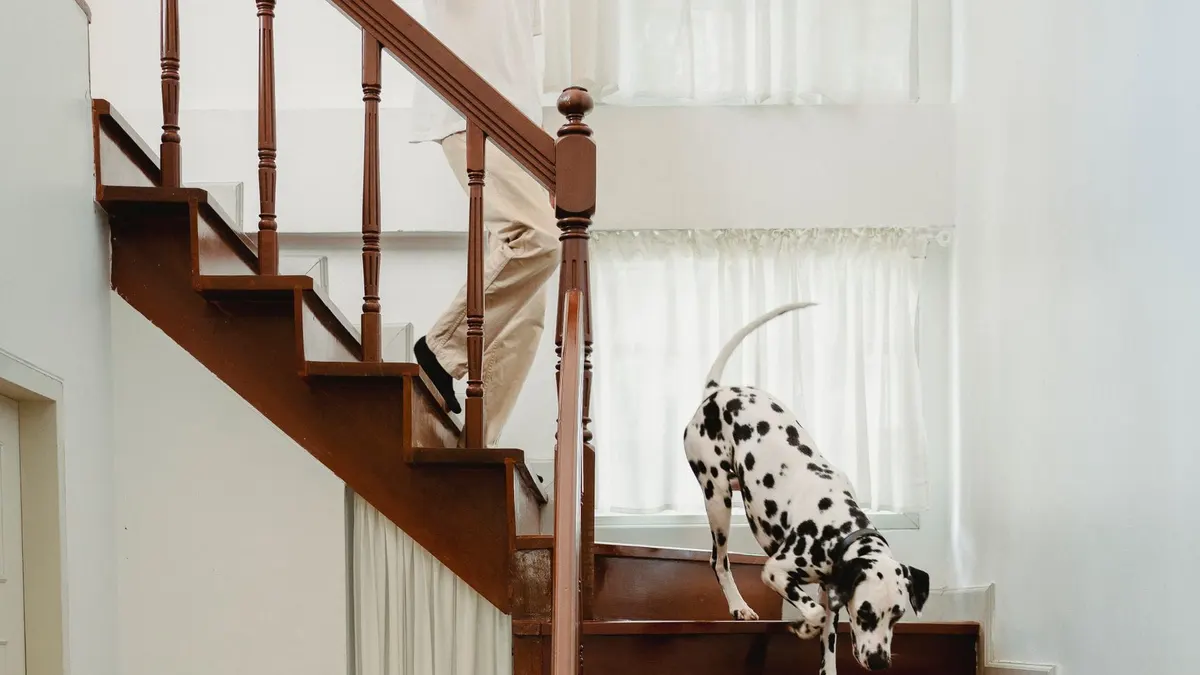
Walk the route before the dog if conditions have changed. Remove branches, toys, leaves, and standing water from regular paths. Secure outdoor steps and use a surface that stays stable when wet. Avoid smooth decking, loose gravel, steep slopes, and transitions where a dog must turn quickly.
Test pavement with your hand in warm weather and choose shade or cooler times. In cold weather, check for ice, salt, and packed snow between paw pads. Provide shade and fresh water, but keep bowls and hoses from creating a slick patch.
Make exits and boundaries predictable
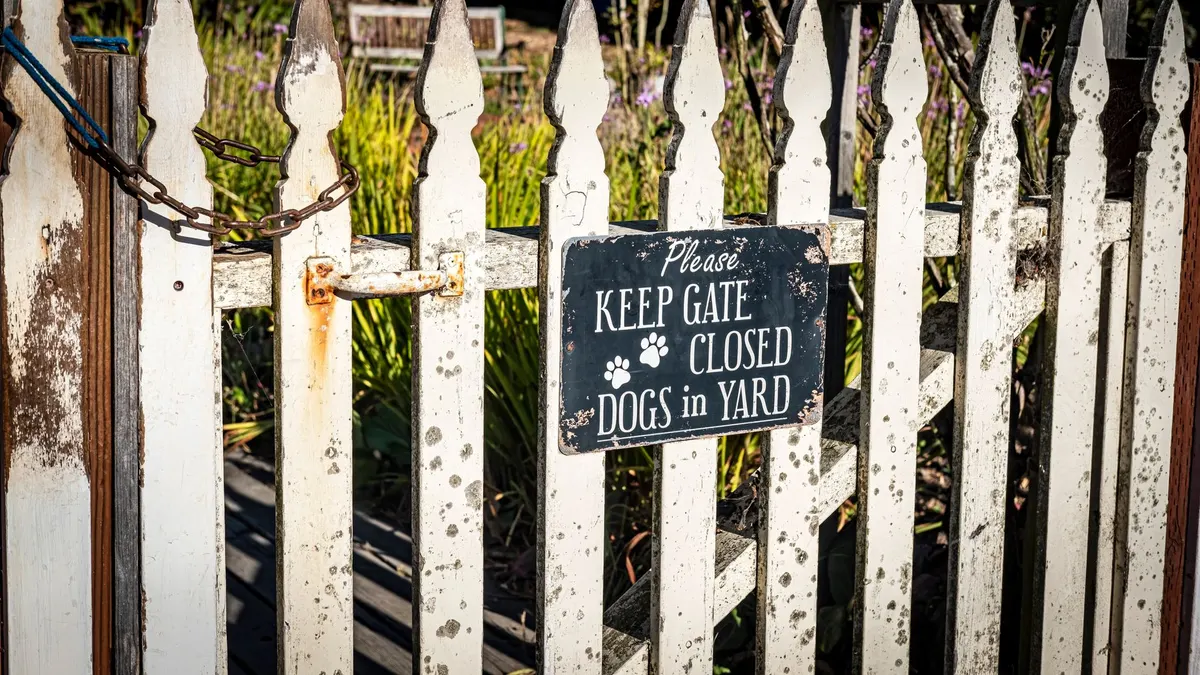
Use a secure gate, check fence gaps, and keep identification visible when movement or vision changes. A dog who is slower to turn may not be able to avoid an open gate or approaching vehicle. Add lighting near steps and doors, and keep the route from the resting area to the yard clear.
Adjust activity to recovery
Use short, familiar routes while you observe confidence and recovery. Sniffing and gentle movement can be valuable even when distance decreases. Offer breaks before the dog looks exhausted and avoid pushing through a slower pace, repeated stopping, limping, or reluctance to continue.
When to call a veterinarian
Stop and seek veterinary advice for sudden weakness, collapse, severe pain, breathing difficulty, heat illness signs, repeated falls, or a new inability to manage familiar ground. Arrange an evaluation for persistent limping, declining endurance, or a change that continues after weather and route conditions improve.