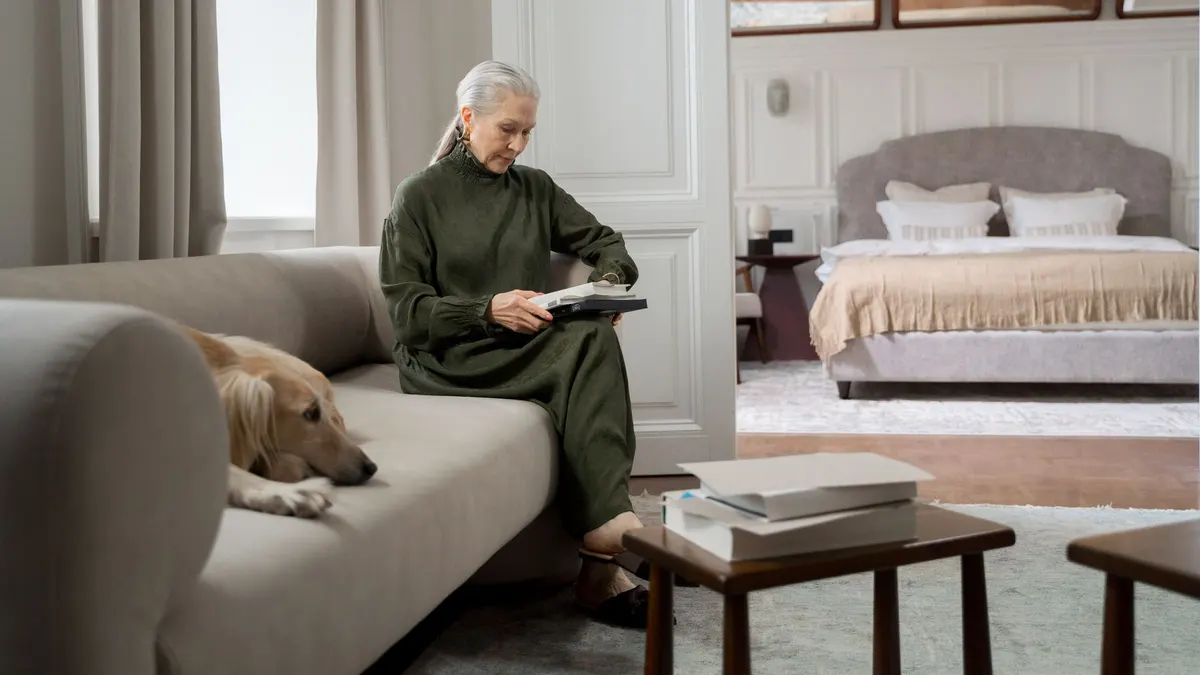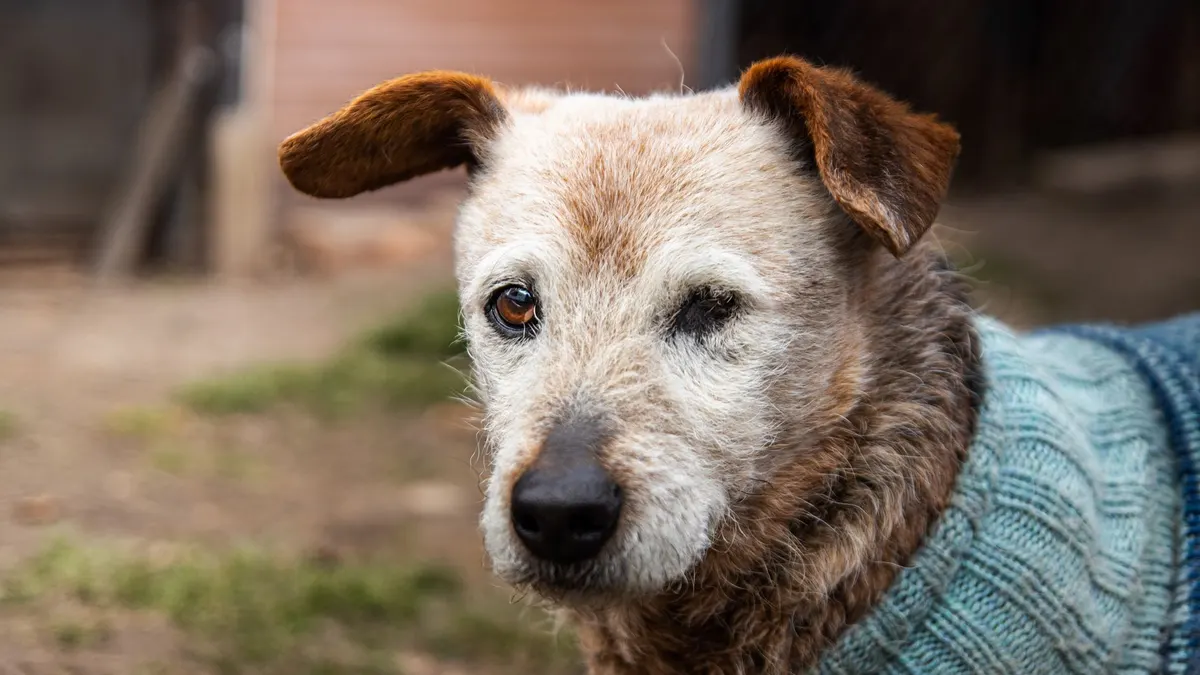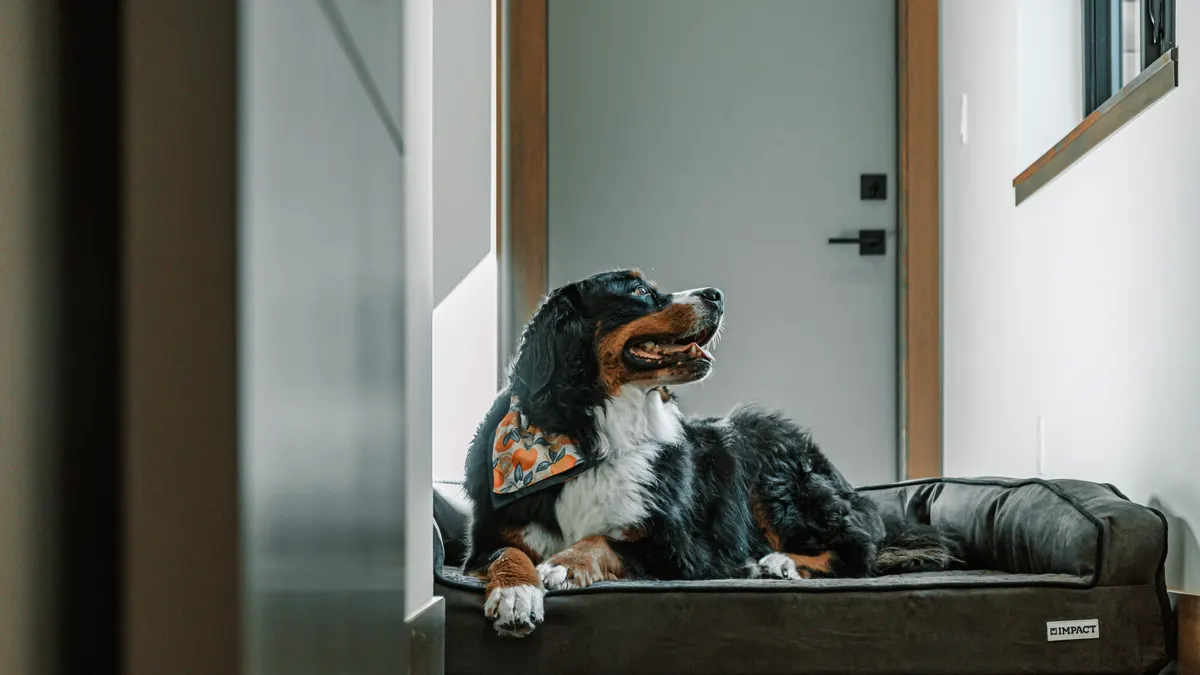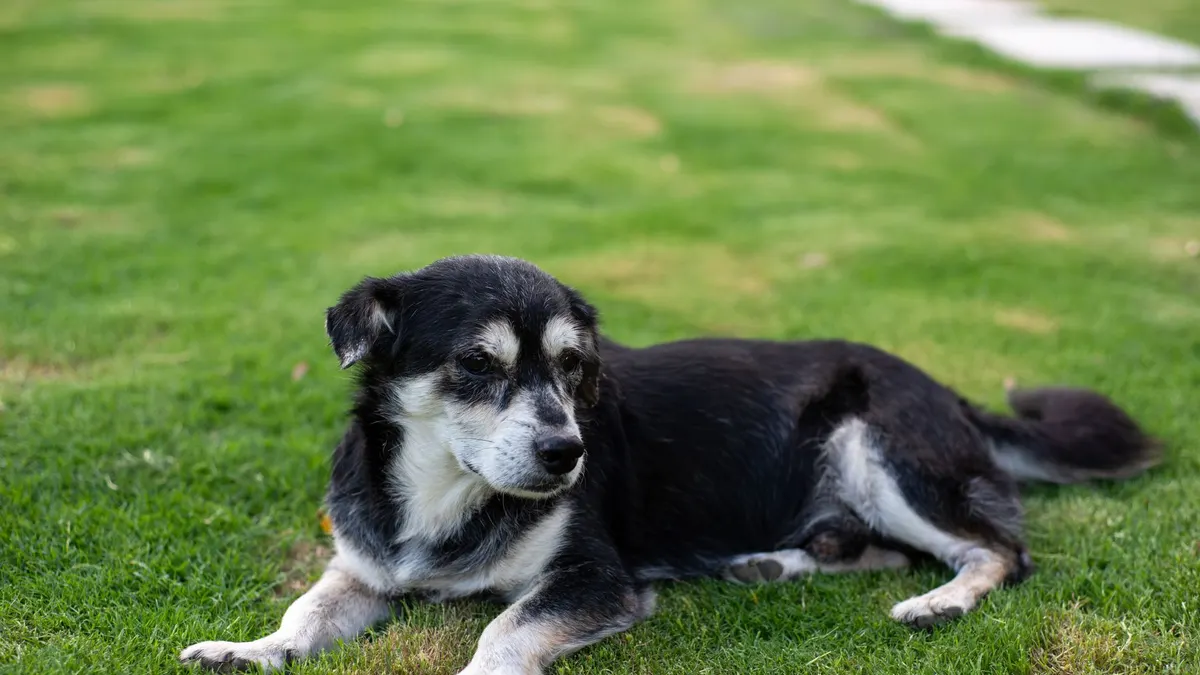
Stiff after a nap is not the same as stiff all day, and that single distinction runs this whole page. When an older dog rises rusty for the first ten steps and then loosens, that is osteoarthritis behaving predictably — annoying, manageable, and usually improvable with what you already own: blankets, rugs, patience, and shorter walks. The oldest dog I've cared for, a sixteen-year-old terrier, rose slower every winter, and the change that helped most was simply moving her bed off the kitchen tile. What matters is knowing which category your dog's stiffness falls into: the normal kind you can work with, the comfort-setup kind you can fix, or the kind that belongs in an exam room.
Why the first ten steps are the hardest
Most senior dogs seem stiff after resting because aging joints make less lubrication, cartilage has thinned, and muscles cool and tighten during stillness. Stiffness that eases within five to fifteen minutes of gentle movement is usually a comfort problem you can improve at home with warmth, traction, patient warm-ups, and a vet-designed support plan. Stiffness that is sudden, severe, one-sided, or worsening week over week deserves an exam sooner rather than later.
What actually stiffens while the dog sleeps
Joints lose their cushioning
The most common cause is osteoarthritis, which affects the large majority of dogs over eight years old to some degree. Cartilage that once gave each joint a smooth, gliding surface wears thin over a lifetime of use. The bones, ligaments, and joint capsule then absorb more of the load, and low-grade inflammation makes the joint less willing to bend after it has been still.
Joint fluid thickens at rest
Synovial fluid is the oil inside the joint. When a dog moves, that fluid warms and spreads across the joint surfaces. When a dog lies still for an hour or a whole night, the fluid settles and thickens, and the first movements have to squeeze it back into circulation. This is exactly why so many older dogs look their worst in the first ten steps and noticeably better by the fiftieth.
Muscle mass declines with age
Senior dogs lose muscle, a process called sarcopenia, even when they eat well. Weaker muscles stabilize joints less effectively, so rising from the floor takes more effort. You will usually see this first in the rear legs: the dog rocks forward, pushes hard with the hind end, and needs a beat or two to find its feet. If the story is less about creakiness and more about the actual struggle to get up — scrabbling, collapsing, giving up — that is rising mechanics, and it has its own guide: the page on struggling to stand.
Cold and hard surfaces make everything worse
A dog that sleeps on a hard floor or in a drafty spot gets up stiffer than a dog that sleeps warm and supported. Cold tissue is less elastic, and hours of pressure on bony hips and elbows add their own soreness to the equation.
Five changes that help by tomorrow
- Put a supportive, low-entry bed in a warm, draft-free spot so your dog is not sleeping on cold, hard flooring.
- Add rugs or runners with non-slip backing along the routes your dog walks first thing in the morning.
- Keep nails trimmed short and the fur between the paw pads clipped so the feet can grip properly.
- Give the dog a minute. Do not rush an old dog off its bed; let the first movements happen slowly.
- Keep your dog lean. Every extra pound is load on worn joints, and weight management is one of the most proven ways to reduce arthritis pain.
Ask your veterinarian whether a joint supplement, such as omega-3 fatty acids or a veterinary-formulated product, fits your dog's situation — the evidence and the right choice depend on what else is going on medically.
A simple morning warm-up routine
- Let the dog wake and rise on its own schedule instead of startling it up.
- Before the first walk, spend two or three minutes on the big muscles of the shoulders, back, and thighs with warm hands and slow strokes — the full technique is in a safe hands-on routine for sore bodies.
- Encourage a slow indoor walk first, a few laps around the living room or down the hallway, before tackling stairs or cold outdoor air.
- Keep the first minutes outside slow and sniff-heavy, because sniffing walks naturally warm the body up.
- Compare how the dog moves at minute one versus minute ten. That difference tells you a lot about what you are dealing with.
The resting setup that reduces stiffness
The bed matters more than most people expect. A thick, supportive mattress-style bed with a low entry lets the dog step on and off without climbing, and it keeps pressure off hips and elbows during long naps. Place it away from drafts and exterior doors, and if your home runs cool, a self-warming bed liner or a pet-safe heated pad used according to its instructions can make a real difference. Dogs with arthritis consistently do better when their sleeping surface holds warmth rather than wicking it away.
Normal aging versus something more
| What you observe | More likely normal stiffness | More likely needs a vet |
|---|---|---|
| Duration | Loosens within 5 to 15 minutes | Stiff all day or steadily worsening |
| Pattern | Same every day, changes gradually | Sudden onset or rapid decline |
| Symmetry | Both sides equally creaky | One leg clearly worse, obvious limp |
| Attitude | Bright, eager to eat and walk | Withdrawn, off food, panting at rest |
| Response | Improves with warmth and routine | No improvement despite home changes |
How much movement is enough
Rest is not the treatment for stiffness; measured, regular movement is. Most stiff seniors do best on two to four short walks of ten to twenty minutes rather than one long outing, because frequent gentle motion keeps joints lubricated without overloading them. Splitting walks the smart way covers the scheduling. Avoid the weekend-warrior pattern where a quiet week ends in a long hike. Consistency is what keeps an old body loose.
Signs your dog is loosening up
When the routine is working, you will usually see the dog rise in one smoother motion, take those first steps with less hitching, and reach its normal walking pace faster. Many older dogs also start choosing their bed more willingly, stretch more often after naps, and stop hesitating at the start of walks. The changes usually arrive gradually over two to four weeks rather than dramatically overnight, so keep notes if you want to be sure.
Call the vet if the stiffness changes shape
Call if the stiffness appears suddenly, if one leg is clearly worse than the others, if the dog cries out when rising, or if it refuses walks it used to enjoy. Also call if the stiffness no longer eases with movement, or if you notice joint swelling, dragging toes, a hunched back, or a yelp when touched. These can point beyond garden-variety arthritis toward a ligament injury, a spinal problem, or pain significant enough to need real medication. Modern veterinary pain management, including anti-inflammatories and newer long-acting injections, can transform an old dog's comfort, but it all starts with an exam.
Stiffness questions
Is it normal for a senior dog to be stiff every morning?
Mild stiffness that resolves within about fifteen minutes of gentle movement is very common in older dogs. It still deserves attention, since warmth, traction, and joint support genuinely help, but it is usually manageable rather than alarming.
Should I walk my stiff dog or rest it?
Gentle, regular movement is almost always better than rest. Short, frequent walks keep joints lubricated and muscles working. Prolonged rest tends to make the next rise from the floor harder, not easier.
Do joint supplements actually work?
Some have reasonable evidence behind them, particularly omega-3 fatty acids and certain veterinary-formulated products, and they typically take four to eight weeks to show an effect. Quality varies enormously between brands, so ask your veterinarian which ones are worth the money.
Stiffness you can manage, stiffness you can't
Post-rest stiffness is the most common complaint in aging dogs, and most of the time it responds to the unglamorous basics: a warm supportive bed, good traction, patient mornings, a lean body, and steady gentle movement. Watch the pattern more than any single bad morning. If the stiffness is steady and predictable, keep improving the home setup. If it is changing fast, one-sided, or painful, that is your cue to get your veterinarian involved.