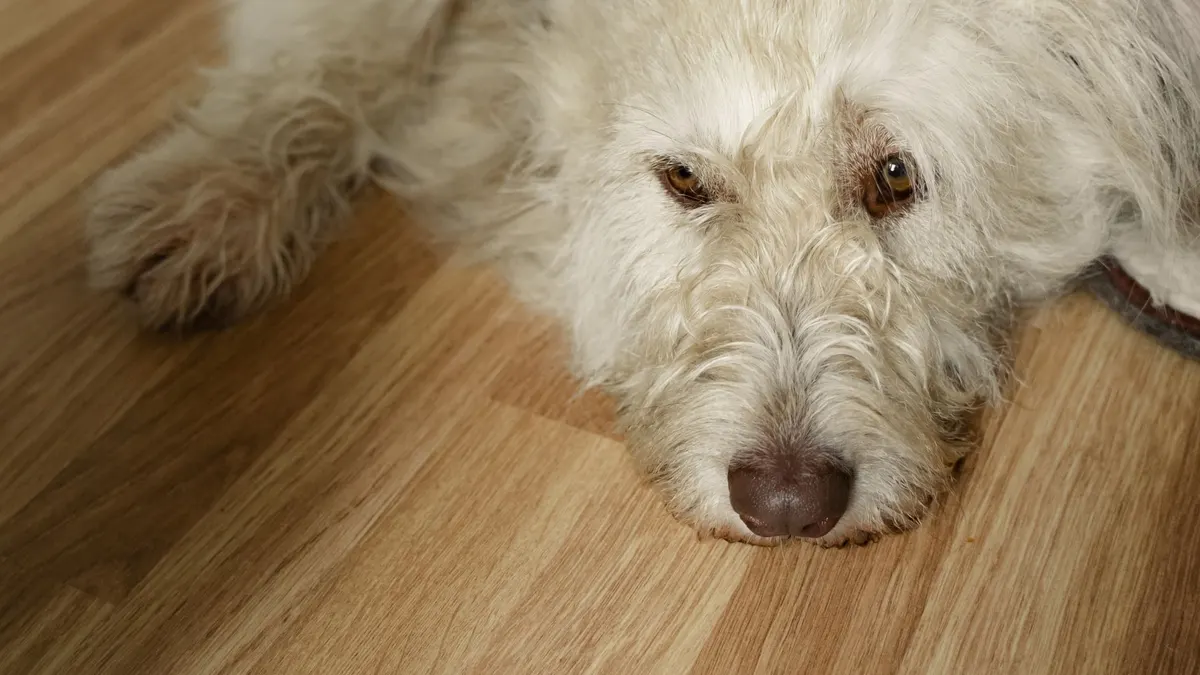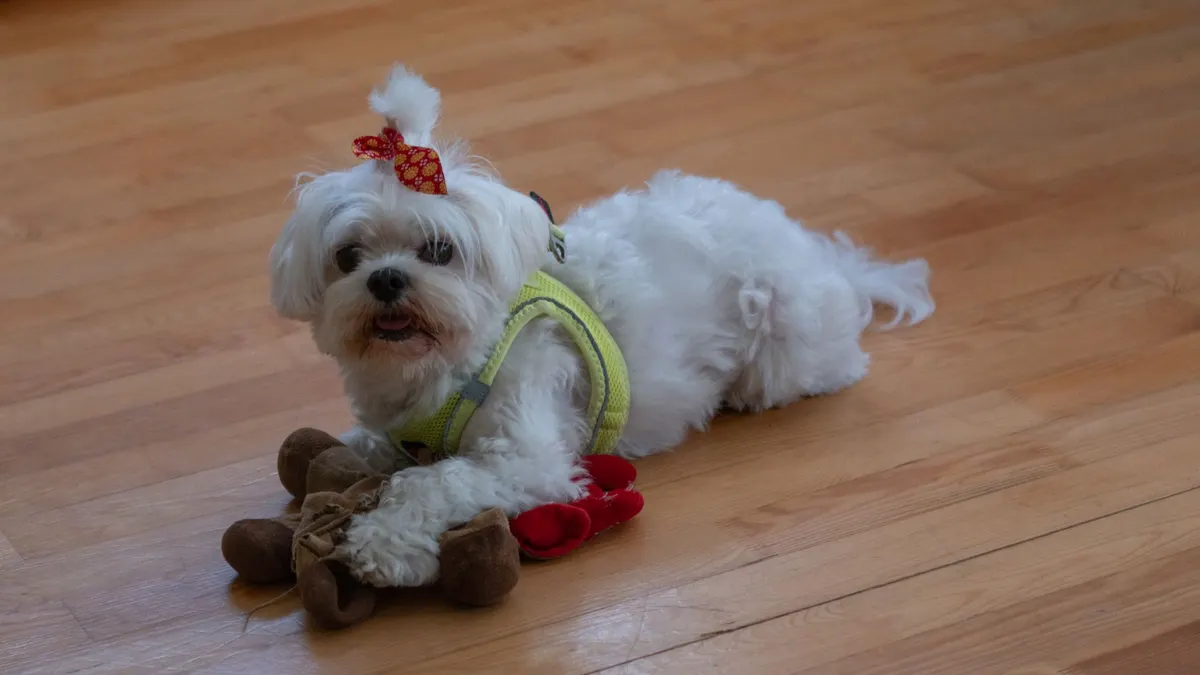
Walking on hardwood floors can feel risky for an older dog, especially if the dog has movement changes, weak rear legs, or reduced confidence. You do not need to make the whole home perfect. You just need safer routes and less slippery strain on the dog’s normal walking path.
The first step is route design
Look at where your dog walks the most. If they cross the kitchen, hallway, or living room every day, add traction there first. A runner, a washable mat, or a non-slip rug can help the dog feel stable without making the space look cluttered.
Choose a product that lies flat and has a good grip underneath. This matters because a mat with a curled edge can become a trip hazard.
Treat the floor as a daily challenge
Older dogs often have a harder time making fast turns or sudden stops on smooth surfaces. If your dog tends to speed up when excited, a safer route and slower, more structured movement can help. A shorter walk with more careful pacing may be easier than a longer one on a slick floor.
Support the dog’s dynamics, not just the floor
If your dog is slipping while standing or turning, consider whether a simple fix like nail care, a bed that is easier to rise from, or lower-impact play routines would help. Small changes often matter more than one large product purchase.
When a veterinarian visit makes sense
If your dog is slipping more often, worsening quickly, or showing signs of weakness or pain, do not ignore it. A veterinary review can help confirm whether the issue is mostly environmental or whether there is an underlying mobility concern to address.
Bottom line
Hardwood floors do not have to be a daily hazard. A safer route, better traction, and a calmer pace can make walking feel much easier for an older dog.