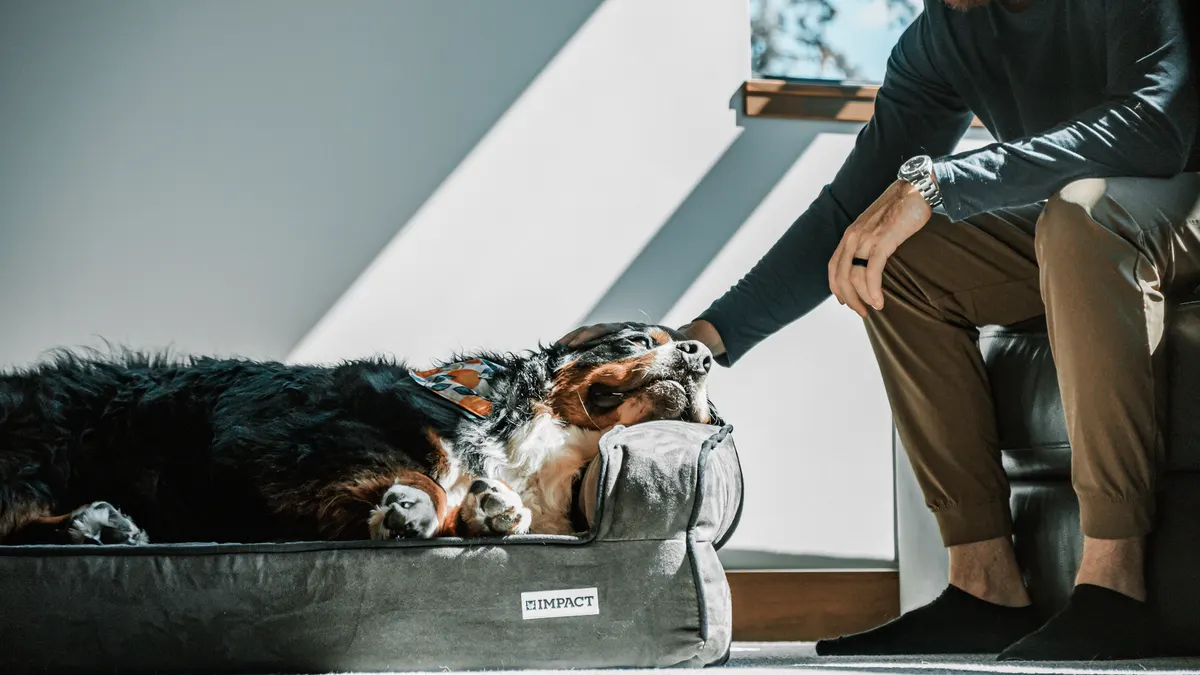
Indoor exercise can help an older dog stay engaged when weather, footing, or endurance makes outdoor activity harder. The goal is controlled, comfortable movement on a stable surface, not an exhausting workout or a test of strength.
Quick answer
Start with short, low-impact activities such as slow walking between familiar points, gentle food searches, or calm position changes on a non-slip surface. Stop before fatigue or frustration. If your dog has pain, marked weakness, balance problems, or a recent mobility change, ask a veterinarian or rehabilitation professional before adding exercises.
What matters most
Prepare a clear route with reliable traction and enough space to turn. Avoid stairs, slippery flooring, tight corners, and furniture that invites jumping. Place water and a resting area nearby so the dog does not need to continue when tired.
Low-impact ideas to try
Choose one activity at a time and keep it brief:
- slow walking along a clear hallway or room perimeter
- gentle sniffing games with a few treats placed at floor level
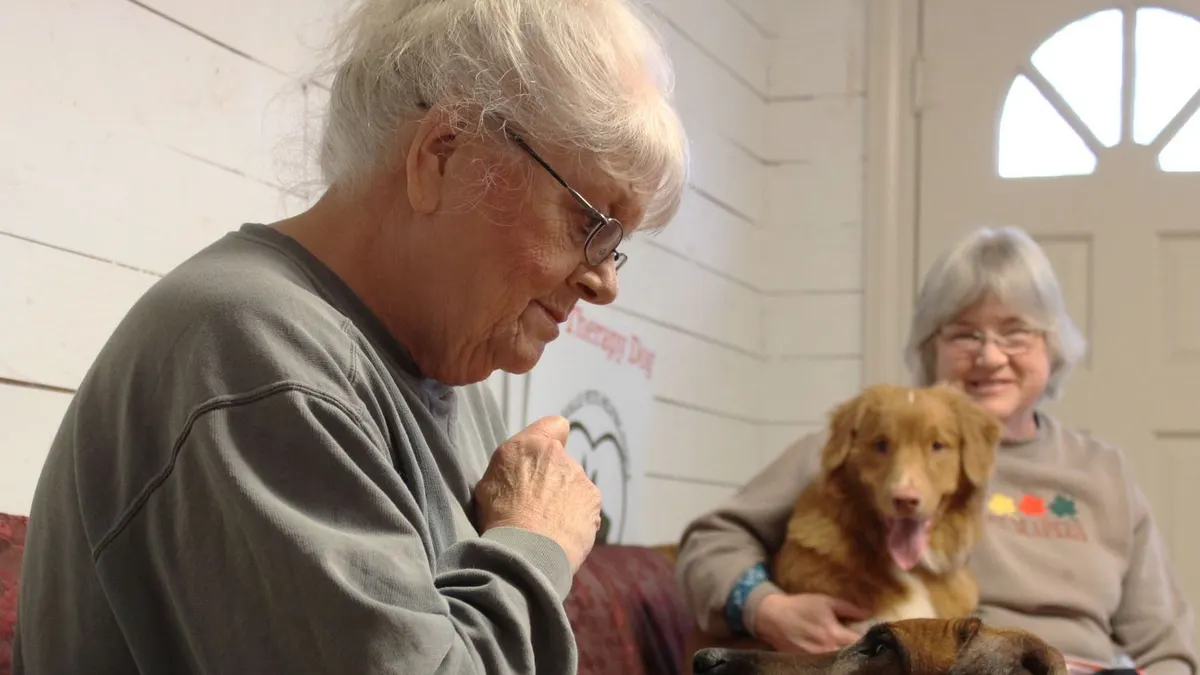
- walking between two familiar people at a comfortable pace
- calm weight shifts while standing, only if the dog is steady and willing
- controlled sit-to-stand practice, only with professional guidance when weakness or joint pain is present
- relaxed stretching through normal movements rather than forced limb positions
Food puzzles can add mental engagement, but choose a design that does not require pushing, jumping, or awkward reaching. For broader movement options, see Gentle Movement Ideas for Senior Dogs.
What to do at home
Start with one to three minutes and allow a full rest afterward. Watch the dog during the activity, later that day, and the next morning. The appropriate amount is the amount the dog can recover from comfortably, not the longest session they can complete once.
Watch for red flags
Stop for limping, stumbling, panting that seems excessive, reluctance, shaking, pain, repeated sitting, or a clear change in coordination. Sudden weakness, collapse, severe pain, trouble breathing, or inability to stand needs prompt veterinary attention. Arrange guidance for persistent stiffness, declining endurance, or a pattern that is worse the next morning.
Keep indoor exercise safe
Do not use slippery floors, loose rugs, unstable cushions, or a ball that encourages sudden turns. Avoid forced stretching, fast chasing, repeated jumping, and exercise immediately after a large meal. Keep sessions predictable and end while the dog is still calm.
Bottom line
Indoor exercise works best as small amounts of comfortable movement repeated consistently. Stable footing, short sessions, and recovery checks help you support mobility without turning activity into a source of strain.
Related guides
- Indoor Exercises for Older Dogs With Mobility Problems
- Senior Dog Mobility Exercise
- How Much Exercise Does a Senior Dog Need?
Bottom line
Senior dog care works best when it is practical, repeatable, and built around the dog’s real comfort and confidence in daily life.