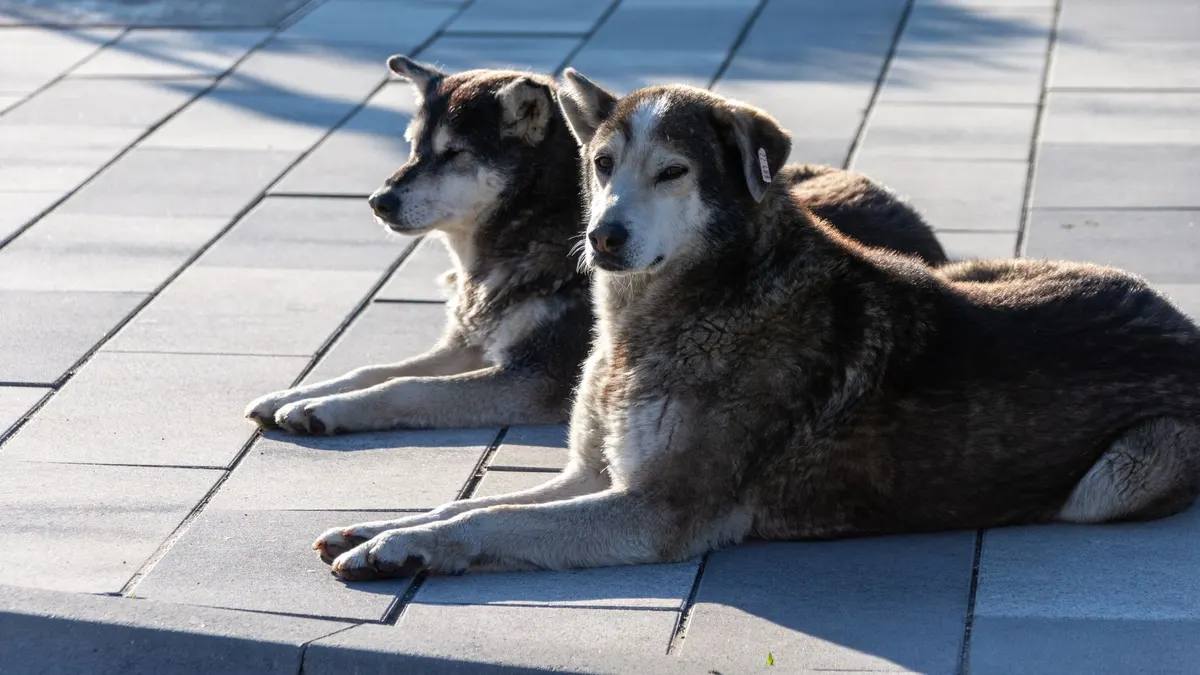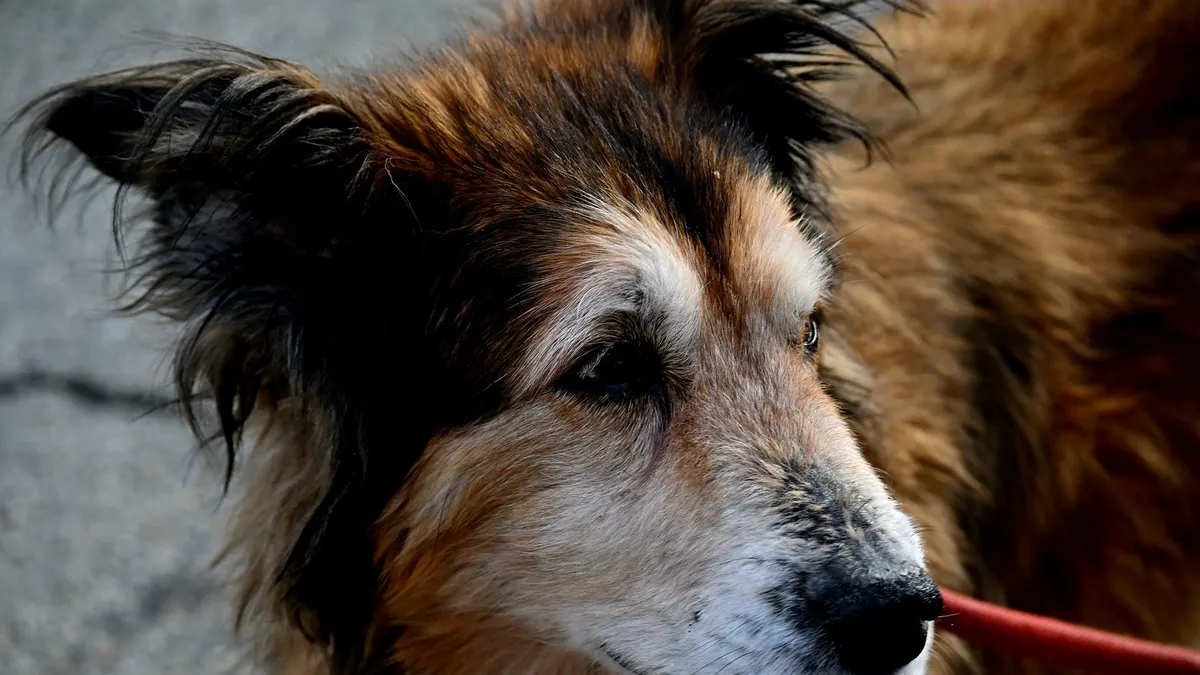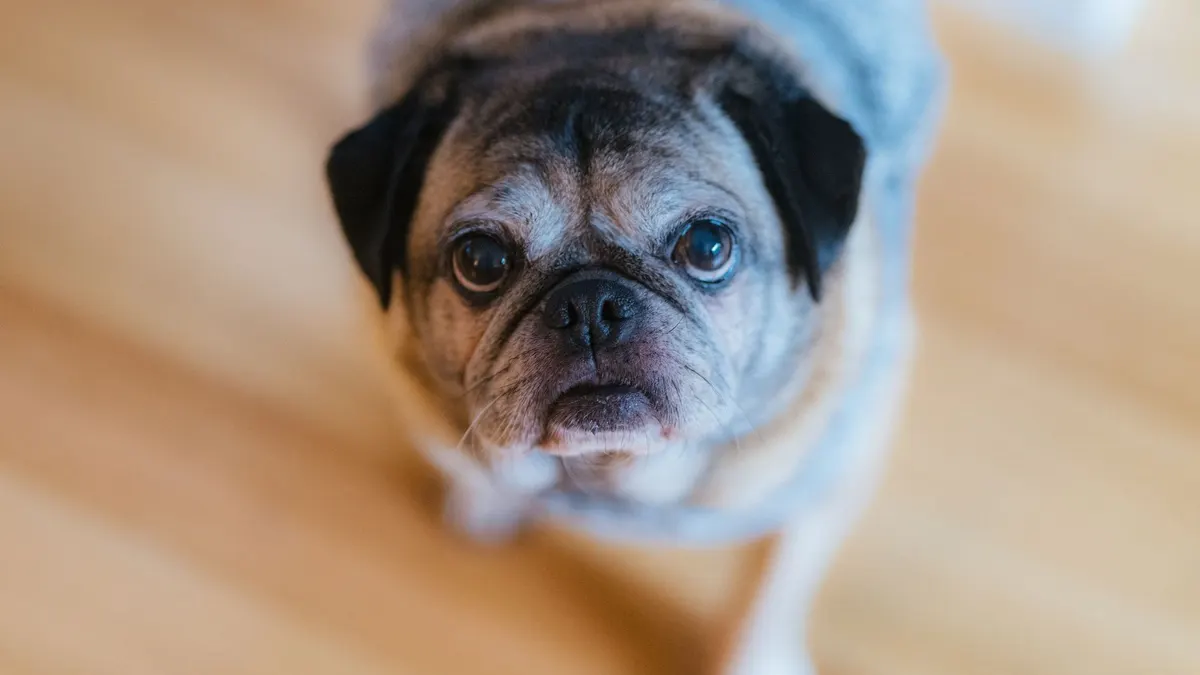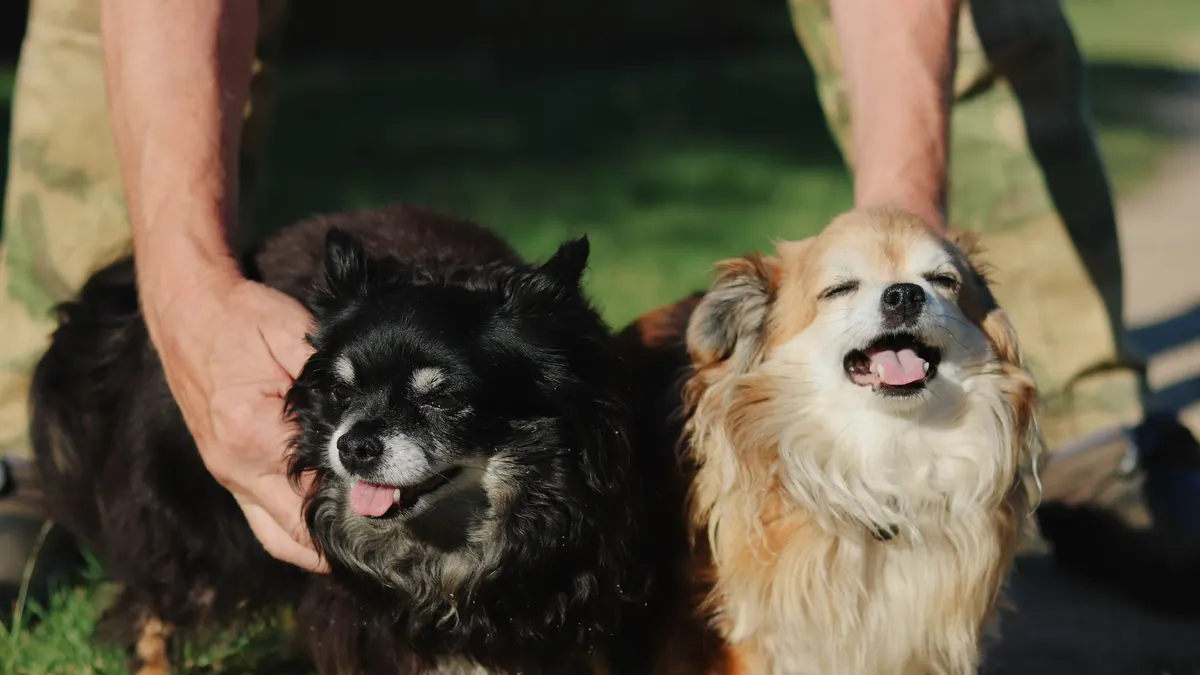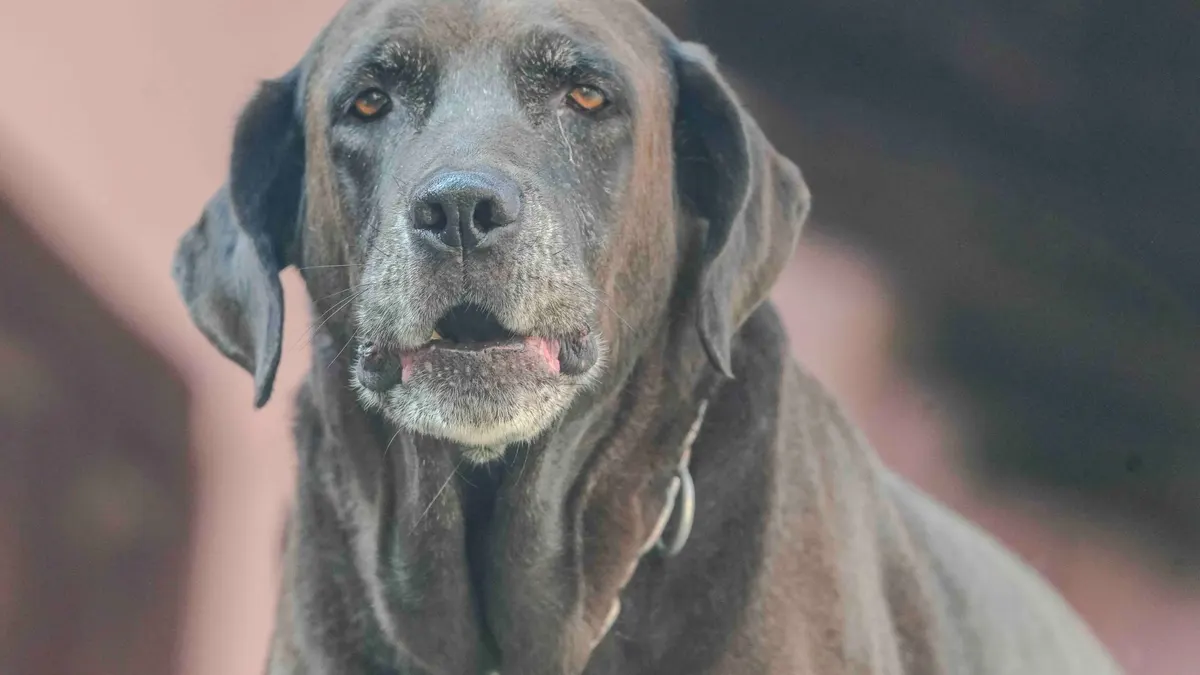
My beagle, Juniper, used to demolish breakfast in four seconds flat. The morning I scattered the same kibble across the living-room rug instead, she spent eleven minutes head-down, nosing every fiber — and slept harder that afternoon than she had in weeks. One redeployed bowl of food did more for her aging brain than any gadget on the shelf.
Brain games fill the gap that young-dog activities leave open. They hand a senior dog a real job in a short, gentle session that doesn't produce a sore, exhausted dog the next morning.
Start here: the games that work
The best brain games for an aging dog are short, low-impact, and nose-led: scatter feeding, "find it" with hidden treats, a simplified shell game, snuffle mats or rolled towels, gentle hide-and-seek, and a cheerful refresher on old cues like "touch." Run them five to ten minutes, once or twice a day, on carpet or a yoga mat. Keep every round winnable and quit while your dog still wants more. The goal is pleasant mental work, not a workout.
Why brain games earn their spot in the day
Research on canine cognitive dysfunction — the dog version of age-related mental decline — suggests roughly a quarter to a third of dogs show at least one sign by age 11 or 12, and well over half by 15 or 16: disorientation, flipped sleep cycles, house-soiling, changed greetings toward family. No game prevents or cures that decline. Even so, vets and behaviorists broadly agree that regular mental enrichment is one of the few practical levers we have for aging brains, alongside a good diet, appropriate exercise, and medical care.
The daily payoff is smaller and easier to see. Sniffing and light problem-solving are naturally calming for dogs. Nose work lowers arousal, gives a restless dog something satisfying to focus on, and usually buys you a good nap. For a senior who can't hike anymore but still wakes up looking for something to do, a five-minute scent game can take the edge off the whole day.
Before the first game: a five-point check
- Clear pain first. A stiff, arthritic, or sore dog will not enjoy games that ask them to stand, turn, or reach. If mobility hasn't come up at a vet visit recently, raise it there before you build a play routine.
- Know the senses. A dog with hearing loss needs visual cues; a dog with fading vision does best with scent. Build around the senses that still work.
- Fix the floor. Carpet, a rug, a yoga mat. Slippery floors make older dogs cautious and can turn a fun round into a scary one.
- Match the treats. Small, soft, smelly. Easy on aging teeth, tiny enough that ten minutes of games doesn't add up to a second meal.
- Pick the alert window. Most seniors have a few bright hours — mid-morning or early evening, usually. Play inside that window.
Six games to put in rotation
1. Scatter feeding
Feed dinner from the floor instead of the bowl: scatter kibble across a rug, a patch of grass, or a snuffle mat and let your dog sniff out every piece. Easiest setup in the world, zero training, and almost every dog understands it instantly. For a dog who has never done puzzle work, this is the starting point.
2. "Find it" with hidden treats
Ask for a stay — or have someone hold them gently — place a few treats in plain sight around one room, then release with a cheerful "find it!" Over several days, make the hiding spots slightly harder: behind a chair leg, under a rug edge. Keep it winnable. A senior dog should succeed most of the time.
3. The shell game, simplified
Show your dog a treat, slide it under one of two or three plastic cups while they watch, and let them knock or nose the cup over. One cup first, so the concept lands, then add more. It's genuine problem-solving, and dogs tend to love the moment it clicks.
The first time I set up a shell game, I went greedy — six cups, three hiding spots. Juniper sniffed once, sat down, and checked out. Two cups and one obvious win got her back in the game. Start easier than feels reasonable.
4. Snuffle mats and rolled towels
A snuffle mat — or a bath towel with kibble rolled up inside it — turns a meal into ten minutes of foraging. Foraging is deeply natural dog behavior, and it's one of the most settling things you can offer an older dog who gets fussy in the evening.
5. Gentle hide-and-seek
Hide yourself somewhere easy — behind a door, not up the stairs — call your dog once, and let them search. A favorite toy works too. The joy on an old dog's face when they find you is worth the small effort, and the recall practice comes free.
6. Old-cue refresher and hand targeting
Spend a few minutes revisiting cues your dog learned years ago — sit, down, touch, shake — with generous rewards. "Touch," nose to your palm, is especially useful for seniors because it doubles as a gentle way to steer a stiff or visually impaired dog without pulling on a collar. Learning slows in old dogs, but it absolutely still happens, and short upbeat training bursts are real brain work.
Games to leave off the shelf
- High-arousal fetch or tug marathons. They spike excitement and stress sore joints. If your dog still loves fetch, roll the ball a few feet on grass, two or three times.
- Puzzles that need vigorous pawing on hard floors. They invite slipping.
- Anything involving jumping, climbing, or stairs — including treats hidden on furniture.
- Rolling treat balls that vanish under furniture. A frustrated senior may strain to retrieve them.
- Long, difficult puzzles. If your dog can't solve it in a few minutes, it's too hard. Frustration is not enrichment.
- Vigorous play right before or after meals, especially for deep-chested breeds, where hard activity around eating is a known bloat risk factor.
How long, how often, when to stop
Think in minutes, not hours. One or two sessions of five to ten minutes a day is plenty for most seniors, and many do best with several two- or three-minute micro-sessions sprinkled through the day. Rotate two or three games across the week so the activity stays fresh without getting confusing. Always end on a success. Lagging interest, panting, or a dog who would rather lie down means the session is over.
What a good session looks like afterward
- They settle or nap contentedly when the game ends.
- Soft eyes and a wagging tail when the mat or the cups come out.
- Easier nights on the days they got mental work.
- More general interest in their surroundings.
- Slower, calmer mealtimes once food arrives in puzzle form.
Skip a day, or make the vet call
On days your dog seems painful, unusually tired, or off their food, skip the games. A sudden loss of interest in food games is still information: appetite changes, dental pain, and nausea are all common in seniors and worth raising with your vet. Call promptly about new confusion during familiar activities, a dog who gets stuck in corners or stares at walls, fresh nighttime pacing or vocalizing, or any overnight personality change. Those can point to cognitive dysfunction or an underlying medical problem — what confusion in senior dogs actually looks like is worth reading before you chalk it up to age — and earlier help genuinely works better.
Three questions from first-time players
Can an old dog really learn a new game?
Yes. Older dogs learn more slowly and may need more repetitions, but the capacity to learn persists throughout life. Keep sessions short, rewards generous, and expectations realistic.
Which brain games are safest for a dog with arthritis?
Stationary nose work: scatter feeding, snuffle mats, and hidden-treat finds inside one small area. All three run at the dog's own pace, and it is perfectly fine if half the game happens from a lying position.
My senior dog is losing sight or hearing. Can they still play?
Absolutely. Scent games are ideal for a blind dog, since smell is usually the last sense to fade. For a deaf dog, use hand signals and gentle touch cues. Dogs adapt to these losses better than we expect, so match the game to the senses your dog still has.
Put tonight's dinner to work
Tonight, skip the bowl. Scatter dinner's kibble across the rug while your dog waits, set a ten-minute timer, and watch what a head-down sniff crawl does to your evening. If they clear it fast, tomorrow add the rolled towel. Note which game earns the perk-up-and-tail-wag, and keep that one in rotation. If new confusion or flat disinterest shows up along the way, loop in your vet instead of pushing through.