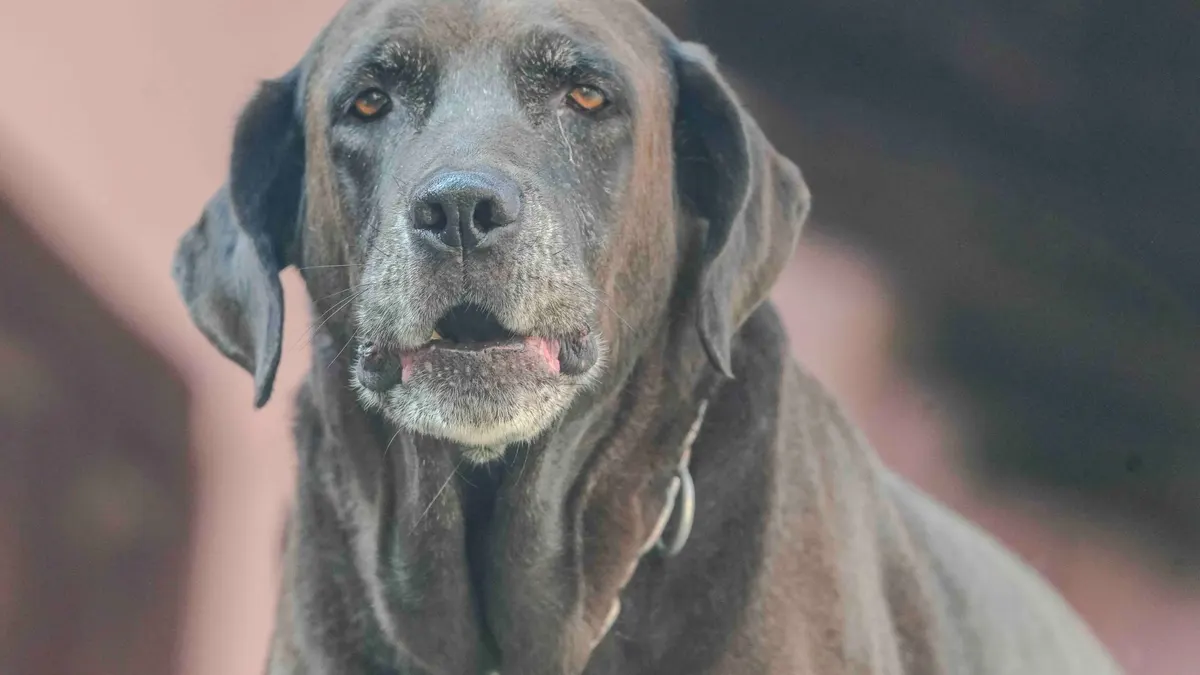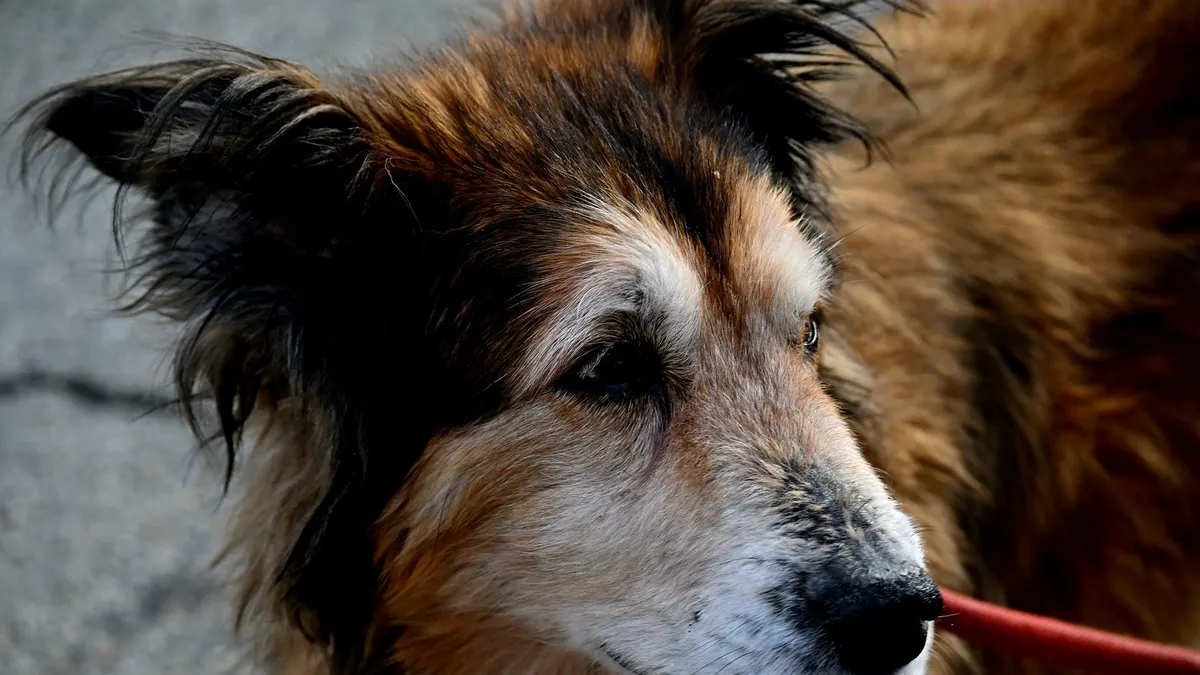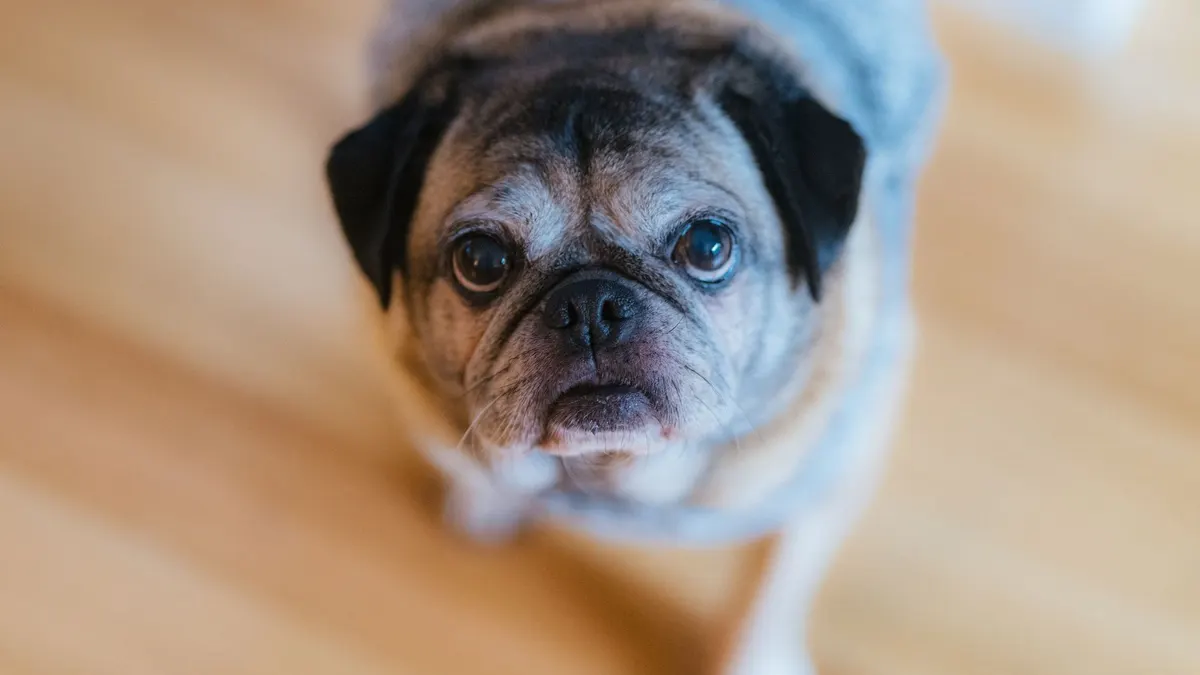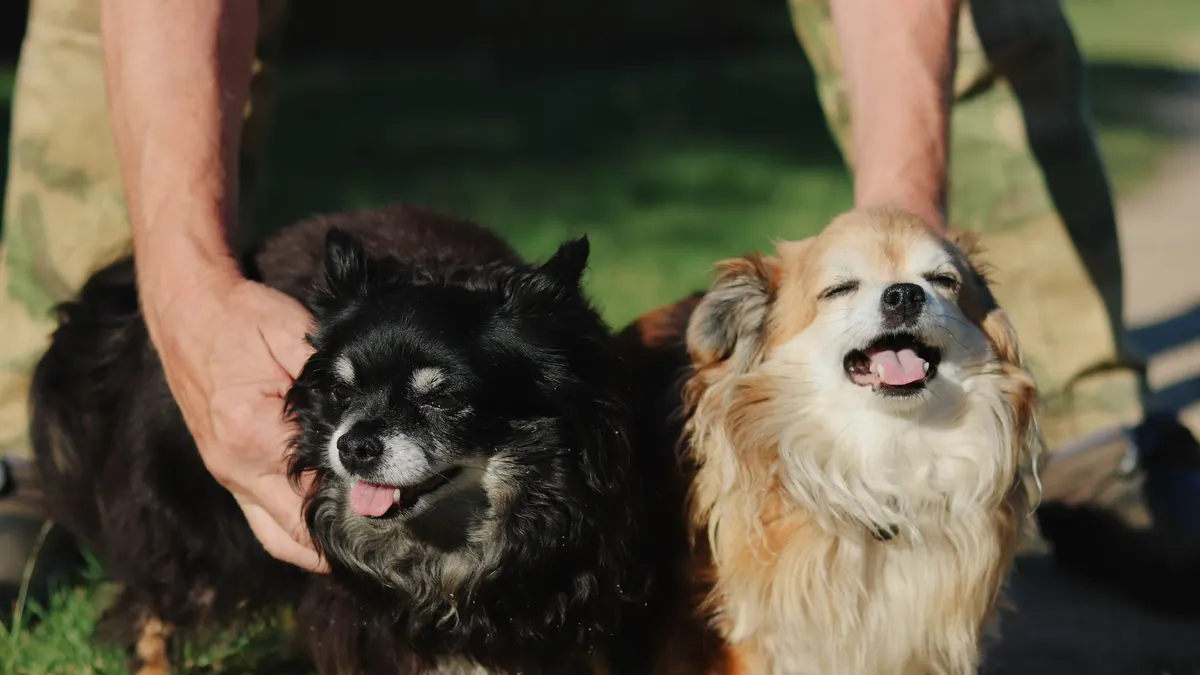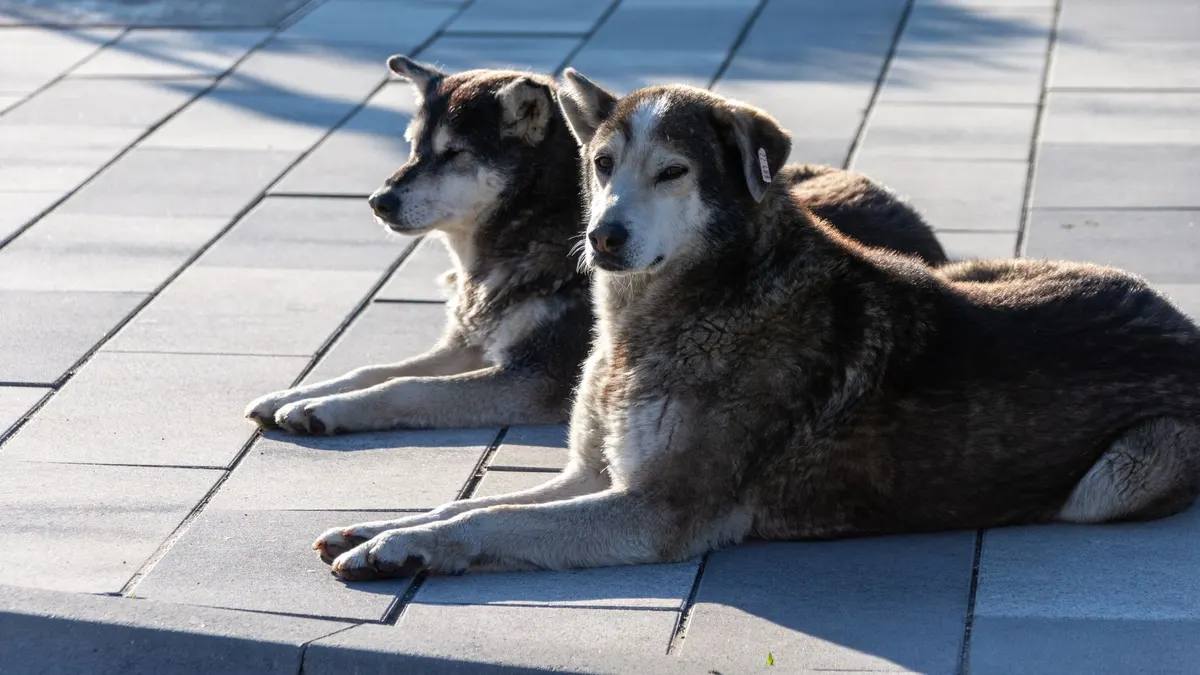
She had ridden out eleven July 4ths without lifting her head. Then a firecracker went off two blocks over, and the neighbor's lab mix came through the doggy door shaking — pacing, panting, wedged against the side of the bathtub like she was trying to merge with the plumbing. The family's first guess was that she'd simply gotten spooky with age. The truer answer: age had changed how the sound landed, how her brain filed it, and how long her body took to stand down.
Fireworks fear in senior dogs is common, it usually has physical reasons hiding behind it, and it is genuinely manageable — if you start two weeks early instead of at midnight. This page covers why the fear arrives out of nowhere, how to build the safe space while the street is still quiet, the run sheet for the night itself, and what the morning after owes her.
Why the fear can arrive out of nowhere
Fading hearing changes what a sound is. A healthy ear hears a firecracker and the brain labels it: distant, sharp, over. An ear losing high-frequency detail hears a distorted, unplaceable bang it cannot locate — and a sound you cannot locate is a sound you cannot dismiss. The boom that used to read as "somewhere out there" now reads as "nowhere I can check." That is not a duller ear hearing less; it is a duller ear hearing something the brain no longer recognizes.
Cognitive decline removes the filter. Middle-aged dogs learn that booms mean nothing; the brain files them as irrelevant and moves on. Canine cognitive dysfunction erodes exactly that filing system, and new fears of familiar things are one of its reported faces. A dog who panics at fireworks for the first time at twelve may be telling you about her brain, not just her ears. What cognitive decline actually looks like has its own page, and sudden noise fear belongs in that conversation.
Pain turns a flinch into a flare. Startle is a full-body event: muscles snap tight in an instant. In an arthritic back or sore hips, that involuntary tensing hurts, and the hurt confirms the dog's suspicion that something terrible just happened. The sound stops being a sound and becomes a pain spike with a trigger. A dog can learn to dread a noise in one night when the noise arrives paired with pain.
An old dog does not bounce back the way a young one does. A young dog jumps, scans, shakes off, and is asleep within minutes. An older dog's stress response takes far longer to stand down — a single volley can keep her flooded, pacing, drooling, and unable to settle for hours, sometimes until dawn. And every all-night panic makes the next one easier to trigger. That is the difference between a startle and a phobia, and it is why "she'll get over it" quietly stops being true in the senior years.
The two weeks before the sky lights up
Owners start planning at 11:50 pm, when the first pop already has the dog under the bed. That is too late for one simple reason: a frightened dog cannot learn a new place. The safe space has to be boring and good before it needs to be a shelter. Fourteen days is enough to make that happen, and July 4th and New Year's Eve both reward anyone who marks the calendar early.
Week one makes the space normal. Choose the room (next section), set it up, and move the good things into it: meals on the floor beside the bed, the long-lasting chew there, evening petting sessions there. The dog should start walking into the room when nothing is wrong. If your senior dog already struggles with change, the calm daily routine makes this window easier, because the rest of the day stays steady while you add the new spot.
Week two makes the sound boring. Buy or find a fireworks recording and play it during meals and chews at barely-audible volume — a murmur under the conversation, not a soundtrack. If she lifts her head from the bowl or looks around, it is already too loud; turn it down and restart the next day. The goal is not to "toughen her up." It is to give a brain with a broken filter one more boring file to pull when the real thing starts.
Build the safe space while the street is still quiet
- Pick the quietest interior spot. A ground-floor bathroom, a walk-in closet, or the corner of an interior bedroom — somewhere with no exterior walls, no windows facing the street, and a door that can stay shut against drafts and flashes. A corner six feet by six is plenty. Interior rooms muffle booms far better than any gadget.
- Outfit it for an old body. Her bed against the interior wall, water within two steps, a worn shirt of yours for scent, a nightlight by the door, and a non-slip runner if the floor is slick. A panicked senior dog on hardwood is a dog that cannot run and a dog that hurts when she stops.
- Let her own it. Refuge she chose is calm; refuge she was stuffed into is a trap with a view. The room-by-room version of this setup lives in how to create a safe sleeping area for an older dog.
- Keep the door open. Always. The point is a place she can go, not a place she is sent.
Run sheet for the night itself
- Last real bathroom break early. Full time to go, before the first pop. A dog who needs out during the show is a dog with two problems instead of one.
- Windows shut, curtains drawn, doggy door locked. Sound and light flashes both feed panic; you are cutting the volume and killing the strobe.
- Start the noise cover an hour before showtime and leave it on all night. A box fan, a white noise machine, a television or radio at slightly above conversational volume — anything steady that fills the frequencies fireworks punch through. Calming playlists for dogs work on the same principle. Start early so the cover is already running when the first boom lands.
- Bed goes inside the safe space, against the interior wall. Not in the hallway, not by the sliding glass door facing the neighbor's display.
- Never leave her outside. Not "just for a potty break," not in a fenced yard, not on a tie-out. A panicked dog clears six-foot fences, goes through gates, and runs blind into traffic. The general rules for a senior dog in the yard — outdoor safety for older dogs — become non-negotiable tonight.
- Block the escape routes. A baby gate plus a closed door between the safe space and the front door. Check that her ID collar is snug; panic can loosen a fit that was fine yesterday.
- If she won't leave your side, let her stay. The old "don't comfort a scared dog" advice is wrong here — reassurance is not reinforcement when the sky is exploding. Sit, speak quietly, let her lean. Your steady presence is data her aging brain can still read.
- Be boring on purpose. Normal voice, slow movements, same routine inside the chaos. Dogs borrow their footing from us; a frantic owner confirms the dog's worst guess.
What not to do when the first boom lands
- Do not punish or scold. Barking, pacing, and destruction during a panic are not disobedience. They are a dog having no better option.
- Do not force her to "face it." No dragging her to the window, no playing fireworks videos at full volume, no taking her to the display to build confidence. Flooded dogs do not get braver; they get flooded.
- Do not pull her out of hiding. If she chooses the bathtub over your beautiful safe space, bring the bed and the water to her. The plan adapts to the dog, not the other way around.
- Do not fuss. Quiet comfort helps; frantic, high-pitched soothing hands her a script that says this is, in fact, an emergency.
- Do not leave her alone tonight. A dog who normally tolerates solitude may not tolerate it with a war going on outside.
If the fear is brand new, start with an exam
A twelve-year-old who panics at fireworks for the first time has a medical question on the table, not just a training one. A veterinarian can check the three things that hide behind sudden noise fear: the ears (infection, wax, and age-related hearing change all alter how sounds land), the body (arthritis and dental pain turn startles into spikes), and the mind (early cognitive dysfunction strips the background-noise filter). None of these are things you can diagnose from the hallway at midnight — they are reasons to book the visit.
For severe panic, the medication conversation is a legitimate one to have. A veterinarian can discuss anti-anxiety options for dogs who cannot recover from a night like this, and timing matters: some options need days to build up rather than minutes to kick in, which is exactly why the call goes in two weeks before the holiday instead of 9 pm on the evening itself. Bring the video you took of the pacing, the log of how long it took her to settle, and the list of what she did when it started.
The morning after still matters
A dog who didn't sleep needs a slower morning, not a catch-up day. Short, calm bathroom trips; skip training demands and visitors; let her nap the deficit out. Watch two things for the next 24 to 48 hours: appetite and bladder control. A skipped meal or an accident after an all-night panic is usually exhaustion plus stress, and it typically clears within a day or two of normal routine. If she's still flinching at ordinary household sounds on day three, still refusing breakfast, or the fear has started bleeding into quiet nights, that is no longer a holiday problem — it is a vet conversation, and a night-by-night pacing log is the right evidence to bring.
Three questions about fireworks nights
My dog rode out years of fireworks fine. Why is she panicking now?
Because aging changed her equipment, not her memory. Fading hearing distorts sounds she used to recognize, cognitive decline weakens the filter that dismissed them as background noise, and arthritis turns a startle flinch into a pain spike. A young dog bounces back from a boom in minutes; an older dog can stay flooded for hours. New panic deserves a veterinary exam, not a shrug.
Will comforting my dog during fireworks make the fear worse?
No. The old advice about never rewarding fear does not hold here. Comfort is not a treat for panic; it is a floor under a dog who is losing her footing. Stay calm, speak quietly, and let her stay near you. What actually worsens fear is punishment, forced exposure, or being left alone while the sky explodes.
The holiday is only a few days away. Is the two-week plan too late?
Not too late — compressed. Pick the quietest interior spot today, make it her sleeping area for the next few nights with meals and chews there, and have the noise cover and closed curtains ready before the evening starts. You lose the gradual sound practice, but the safe space and the run sheet still work.
Mark fourteen days on the calendar tonight
Count back from the next holiday and put the date in your phone: fourteen days out, pick the room and set it up; twelve days out, start feeding there; seven days out, add the barely-audible recording; the morning of the holiday, close the windows and start the noise cover an hour early. The whole plan is a calendar entry and a box fan. The dog who sleeps through July 4th is not the brave one — she's the one whose people started two weeks ago.