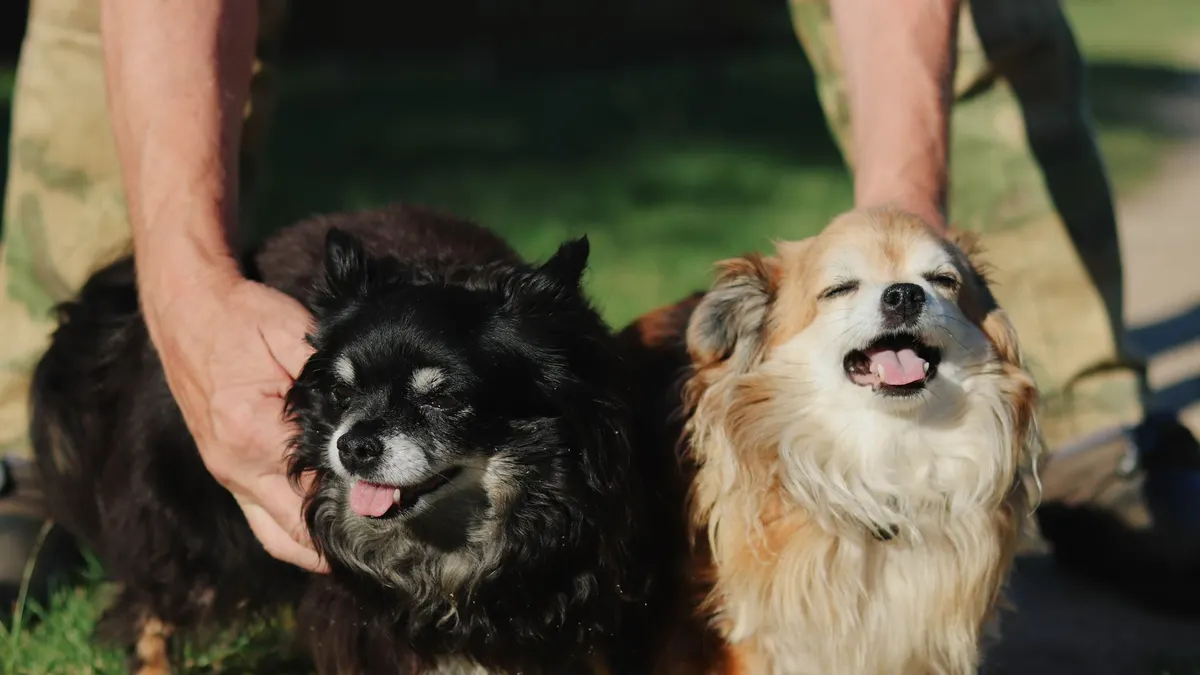
Behavior changes in an older dog are often a clue that something in daily life has become harder or less comfortable. A senior dog may seem confused, restless, louder, or more attached because of pain, sensory changes, routine shifts, or the day-to-day strain of aging.
Start with a practical pattern check
It helps to note when the behavior happens, how often it occurs, and whether it is paired with movement changes, vocalizing, pacing, accidents, or sleep disruption. A behavior shift is more meaningful when you can compare it to the dog’s normal pattern.
Common reasons for behavior change
Some of the most common factors include:
- discomfort at rest or after standing up
- house setup changes or bathroom access issues
- vision or hearing changes
- nighttime confusion or disorientation
- a routine that feels less predictable
- reduced mobility or confidence on floors or stairs
When you look at the dog’s full routine, the cause is often easier to see.
What helps at home
A calmer routine, more predictable lighting, easier access to food and water, and stable floor surfaces can do a lot for a senior dog. If the dog is pacing, following, barking, or unsettled at night, give the dog a quiet environment and reduce confusion where you can.
When to speak with a veterinarian
If the behavior is sudden, worsening, or paired with pain, weakness, accidents, appetite changes, or unusual confusion, a veterinary conversation is a good next step. Behavior change can sometimes be tied to pain or a health issue that is easier to address early.
Bottom line
Senior dog behavior issues usually make the most sense when you look at the full context: comfort, mobility, sleep, routine, and new stressors. Good support starts with careful observation and a calmer, easier environment.