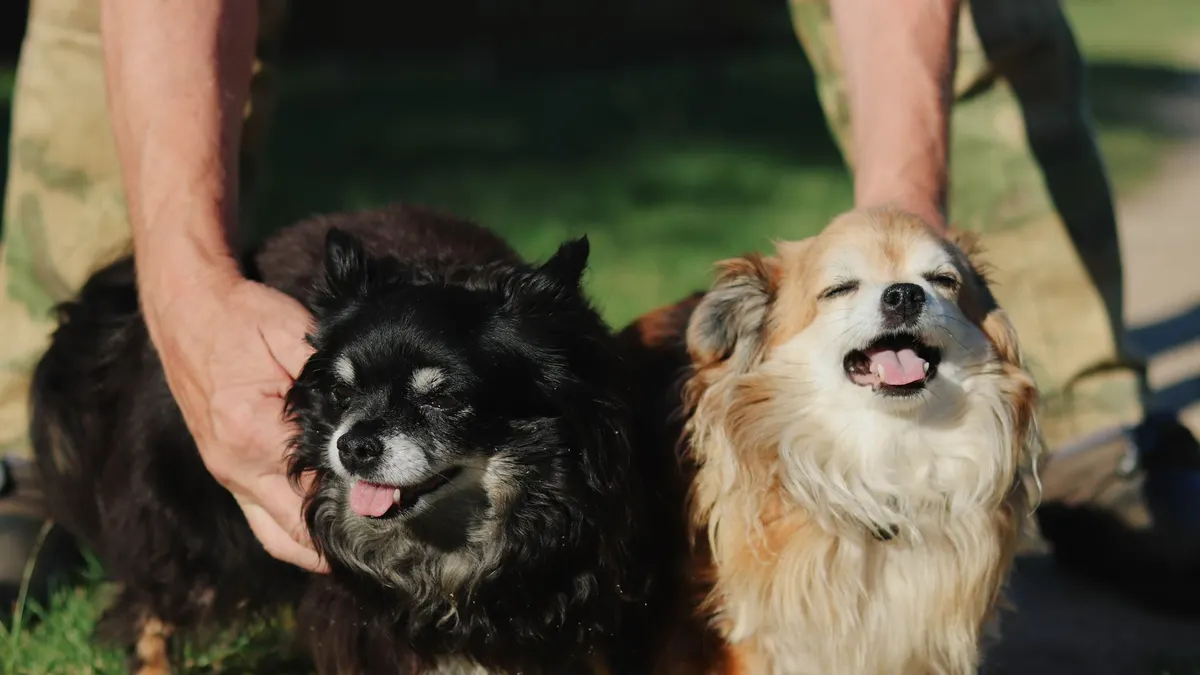
Behavior changes in an older dog are often a clue that something in daily life has become harder or less comfortable. A senior dog may seem confused, restless, louder, or more attached because of discomfort, sensory changes, sleep disruption, routine shifts, or reduced confidence moving around the home.
Quick answer
New behavior is worth observing rather than dismissing as “just aging.” Write down what changed, when it happens, and what else is happening at the same time. A pattern can help you make a safer home adjustment and give your veterinarian more useful information.
Changes owners commonly notice
Behavior changes can look different from dog to dog. Common examples include:
- pacing or waking more often at night
- barking or whining at times that were previously quiet
- seeming lost in familiar rooms
- following a caregiver more closely than usual
- having accidents despite a previously reliable routine
- withdrawing, hesitating, or becoming less interested in normal activities
These signs do not identify one specific cause by themselves. The useful question is what changed around the behavior and whether the change is gradual, intermittent, or sudden.
Look for the pattern, not just the moment
For several days, keep a short log with five details:
- Time and place: Note whether it happens after waking, during the night, near stairs, or in a particular room.
- What happened first: Record a meal, walk, nap, bathroom trip, visitor, loud noise, or difficult transition.
- Movement and comfort: Watch for stiffness, slipping, hesitation, difficulty standing, panting, or repeatedly changing position.
- Basic routines: Note appetite, drinking, urination, bowel movements, and sleep.
- What helped: Record whether lighting, a quiet room, a bathroom break, traction, or reassurance changed the behavior.
This kind of observation is more useful than trying to label the behavior from one difficult evening.
Why an older dog may behave differently
Several everyday changes can overlap:
Comfort and mobility
An older dog may become vocal, avoidant, or restless when standing, walking, using stairs, or settling into bed is harder. A dog that slips on smooth floors may also avoid a room or follow a person for help. Review the routes your dog uses most, and consider the guidance in Why Is My Senior Dog Slipping on Hardwood Floors?.
Hearing and vision changes
Reduced hearing or vision can make familiar sounds, shadows, furniture, and nighttime movement feel less predictable. Keep pathways clear, avoid moving important furniture without a reason, and use gentle lighting between the resting area and water or the outside door.
Sleep and nighttime disruption
Nighttime pacing, barking, and restlessness can have several possible contributors, including discomfort, a need to toilet, anxiety, or confusion. Read the focused guides on nighttime pacing, night barking, and why your dog is restless at night after noting your dog’s specific pattern.
Routine and environment
Later meals, visitors, changes in work schedules, a new pet, or less predictable access to the yard can affect behavior. A consistent sequence for meals, walks, medication, rest, and bedtime gives your dog fewer transitions to interpret.
Cognitive or medical concerns
Confusion, house-soiling, changes in sleep, and altered interaction can sometimes occur alongside health problems. Why Does My Senior Dog Seem Confused? explains what to observe, but it cannot determine the cause. A veterinarian should assess persistent, progressive, or concerning changes.
Low-risk changes to try at home
Start with one or two changes so you can tell what helps:
- keep meals, walks, and bedtime at consistent times
- add low, even lighting to nighttime routes
- use stable, non-slip surfaces where your dog turns or stands
- keep water, bedding, and the exit route easy to reach
- offer a quiet resting place away from sudden noise
- use calm, brief reassurance instead of punishment for accidents or vocalizing
- avoid forcing stairs, jumps, or long walks when your dog is hesitant
Do not give human medication or make a major diet or exercise change without veterinary advice.
When to call your veterinarian
Contact your veterinarian promptly for a sudden or rapidly worsening behavior change, collapse, marked weakness, trouble breathing, severe pain, repeated vomiting, seizures, inability to urinate, or trouble standing. Arrange a visit for persistent confusion, nighttime disruption, new accidents, appetite or drinking changes, repeated vocalizing, or a noticeable decline in movement or interaction.
Bring your observation log and, when safe, a short video of the behavior. Mention any new medication, supplement, household change, fall, or change in eating, drinking, urination, or bowel habits.
Bottom line
Senior dog behavior changes are best understood in context: comfort, mobility, senses, sleep, routine, and health can all interact. Observe the pattern, make the home easier to navigate, and involve your veterinarian when the change is new, persistent, worsening, or paired with other symptoms.