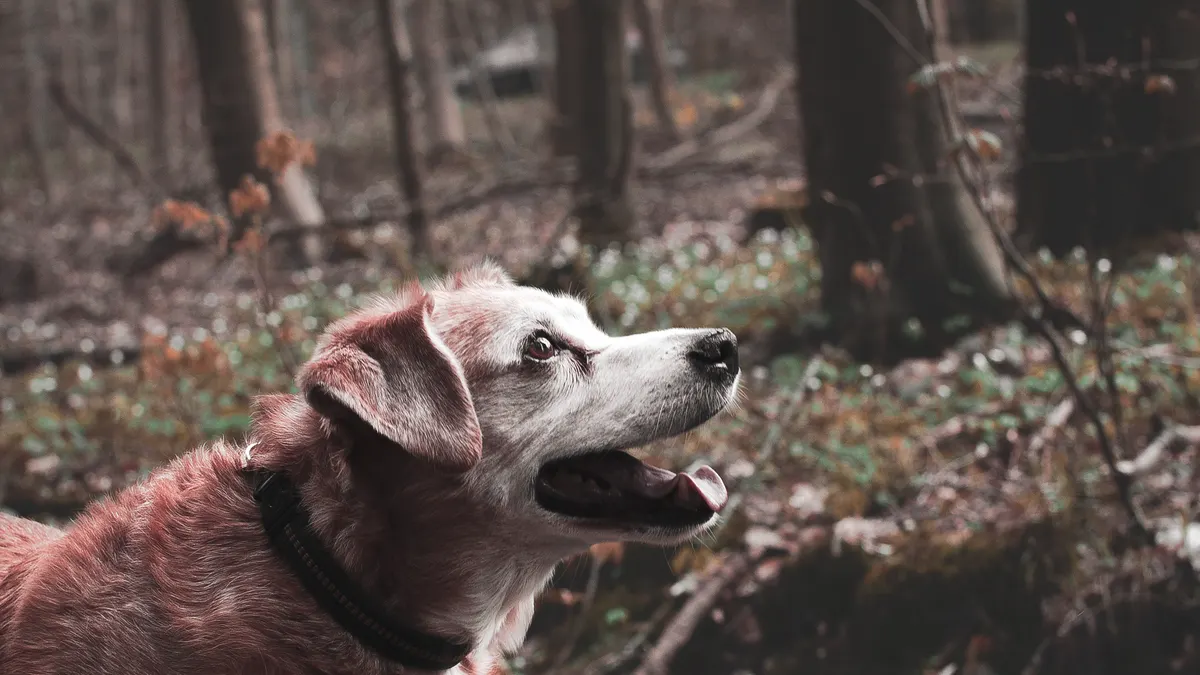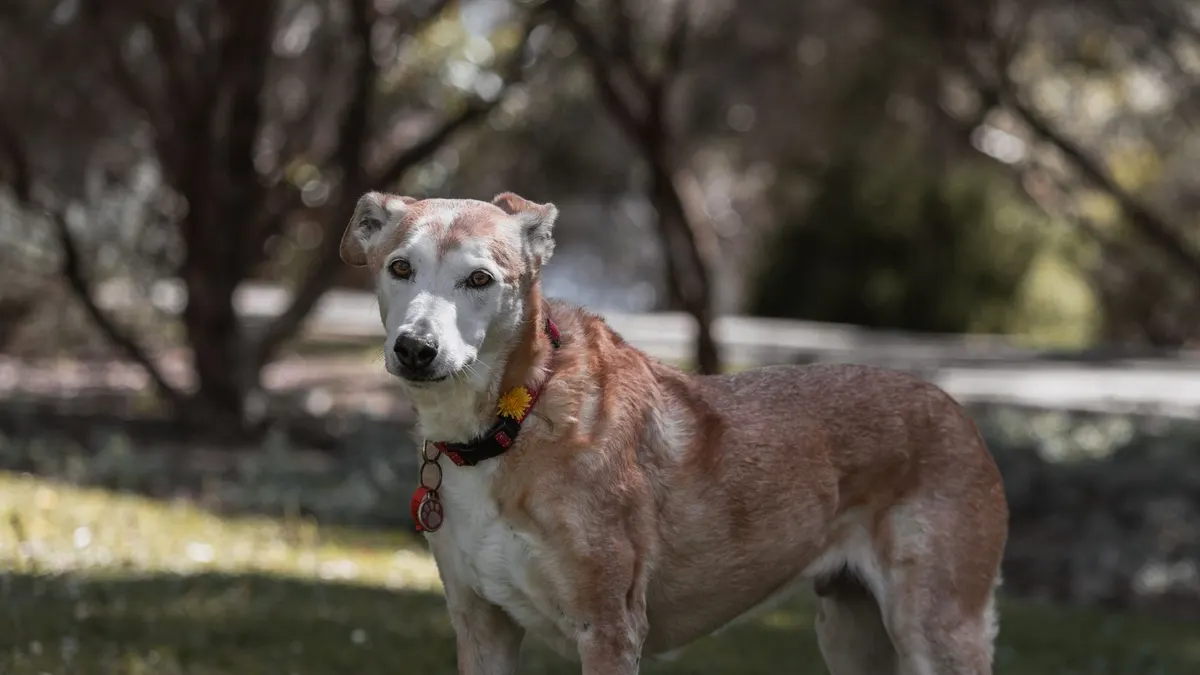
"Why is he still pacing at eleven at night when nothing has changed?" A reader asked me that after her twelve-year-old corgi started orbiting the coffee table every evening — same house, same walks, same dinner, and a dog who had slept through the night for a decade. Almost everything had changed, though. She'd gone back to the office three days a week, and the dog's world had quietly lost its shape.
A calm routine is how you give that shape back. Not rigidity for its own sake — the removal of the cognitive load that uncertainty places on an aging brain. When an older dog wakes up knowing, not guessing, what comes next, the body relaxes, the pacing quiets, and the worried nighttime bark fades.
What a calm routine really means
A calm routine trims the stress out of an aging dog's day: three to five anchor events at roughly the same times, gentle transitions between them, a quieter home environment, and one fixed evening wind-down. It is not an hour-by-hour schedule, and it is not the whole daily-care plan — this page targets arousal and anxiety specifically. Most older dogs settle noticeably within one to two weeks of predictable structure.
Why predictability quiets an aging dog
Senior dogs process change more slowly. Hearing fades, vision dims, joints stiffen, and the world that once felt familiar starts to feel unpredictable. A steady routine reduces the number of new decisions a dog has to make every hour. When meals happen at the same time, in the same place, from the same bowl, the brain can rest instead of scanning for cues.
There's a biological layer too. Older dogs often develop disrupted circadian rhythms, so sleep gets patchy and nighttime restlessness grows. Same light, same mealtimes, same walk timing helps reinforce the body clock. The dog version of sundowning — disorientation that worsens in the late afternoon and evening — is well documented in veterinary literature, and a consistent wind-down sequence is one of the few non-drug strategies that genuinely seems to help.
Turn the house down before you train the dog
- Audit for stressors. Flashing lights, loud appliances, slippery floors, and frequent furniture moves all add cognitive load. Fix what you can this week.
- Pick anchor times you can actually keep. A routine that collapses on weekends is not a routine. Be realistic about mealtimes, walk windows, and bedtimes.
- Gather the tools. Non-slip mats for eating and sleeping, nightlights along the usual paths, a raised bowl if bending hurts, and a bed placed away from foot traffic.
- Brief the household. Everyone should know the sequence and the rules — especially the rule that the senior dog doesn't get startled or over-handled.
- Check health first. Pain, urinary urgency, and cognitive decline all masquerade as restlessness. Make sure you aren't trying to calm a dog who needs medical help.
Pick your anchors and keep them
Three to five fixed events carry the whole day: first trip out, breakfast, one gentle walk, dinner, last trip out, bed. Sequence matters more than clock time — dogs read order far better than they read hours — so a day that shifts by thirty minutes but keeps the order still counts as consistent. Hold each anchor within a 15- to 30-minute window. If you want the full hour-by-hour care structure, including grooming and medication timing, the full-day care plan owns that; here, the anchors exist for one purpose: nothing surprising.
The wind-down sequence, step by step
The evening is where calm routines earn their keep. Start about an hour before your own bedtime and run the same order every night:
- Dim the lights. Whole-house, not just the room the dog happens to be in.
- Last bathroom break. Same door, same short route, unhurried minutes to fully go.
- Settle. Get your dog onto their bed with a slow petting pass or a few minutes of gentle massage, in a low voice.
- Drop the house's energy. No late television volume, no guests, no rowdy play after this point. Loud anything at this hour can undo the whole day.
- Keep night trips boring. If they need out again: low lights, quiet voices, brief walk, back to bed. The message is "bathroom break, not morning."
I learned the hard way that the wind-down matters more than the wake-up: when I kept shifting our last trip out by an hour depending on my own schedule, Juniper's midnight pacing got worse, not better. Fixing that one event fixed most of the night.
Routine breakers
- Erratic mealtimes. A dog who eats at 6 p.m. on weekdays and 9 p.m. on weekends has no reliable anchor.
- Sudden schedule overhauls. If plans change, shift by about 15 minutes every few days instead of all at once.
- Loud late-night activity. Parties, vacuuming, or kids thundering through the house spike anxiety in a dog whose senses are already on alert.
- Moving furniture or the bed without a transition. Older dogs map the house visually and by scent; a relocated bed can feel like a new world.
- Forcing interaction during rest. Let a sleeping senior dog sleep. Abrupt waking can trigger confusion or defensive snaps, especially in dogs with hearing loss.
- Trying to out-walk anxiety. A physically exhausted but mentally unsettled dog will often pace more, not less.
The two-week settling-in checklist
Week one:
- Pick your three to five anchors and write them down.
- Put nightlights in the hallway and non-slip mats under the bowls.
- Run the wind-down sequence at the same time every night.
Week two:
- Hold anchor times within the 15- to 30-minute window.
- Add a short, quiet check each evening: how fast did they settle? Any pacing after midnight?
- Keep everyone in the house on the same rules.
Most owners notice a calmer dog somewhere between day seven and day fourteen. If nothing has shifted by the end of week two, read the next section before you tighten anything further.
How you'll know it's working
- They wait quietly by the bowl at mealtime or drift to the door at walk time — anticipation without anxiety.
- Nighttime pacing, barking, and room-to-room following drop.
- Sleep gets deeper and mornings start more gently.
- Appetite steadies at the expected times.
- Body tension — tight jaw, panting at rest, raised hackles — eases.
When calm isn't enough
If your dog is calmer overall but still struggles at one stretch of the day, edit that segment instead of abandoning the plan. Restlessness after dinner may mean a shorter walk or an earlier last trip out. But if the routine has held for two weeks and you still see nightly pacing, new vocalizing, house-soiling, or apparent confusion, that's a veterinary conversation — pain, urinary infection, and cognitive dysfunction are not things a schedule can fix. The symptom-specific guides for the night-pacing walkthrough and the night-barking walkthrough can help you describe what you're seeing. Your vet may disagree about the cause; the log is what you bring, not what you conclude.
Three questions about calming routines
Will a strict routine make my dog inflexible?
No. Older dogs gain confidence from predictability, not dependence on it. A stable routine usually makes a senior dog more adaptable to small, well-signaled changes, because the baseline is solid enough to absorb a surprise.
What if I work and can't be home for every meal?
Use an automatic feeder on a consistent schedule, or ask a neighbor or dog walker to hold the same timing. The point is predictability, not who delivers the food.
My senior dog still barks at night even with a routine. What am I doing wrong?
Possibly nothing. Night barking can signal pain, cognitive decline, sensory loss, or outside noises a duller brain can't filter. If two weeks of consistent routine doesn't move it, it is a vet conversation rather than another schedule tweak.
Write the wind-down on a card tonight
Here's the whole setup: before bed tonight, tape a card to the fridge with five lines — wake, breakfast, walk, dinner, lights-out — and start the wind-down sequence sixty minutes before your bedtime tomorrow. Run it unchanged for seven nights. Keep a pen beside the card and mark one tally each time the dog paces or barks after midnight. That tally is your before-and-after, and it's exactly what to hand your vet if the calm doesn't come.