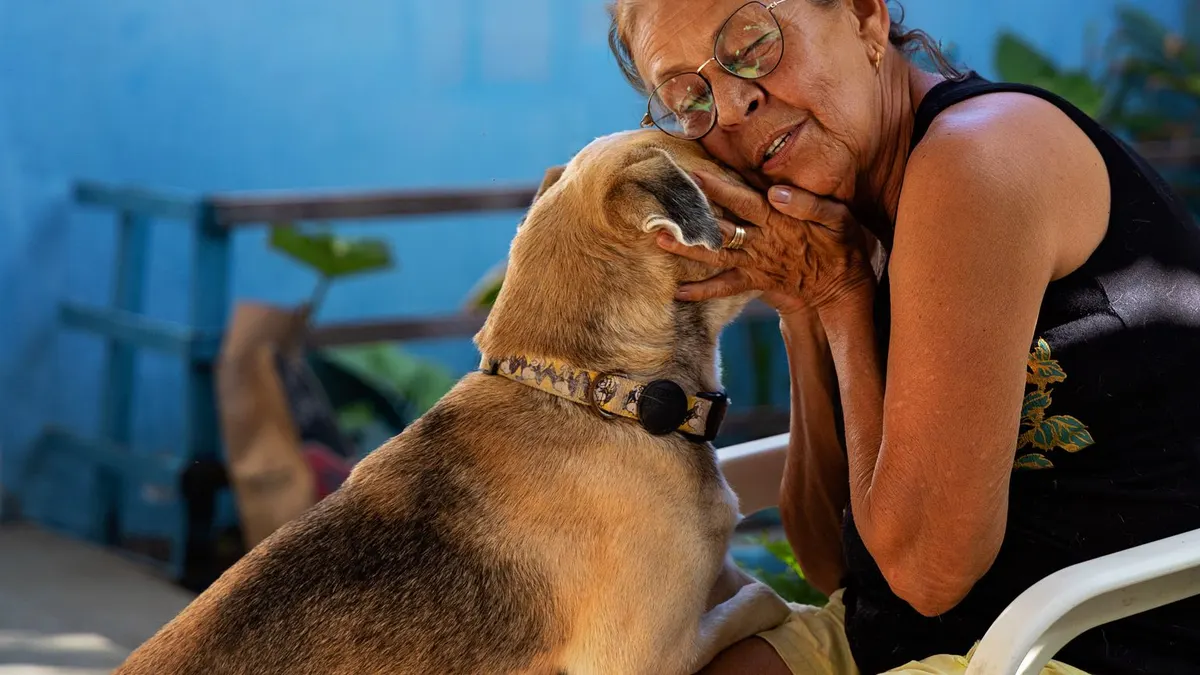
Brushing is the one dental intervention with the strongest evidence behind it — and the one most senior dog owners give up on, usually because the dog hates the process or the tools do not fit an aging mouth. The right brush lowers both barriers: less gagging, less poking at sore gums, and a shorter session the dog can tolerate.
This guide covers brush types, how to match the head to an older mouth, a tolerance-building plan for resistant dogs, and the actual cleaning steps.
Quick answer
For most senior dogs, a soft-bristled brush with a small head wins — either a finger brush for sensitive or small mouths, or a long-handled brush with an angled head for reaching back molars without fighting the dog. Pair it with dog-specific enzymatic toothpaste and short, calm sessions.
Why senior mouths need a different approach
An aging mouth changes the brushing equation in three ways:
- Gums are often tender. Periodontal disease is present in a large share of senior dogs. Poking inflamed gums with a stiff or oversized brush head ends sessions fast and teaches the dog that brushing hurts.
- Jaws tire and arthritis is real. TMJ discomfort or neck arthritis can make a dog resist the head position needed for long brushing sessions. Sessions need to be shorter and positioning gentler.
- Teeth may be worn, chipped, or missing. Exposed roots and uneven surfaces need soft bristles and a light touch — friction, not scrubbing.
None of this means skip brushing. It means the tools and the pace should fit the mouth in front of you.
Brush types compared
📊Dog Toothbrush Types for Senior Dogs
| Type | Strengths with seniors | Weaknesses | Best fit |
|---|---|---|---|
| Finger brush | Great feel for gum sensitivity; fits tiny mouths; less scary for wary dogs | Short reach to back molars; your hand is close to the teeth | Small breeds, very sensitive gums, dogs new to brushing |
| Long handle, dual head (small + large) | Reaches back molars without stretching lips; keeps hand away from bite zone | Feels more clinical; can bump the roof of the mouth if rushed | Medium and large dogs tolerant of handling |
| Angled single-head brush | 45° angle targets the gumline where plaque matters most | Usually one head size per product | Dogs with existing gumline inflammation |
| Cat-size small head brush | Fits crowded or tiny mouths without gagging | Slower to cover tooth surfaces | Toy breeds and dogs with missing teeth changing the mouth shape |
Click on any product to view full details and reviews
Matching the brush to the dog
Three checks before buying anything:
- Head size test. The bristle head should fit against the back teeth without stretching the dog's lips or triggering a gag. For small seniors, a "small dog" head is often still too big — cat-size heads work.
- Bristle softness. Press bristles against your own gumline. If it feels sharp, it will feel worse on inflamed gums. Soft or extra-soft is the default for senior dogs.
- Handle for your grip, not the dog's mouth. If your hand shakes, or the dog wriggles, a handle with a non-slip grip matters more than any feature on the head.
Owners of small senior dogs often end up with both a finger brush and a long-handled brush — finger brush for the front teeth and canines, long handle for the molars. That two-brush setup costs little and covers both needs.
Finger Toothbrushes for Dogs
Compare soft silicone finger brushes for small mouths and sensitive gums. Check bristle softness, fit on your finger, how easy they are to clean and dry, and whether they come in multi-packs for regular replacement.
Look for:
- soft, flexible bristles rather than hard nubs
- a snug fit on your finger with good tactile feedback
- easy to rinse and dry between uses to avoid bacterial growth
Dual-Head Dog Toothbrushes with Long Handle
Compare long-handled dual-head brushes for reaching back molars safely. Check head angle, bristle softness on both ends, handle grip, and whether the small head suits your dog's mouth size.
Look for:
- a small enough small-head end for your dog's actual mouth
- soft bristles on both ends, not just one
- angled neck that keeps your hand out of the dog's face
Enzymatic Dog Toothpaste and Brushing Kits
Compare enzymatic toothpastes in flavors dogs accept, bundled with brush options. Enzymatic formulas continue working after brushing — check for xylitol-free labeling, flavor variety, and VOHC-listed status where available.
Look for:
- explicitly xylitol-free (xylitol is toxic to dogs)
- a flavor your dog will lick willingly — chicken and malt are common acceptance leaders
- enzymatic action, which keeps reducing plaque between sessions
If the dog resists: a tolerance plan that works
Most senior dogs were never systematically desensitized to mouth handling, so resistance is learned, not stubbornness. Restart from where the dog is comfortable:
- Days 1–3: touch only. Lift the lips on one side for two seconds, reward. No brush, no paste. Repeat a few times a day.
- Days 4–6: paste as a treat. Let the dog lick enzymatic toothpaste off your finger. This builds a positive association with the taste.
- Days 7–9: brush, no paste. Touch the brush to the canine teeth and one or two back teeth. Two to three seconds. Reward and stop before any struggle.
- Days 10+: small circles at the gumline. Add a few seconds per session. Stop while the dog is still okay — not after the dog is upset.
For dogs with arthritis or neck stiffness, experiment with position: some tolerate brushing best while lying on their side, which avoids the upright head posture that hurts.
📋Senior Dog Brushing Session Checklist
0/8 completed- Dog-specific enzymatic toothpaste (never human toothpaste — xylitol and fluoride risk)
- Soft-bristled brush matched to the mouth size
- Session under 60 seconds to start; end while the dog is still calm
- Focus on the outer gumline surfaces — that is where plaque accumulates most
- Inner surfaces and chewing surfaces get less priority if tolerance is limited
- Position supports the dog: lying on a side or chin resting, no forced upright head
- Stop immediately on pain signs: yelping, head shying, bleeding beyond light pink
- Reward after every session, even a failed one
The actual cleaning steps
Once the dog tolerates the brush:
- Put a pea-sized amount of toothpaste on the bristles.
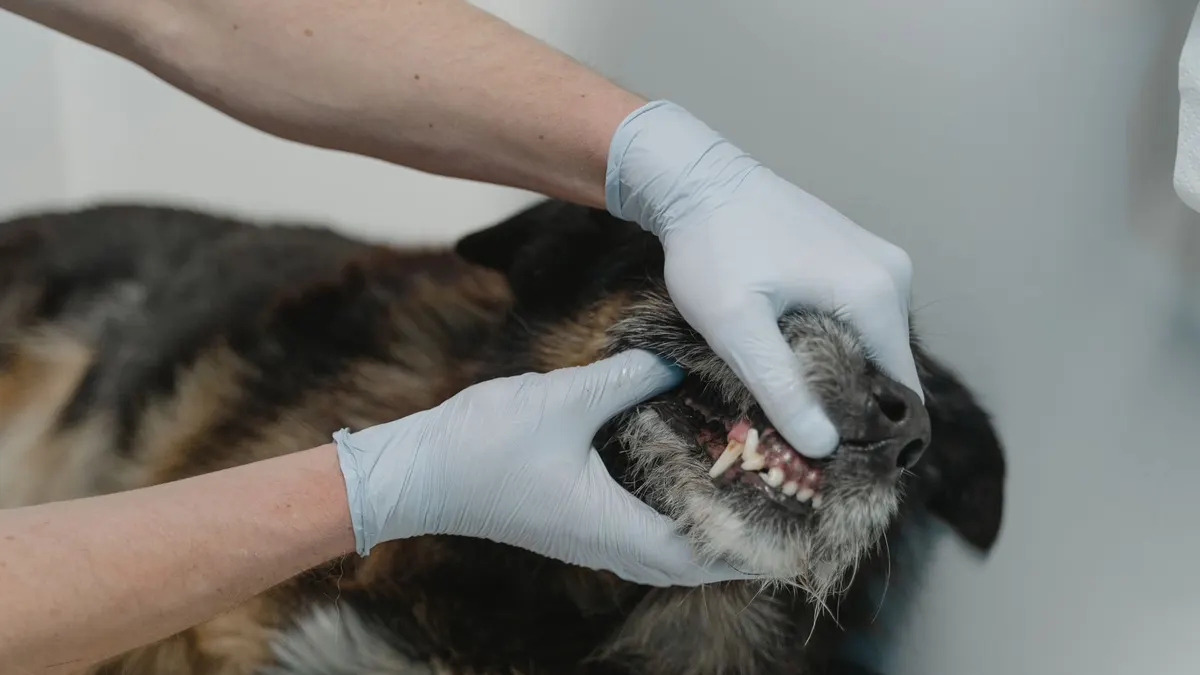
- Lift the lip on one side — do not pry the mouth wide open.
- Brush in small circles at 45° to the gumline, starting with the canines.
- Work backward toward the molars on that side in short strokes.
- Switch sides rather than crossing the nose with the brush.
- Total time: 30–60 seconds is enough for daily maintenance.
The outer surfaces matter most because the tongue does a reasonable job on the inner surfaces, and the chewing surfaces get some abrasion from food and chews.
When brushing is not enough
Brushing slows plaque; it does not remove hardened tartar or treat infection below the gumline. A veterinary dental exam is due when you see brown or gray buildup, red or bleeding gums, persistent bad breath, or the pain signs covered in dental chew safety. In senior dogs, the anesthesia question deserves an honest, individualized conversation with your vet — pre-anesthesia bloodwork and age-adjusted protocols make cleanings feasible for many older dogs.
Related guides
- Senior Dog Dental Care
- Best Dental Chews for Older Dogs
- Senior Dog Grooming: A Simple Routine
- How Often Should a Senior Dog See the Vet?
- Senior Dog Daily Routine
- Senior Dog Medication Routine Tips for Owners
FAQ
Is a finger brush or a long-handled brush better for a senior dog?
Finger brushes give better feel for sensitive gums and suit small mouths; long-handled brushes keep your hand further from the teeth and give more reach for back molars. Many owners use both — finger brush for the front, long handle for the far side.
How do I brush an older dog's teeth if the dog hates it?
Restart from tolerance, not technique: days of just touching the muzzle and lips, then tasting the toothpaste, then the brush without paste, then a few seconds of actual brushing. Short sessions that end early build more tolerance than long ones that end in a struggle.
What size toothbrush head does a senior dog need?
The head should fit comfortably in the back of the mouth without stretching the lips. Small and toy breeds need a small or cat-size head; medium and large dogs usually do fine with a small dog head rather than a large one.
How often should I brush a senior dog's teeth?
Daily is the goal supported by veterinary dental guidance, but three to four consistent sessions a week already help. For a dog new to brushing, start with two short sessions and build up.
My senior dog has missing teeth. Should I still brush?
Yes — brush what remains, especially the gumline where teeth meet the gums. Missing teeth often mean the remaining ones carry more chewing load, and existing gum disease needs more care, not less.