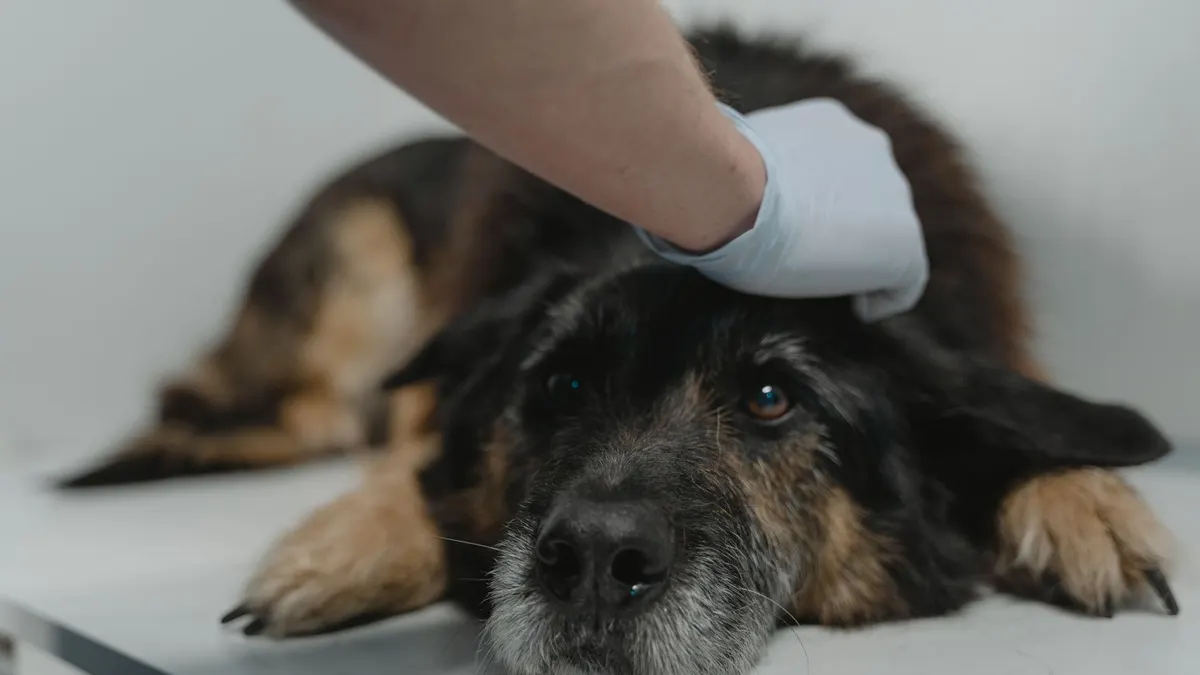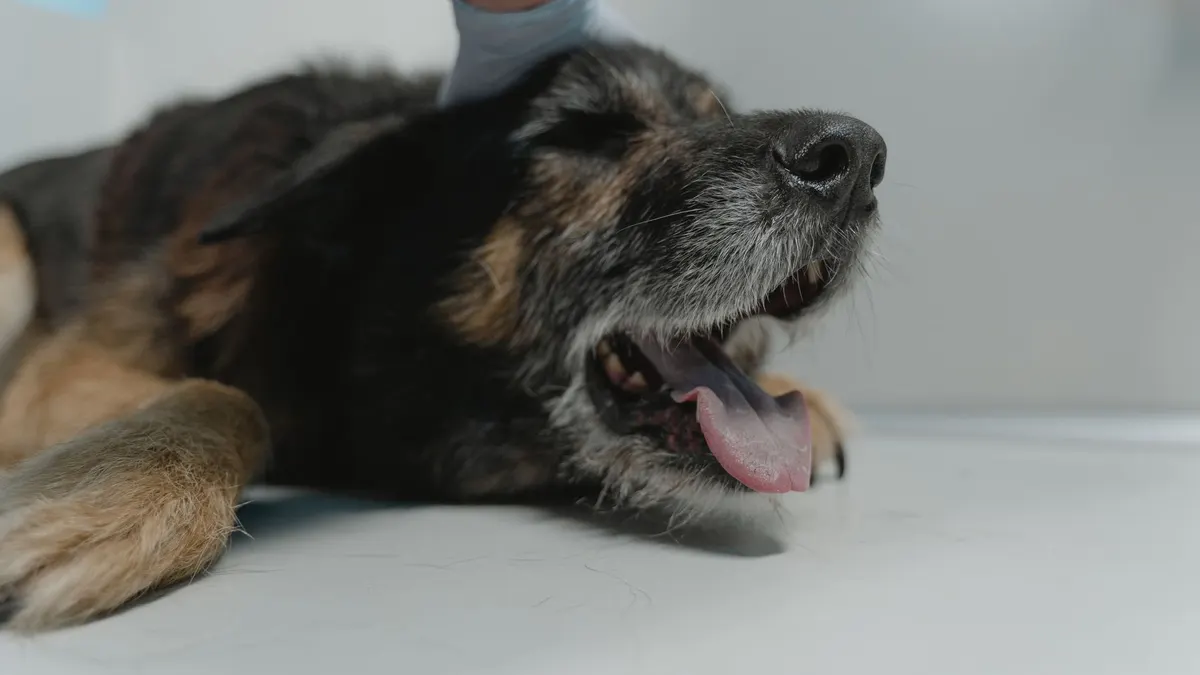
The scale first, then the table, then the floor for the walk. A good senior exam has a rhythm to it, and if your dog's visit was five minutes of stethoscope and a vaccine sticker, that rhythm was missing. Older dogs hide illness well — kidney decline, dental infection, a low thyroid, an early murmur all run silent for months — so the senior visit is built to find what you cannot see from the couch.
How often to come is a separate question, answered on the visit-schedule page. This page is about what the visit itself should contain, and what you should walk out holding.
What the visit should cover, in short
A thorough senior wellness exam covers a full hands-on physical from heart and lungs to abdomen, lymph nodes, skin, teeth, eyes, and ears; a weight and body-condition trend; a gait and pain grading; and baseline labs — chemistry, complete blood count, urinalysis, thyroid, plus a blood-pressure reading. You leave with printed results, any new findings written down, and a date for the next visit, usually six months out.
If a piece of that is missing and your dog is genuinely senior, it is fair to ask for it. None of it is an upsell; each station exists because a specific silent disease hides from the others.
The hands-on exam, station by station
A complete senior workup moves head to tail, and most of it takes minutes you will wish owners used more often:
- Weight and body condition. The number, the ribs, the waist from above, and the comparison to last visit. Trend beats any single reading.
- Eyes. Cataracts versus ordinary age clouding, dry eye, retinal changes, pressure if the breed or findings warrant it.
- Ears. Infection, debris, growths — and a smell check that takes one second and finds what owners stop noticing.
- Mouth. Tartar, gum recession, loose teeth, oral growths. Dental infection in a senior is a pain problem and a heart-kidney problem wearing one costume.
- Heart and lungs. Murmurs, rhythm, breathing sounds. A new murmur at eleven is not automatic news, but it is a plan.
- Abdomen. Two careful hands feeling for enlarged organs, masses, fluid, or tenderness.
- Skin, nodes, and lumps. Lymph nodes, mammary chains or testicles, and every lump you already know about — size and texture matter as much as presence.
- Hydration and coat. Skin elasticity and gum quality; thinning, flaking, or a dull coat can be the first visible face of a thyroid or adrenal problem.
- Orthopedic and gait. Standing, sitting, turning, and walking — ideally on the floor, not only the table. Joints get range-of-motion and pain-on-movement grading.
Take five minutes before the appointment for a short leash walk so the vet sees a warmed-up real gait rather than a stiff dog just out of a carrier.
The lab panel and what each number is hunting for
The senior panel is where silent disease gets caught. Here is what each piece is actually for:
| Test | What it hunts |
|---|---|
| Blood chemistry | Kidney values (creatinine, BUN, SDMA), liver enzymes, blood sugar, electrolytes, proteins |
| Complete blood count | Anemia, infection, platelet problems |
| Urinalysis | Concentrating ability, infection, crystals, protein or glucose in urine — often abnormal before blood is |
| Total T4 | Hypothyroidism, the quiet cause of weight gain, lethargy, and coat change in older dogs |
| Blood pressure | Hypertension, which travels with kidney and heart disease and can threaten vision suddenly |
Findings steer add-ons: heartworm and tick-borne testing by region, chest X-rays for a new cough or murmur, or a fine-needle aspirate of a lump that takes two minutes in the room and saves a biopsy later. Ask what each extra test would change about the plan; a good vet will tell you, because the honest answer is sometimes nothing.
Pain, mobility, and the questions they should ask you
Arthritis is the most underdiagnosed condition in senior dogs, almost always because owners report slowing down as aging rather than as pain. The exam can only grade what it is told about. Mention trouble with stairs, stiffness after rest, refusing the car jump, a coat going unkempt over the hips because grooming hurts, and accidents that used to be impossible — several of those are pain talking, not old age.
Behavior gets examined too, and deservedly. Disorientation, reversed sleep cycles, new anxieties, or a dog who has stopped greeting you can mean cognitive dysfunction, fading hearing or vision, or untreated pain. Those have different answers, and the visit is where they get separated.
The two questions worth putting to the vet directly: is any part of this slowness pain, and what is the plan if it worsens before the next visit?
Your half of the exam: bring this, ask that
You are half the appointment. The vet sees the dog twice a year; you see him twice a day. Before the visit, write down:
- current food, amount, and any appetite shift with rough dates
- every medication and supplement, with doses — the shelf audit takes two minutes and prevents interactions nobody asked about
- water intake and urination changes, including any new accidents
- weight readings if you take them at home
- coughing, panting at rest, exercise tolerance, sleep disruption
- any new lump, however small, and when you first noticed it
- one or two short videos of the movements you cannot describe well
Then ask for the two things owners forget: a copy of every result, printed or emailed, and the watch-list you are supposed to bring back next time.
The first time I carried a written log into a senior exam, the vet stopped mid-sentence, read it for a full minute, and rewrote the pain plan on the spot. Data changes appointments.
Reading the results after you get home
Single numbers get overread in both directions. The kidney value inside the reference range that climbed for three panels is a story; the one odd number in an otherwise stable dog usually is not. Keep every result in one folder so the trend is visible at a glance — that folder is the actual product of a senior exam program.
Ask what happens to the schedule if something is borderline. A dog with early kidney changes may move to three- or four-month rechecks, and that answer is worth getting while you are still in the room rather than wondering about it at midnight.
Three questions about exam content
How much does a senior wellness exam typically cost?
Prices vary by region and how deep the panel goes. The physical exam itself is the modest part; adding chemistry, blood count, urinalysis, thyroid, and pressure readings multiplies it. Many clinics bundle a senior package, and splitting the full panel across one of the two yearly visits is easier on the budget than one large annual bill. Ask for an itemized estimate and say what you can spend; most teams will tell you which tests matter most for your dog.
Is blood work really necessary if my dog seems healthy?
Usually yes, and this is the point of the word baseline. Kidney, liver, thyroid, and some cancers run months ahead of visible signs, and a personal normal is worth more than a population normal: a kidney value that stays inside the range but climbs across panels is a warning you only own if you tested while the dog looked fine.
Can I skip exams if my dog hates the vet?
Not skipping — reshaping. Quiet rooms, floor-level exams, pre-visit anti-anxiety medication from your vet, and short appointments make modern visits survivable for anxious seniors. Call ahead and plan it with the team; most clinics would rather engineer a low-stress visit than see you again in eighteen months with a problem that had time to grow.
Ask for the baseline, calendar the next one
Tonight, do two things. Write the bring-list above on one page — even if the answers are all "no change" — and set the date for the next senior visit in the same calendar you use for refills. At the appointment itself, leave only when you hold three things: a copy of the results, the watch-list in writing, and the reason for every add-on test you agreed to pay for.