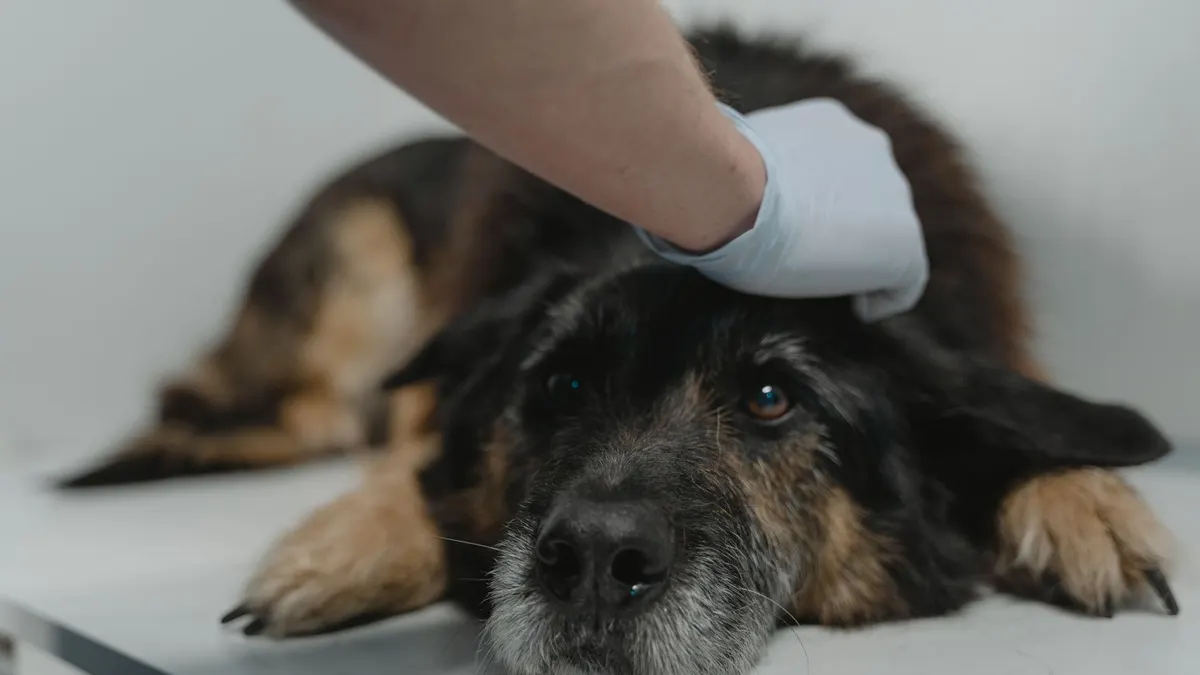
So how often, really? Once a year felt responsible when the dog was three. At thirteen it is a different arithmetic entirely, and most owners only notice the gap after something that a spring visit would have caught cheaply. The honest answer is shorter than the one most calendars assume, and it gets shorter still as the dog ages.
Six months is the working number
Most senior dogs should see the vet every six months. A healthy seven- to ten-year-old with no diagnosed conditions can hold an annual schedule if the home monitoring is real, not aspirational. Past ten, or with any chronic condition — arthritis on daily medication, kidney disease, heart disease, diabetes — twice-yearly becomes the standard. Dogs on long-term prescriptions often need check-ins every three to four months for bloodwork and dose adjustments.
That is the whole answer. The rest of this page is about why the number is six, what moves it, and how to make each visit earn its keep.
Why the calendar shrinks as dogs age
A senior dog ages roughly five to seven human years per calendar year. A twelve-month gap for a thirteen-year-old is closer to skipping your own checkup for seven years. The interval shrinks because the biology speeds up, not because clinics want more traffic.
The second reason is silence. A dog can lose around 75 percent of kidney function before thirst and weight loss make it obvious. The same holds for early heart disease, thyroid imbalance, liver changes, and many cancers. By the time a senior looks sick, the window for easy and affordable intervention has usually narrowed.
And there is a data problem. One blood panel is a snapshot. Two panels six months apart show a direction. A creatinine value that sits technically inside the normal range but climbs across three visits is telling you something a single annual test never will. The six-month rhythm exists to build that trend line before the symptoms force one.
The kidney values that caught my own beagle, Juno, a full year before she ever looked ill are the reason I push this number instead of debating it. She never had a crisis. That is what early looks like when it works.
What moves your dog off the standard schedule
Treat six months as the default, then adjust for four things:
- Size and breed. Giant breeds reach the senior phase in their fives or sixes; many small breeds not until ten or eleven. The older the biological clock, the tighter the interval.
- Diagnosed conditions. Kidney disease, heart disease, Cushing's, diabetes, and hypothyroidism typically pull visits to every three to six months, with monitoring tests in between.
- Long-term medications. Daily NSAIDs, thyroid hormone, seizure drugs, and heart medications need periodic bloodwork to confirm the treatment is not taxing the liver or kidneys. Your prescriber's schedule beats any general rule.
- Recent change. A dog who has started losing weight, drinking more, coughing, or fading does not wait for the calendar. That is a phone call this week, not next spring.
If you cannot decide between two schedules, take the shorter one. The cost of an unnecessary wellness visit is small; the cost of a missed year rarely is.
Build the year: a visit calendar that works
A practical senior year looks like this:
- Two visits, six months apart, booked together. Book the second one on the way out of the first. Spring and autumn slots are easiest to keep because life does not collide with holidays.
- Full senior panel at one visit a year — bloodwork, urinalysis, thyroid, blood pressure — and a lighter exam-plus-review visit at the midpoint. Ask your clinic what their senior split looks like; many price it that way already.
- Medication rechecks on their own clock. If the vet wants a level check six weeks after a dose change, that is a third appointment, not a favor.
- Free weigh-ins in between. Most clinics will put your dog on the scale during open hours, no charge. Monthly numbers turn the trend line into something you own.
Write both dates on the same page as your care checklist. A calendar entry is the intervention; everything else is preparation.
What earns an unscheduled trip
Do not hold for the next appointment if you see any of these:
- drinking or urinating clearly more, or accidents in a previously clean dog
- weight you did not plan for, either direction
- a cough that persists, especially at night or after lying down
- a new lump, or an old one changing size or feel
- breath that suddenly turns foul
- confusion, wall-standing, getting stuck in corners, or nights turned into days
- stairs, car jumps, or rising from sleep suddenly becoming a negotiation
- vomiting or diarrhea lasting more than a day
And skip the appointment queue entirely for collapse, a seizure, labored breathing, a swollen hard belly, or sudden hind-leg weakness. Those are same-day emergencies, not items for the six-month visit.
Getting the most out of the fifteen minutes
A short appointment stretches when you arrive armed. Bring the written log with dates, not impressions. Bring a ten-second phone video of the thing — the stiff first steps after a nap, the night cough, the hesitation at the stairs — because a dog who limps at home often walks beautifully at the clinic, adrenaline being what it is. Bring every medication and supplement with doses.
Ask two questions before leaving: what should I watch for between now and the next visit, and if it changes, what is our plan? Ask for a copy of the lab results so the next visit has something to compare against. What the exam itself should cover — the hands-on stations, the panel, the mobility grading — is laid out in full on the wellness exam page; this page only owns the calendar.
Making the room friendlier on hard days
Stress and slippery floors are what turn a routine visit into a two-day setback for a fragile senior. Book the quietest slot. Carry a familiar mat or blanket for the exam table and the waiting room floor. Wait outside until the room is ready instead of parking next to a barking patient.
Ask, plainly, for accommodations: a ground-level scale, a ramp, an exam done partly in the car, a quiet room instead of the lobby. Some clinics offer Fear Free handling or house calls for frail dogs, and many will discuss a mild pre-visit anti-anxiety dose for the anxious ones. A dog who dreads the clinic is a scheduling problem to solve with the team, not a reason to skip the year.
Three questions about vet visit timing
Is once a year enough for a senior dog?
For a healthy dog between seven and ten with no diagnosed conditions and attentive home monitoring, annual can still work. Past ten, or with any chronic condition, move to every six months.
My senior dog seems fine. Do I really need to go?
Yes. The diseases that matter most at this age — kidney, heart, thyroid, early cancers — run silent for months. A visit while he looks fine is the visit that still has cheap, easy options on the table.
How can I make vet visits less stressful for my old dog?
Ask for the first or last slot of the day, bring his own non-slip mat or blanket for the floor and table, wait in the car until the room is ready, and ask the clinic about pre-visit anti-anxiety medication and home or ground-level exams.
Book the one you're already late for
Open the calendar now. If more than twelve months have passed since the last full exam, call today and book the earliest slot — mornings are usually quieter, and clinics tend to hold senior panels cheaper as a bundle, so ask what the visit will cost before you commit. Put the next one six months out at the same time. Then start the log that makes both visits worth more than their price.