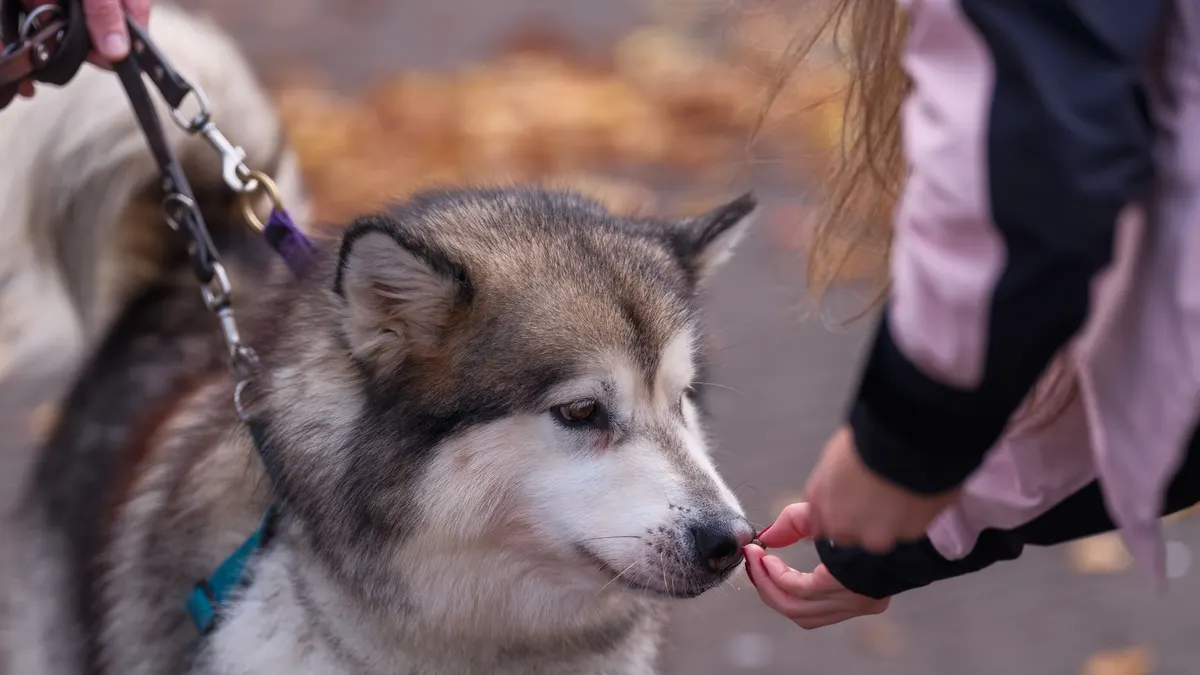
You are on your knees, a pill is buried in a triangle of cheese, and the eleven-year-old who once inhaled socks is delicately peeling the cheese off it like a wrapper. Every owner of a medicated senior has lived this scene. The cost of losing it is real — a skipped pain tablet means a sore night, a missed heart drug is not a small thing — and the cost of winning it the wrong way is a dog who now distrusts every treat you offer.
What works, in sixty seconds
Use a small, aromatic carrier a food-safe pill can hide in — a chilled wet-food meatball, soft cheese, xylitol-free peanut butter, pill paste, or a commercial pocket — and run it as a fast three-treat sequence: plain, loaded, plain. For drugs that cannot be given with food, learn cheek-pouch placement followed immediately by water or a swallow trigger. Keep the whole event under thirty seconds, in the same calm place, and ask the clinic about compounded liquids or chews the moment one method stops working.
That is the complete playbook. The rest of this page is the technique detail.
Set the stage before you grab the bottle
Most pill-time failures are decided before the pill exists. Sort it out first:
- Read the label for food rules. Some antibiotics and thyroid medication must be given on an empty stomach; hiding them in breakfast silently disables the dose. If the label is vague, the pharmacist can answer in one phone call.
- Pick one quiet spot and one time. The kitchen corner at dinner beats a different rooms-and-scrimmage every day. Predictability lowers resistance more than cleverness ever will.
- Prep the carrier before you touch the dog. Meatball rolled, syringe drawn, water within reach. Fumbling with the bottle while holding a tense senior is how pills get dropped and trust gets spent.
- Check the dog's mouth situation first. A senior with dental pain will not chew a hard carrier, and a sore neck will resist any head handling. Those are conversations for the vet, not obstacles to muscle through.
A quick non-medication habit helps too: on off days, lift the lips and hold the muzzle for two seconds, then treat. The mouth should not only ever predict battle.
The treat-swap routine for food-safe pills
The sequence matters more than the carrier. Plain treat. Loaded treat. Another plain treat, immediately. Three items in fast succession, and by the third the dog is swallowing on autopilot, already waiting for the encore instead of auditing number two.
Carriers that hold up in real practice:
- commercial pill pockets or molded treat carriers
- soft cheese or cream cheese wrapped tight around the pill
- smooth peanut butter or nut butter — verify the label has no xylitol
- liver paste, pâté, or pharmacy pill paste
- a small meatball of wet food, chilled so it keeps its shape
- a marshmallow or banana center for dogs with no dietary restrictions
Keep the loaded piece smaller than the plain ones and slightly bigger than the pill, so nothing rattles around inside it. For large capsules, make the medicated piece the exception — bigger, not smaller, so the capsule cannot slide out mid-chew.
My lab mix, Rufus, once ate the cheese, left the pill on the rug, and looked at me while doing it. After that morning I stopped trusting any food trick with a dog who had learned the game, and started teaching my households the hands-on method instead. It ended the daily negotiation in about a week.
The hands-on method for pills that can't be hidden
Approach from the side, never looming over the head — a shadow from above reads as threat to most older dogs. One hand under the muzzle, tilting the head only slightly up. With the other, press the lip back against the side teeth and open a pouch between cheek and molars. Drop the pill far back on the tongue, close the mouth, and keep the nose tilted gently upward, not cranked back.
Now trigger the swallow: stroke the throat downward, or blow softly on the nose. The tell is a lick — watch for it, because a dog who licks has usually swallowed. Hold the mouth closed for a few seconds and give a plain treat or a syringe of water straight after.
That follow-through is not a courtesy. A pill lodged in the esophagus can burn or ulcerate it — the antibiotic doxycycline is the classic offender — so water or a bite of food after every direct dose flushes it into the stomach. A pill-pusher tool helps with wiggly patients and arthritic wrists.
Liquids, crushing, and the compounding conversation
Liquid dosing usually beats pills for small dogs and stubborn big ones, when the drug comes that way. Insert the syringe between cheek and back teeth, not straight down the throat, and depress slowly in small squirts, letting the dog swallow between them. Fast volumes to the back of the mouth risk aspiration, and a wobbly or cognitively declining senior is exactly the patient who cannot cough it clear.
Crushing is a label question, not a preference. Coatings that protect the stomach, time the release, or mask bitterness all stop working when you break the tablet — sometimes dangerously. Confirm first; when allowed, crush into a small spoonful of strong-tasting food, never the whole dinner.
If the fight is structural, change the drug's form. Compounding pharmacies turn many medications into chicken or fish-flavored liquids, soft chews, or transdermal gels rubbed on the inner ear. Ask your vet whether the prescription compounds well; for some drugs it costs less than a month of daily standoffs. Long-acting injectable versions exist for a few common seniors' medications too, dosed at clinic visits instead of at home.
Mistakes that turn pill time into a standoff
- Chasing. A dog who learns that pill time means the hunt escalates fear, risks bites, and teaches the exact avoidance you are trying to unteach. If he flees, pause, calm the room, and retry differently in fifteen minutes.
- Hiding pills in the day's whole meals. A suspicious senior who starts refusing breakfast has learned that food is a trap. Keep carriers separate from dinner so meals stay trustworthy.
- Looming and forcing the head back. Harsh angles hurt arthritic necks and trigger the fight response. Side approach, slight tilt.
- Redosing on a guess. If the pill came back up within minutes, some drugs can be repeated and others must wait for the next scheduled dose. Check the label or call before repeating anything, and never give a double dose to catch up unless the vet has specifically told you to.
- Making it a production. Thirty seconds, same cue, same spot, done. Long rituals telegraph anxiety, and dogs borrow it.
When the fight is the problem, not the pill
Some refusals are medical news. A dog who took pills easily for two years and suddenly cannot swallow one may have throat or dental pain, a developing mass, or nausea from the drug itself. Report it rather than outsmarting it.
Call the clinic promptly for: a suspected double dose, the wrong pet getting the dose, possible chewed-through packaging, repeated vomiting or heavy drooling after one specific drug, facial swelling or hives, or unusual weakness and disorientation after dosing. Bring the bottle. And if home administration keeps failing despite a genuine method change, say so at the next visit — switching formulation, simplifying the schedule, or clinic-dosing are all real options that most vets would rather offer early than after the dog's trust is gone.
Three questions about medicating a stubborn senior
What is the safest way to hide a pill in food?
Use a carrier small enough to swallow whole in one gulp — a chilled wet-food meatball, soft cheese, xylitol-free peanut butter, pill paste, or a commercial pocket — and give plain treat, loaded treat, plain treat in quick succession. Check the label first that the drug allows food, and never hide a pill inside a full meal you cannot confirm was finished.
Can I crush my dog's tablets?
Only after the label, your vet, or the pharmacist says yes. Enteric coatings and extended-release formulations can release everything at once or lose their protection when crushed, so some pills become unsafe or useless. If crushing is allowed, mix it into a small spoonful, not the whole bowl.
My dog eats around the pill every time. What now?
Stop escalating the food game and switch categories: direct cheek-pouch placement followed by water or a chase of plain treats, or ask the vet about compounding the drug into a flavored liquid, chew, or ear-applied gel. A smart senior can outwit carriers; very few can outwit a liquid syringe into the side of the mouth.
Pick one method and rehearse it tonight
Choose the method for your easiest, food-safe drug — usually the three-treat swap — and run it once with plain treats only, today, just for the sequence. Tomorrow, do the real dose the same way, same corner, under thirty seconds, water or chaser at the end. If the pill is one that cannot be hidden, watch the cheek-pouch steps twice and practice the hand position on a treat-shaped object first. One method, rehearsed, beats five methods improvised at 9 p.m.