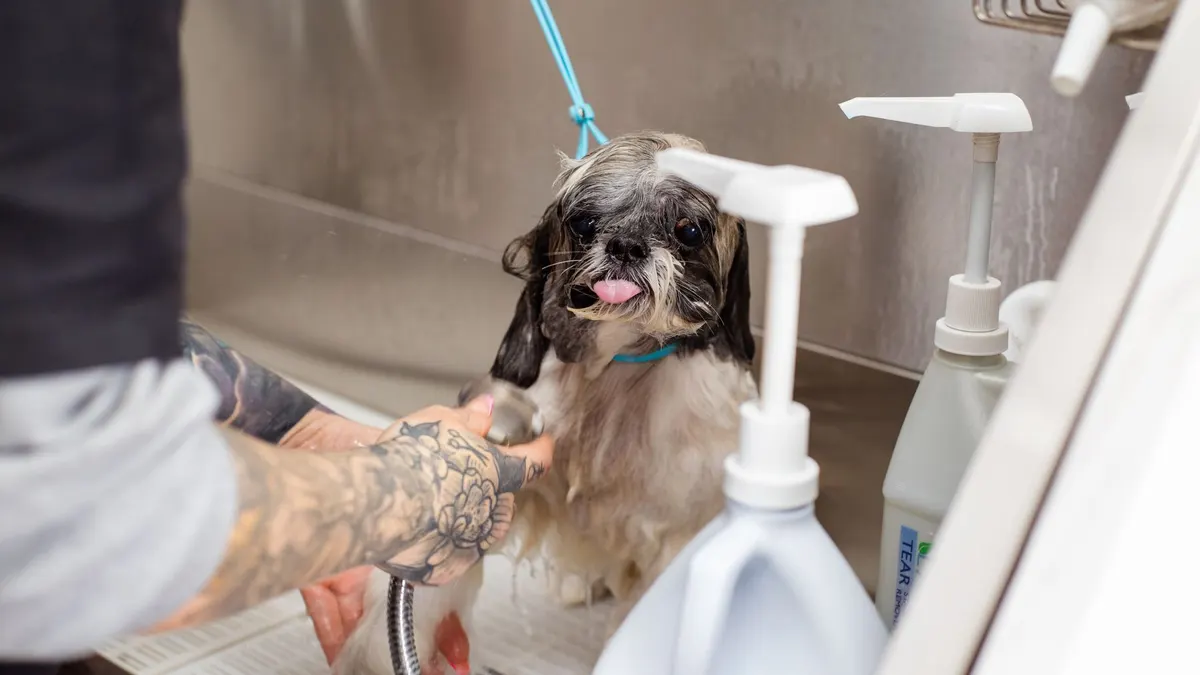
Senior dog grooming works best as a series of small, calm sessions rather than one long push. Older dogs tire more quickly, feel stiff after standing, and may become anxious when a familiar position becomes uncomfortable. A gentle routine protects comfort while still keeping the coat, skin, ears, paws, and nails easier to monitor — and it gives you an early-warning system for changes that deserve a veterinary visit.
This guide covers how to set up the area, run a short grooming session, adjust each task for an older body, and what to do if your dog cannot stand for long.
Quick answer
A simple senior dog grooming routine uses short, repeatable sessions on stable footing, with every tool prepared before you start. Brush a small section, check the paws, and stop before fatigue turns into resistance. If grooming suddenly becomes difficult, treat that change as useful information rather than forcing the task.
Why grooming matters more as dogs age
Senior dogs often tolerate less physical effort and more sensory disruption than younger dogs. A grooming session that was easy at age five can become tiring at age twelve. Common changes that affect grooming include:
- joint stiffness that makes standing or repositioning painful
- reduced balance on slick or unstable surfaces
- skin that becomes thinner, more sensitive, or prone to mats
- longer nails that affect footing and pad grip
- dental pain that makes face handling uncomfortable
- cognitive changes that disrupt tolerance for familiar routines
A predictable grooming routine helps you notice these changes early. Sudden resistance to a familiar task is often the first visible sign of pain, not behavior.
Set up a safer grooming area
Use a quiet, well-lit area with a non-slip surface. A bath mat or secure grooming mat helps, but check that the edges lie flat and that the mat does not slide. Keep scissors, brushes, shampoo, towels, nail tools, and rewards within reach so you do not leave the dog unattended or ask them to change position repeatedly.
Place the dog at a comfortable height only if the surface is designed to hold them securely and you can prevent falls. For many older dogs, floor-level grooming is safer. Avoid grooming near stairs, on a slippery bathroom floor, or on furniture where a sudden movement could lead to a fall.
See best non-slip mats for senior dogs for surface options, and how to make hardwood floors safer for dogs for a broader floor review.
A short, repeatable grooming sequence
- Start with a check-in. Notice breathing, posture, skin sensitivity, stiffness, and willingness to participate.
- Begin with an easy area. Brush a small section or gently inspect the paws before attempting a more sensitive task.
- Pause often. Offer a break after a few strokes, especially if your dog shifts position or looks tired.
- Change position carefully. Support the body and avoid pulling a leg, neck, or hip into an uncomfortable angle.
- Finish early when cooperation is good. Several calm sessions are safer than trying to complete every task at once.
Most senior dogs do well with short daily brushing and a fuller grooming session every 1–2 weeks. The goal is consistency, not completion.
📋Senior Dog Grooming Routine Checklist
0/8 completed- Pick a quiet, well-lit area with non-slip footing
- Lay out brush, comb, nail clippers, shampoo, towels, and treats before starting
- Start with a short check-in: posture, breathing, willingness
- Brush in small sections, checking skin for redness, lumps, or mats
- Inspect paws, paw pads, and nails
- Keep sessions short (5-10 minutes for most older dogs)
- Stop before the dog becomes tired or resistant
- Note any new sensitivity, lump, odor, or behavior change for the vet
Adjust each task for an older dog
Brushing
Use a tool that does not pull or scratch. Work with the coat in small sections and check for mats, skin redness, lumps, moisture, or areas your dog protects. Do not cut close to the skin if a mat is tight; a professional groomer or veterinarian can advise on safer removal.
Bathing
Prepare warm water, a stable surface, and towels before the dog enters. Keep the bath brief and prevent slipping while the dog turns or steps out. Dry thoroughly, especially in skin folds, but avoid excessive heat or prolonged standing. See how often should you bathe a senior dog for a sensible schedule.
Nails and paws
Inspect nails and paw pads regularly. Long nails change how the paw touches the floor and reduce pad grip on smooth surfaces. Trimmed nails make a real difference for senior dogs on hardwood or tile. See how to trim the nails of a senior dog safely for a step-by-step approach.
If your dog cannot stand for long, trim one or two nails at a time, or ask a professional for help.
Ears and face
Keep handling gentle and use only products recommended for dogs. New odor, discharge, redness, swelling, head shaking, or pain during handling warrants veterinary advice rather than repeated cleaning at home.
Dental care
Grooming visits are a good time to check teeth and gums. Bad breath, drooling, or reluctance to eat may point to dental pain that needs attention. See senior dog dental care and how to brush an older dog's teeth for routines that fit older dogs.
If your dog cannot stand for long
Support the dog in a natural position and use more floor-level work. Groom one side, let the dog rest, and return later. A second person can provide calm support, but should not restrain the dog forcefully.
For a dog that is frequently unable to stand, suddenly weaker, or painful when repositioned, stop the session and contact a veterinarian. Sudden grooming intolerance is often an early sign of pain, not behavior.
See how to groom an older dog that can't stand for long for a focused guide on floor-level grooming.
What to avoid
- forcing the dog to remain standing until the task is complete
- using a slippery tub, table, or floor
- pulling through mats or cutting where skin cannot be seen
- trimming nails when the dog is already tired or distressed
- using human shampoos, medications, or skin products without professional guidance
- ignoring a sudden change in tolerance, posture, or sensitivity
When to call your veterinarian
Monitor at home
- occasional reluctance to be touched in a specific area
- mild stiffness during grooming that improves after a few minutes
- the dog still tolerates grooming overall
Schedule a veterinary visit
- sudden resistance to a familiar grooming task
- new lumps, skin changes, ear odor, or discharge
- sensitivity when a specific area is touched
- reluctance to stand for grooming that lasts more than a few sessions
Seek prompt veterinary care
- collapse, severe pain, or breathing difficulty during grooming
- sudden weakness or inability to stand
- a lump that grows quickly, bleeds, or seems painful
- behavior change paired with appetite loss or distress
A grooming session is one of the best times to catch early changes. Lumps, skin infections, ear problems, dental pain, and mobility shifts often show up first during handling.
Bottom line
Comfort and safety come before completing every grooming task. Stable footing, short sessions, supported positions, and careful observation make routine care more manageable for an aging dog. A new struggle with grooming can also be an early sign that movement or comfort deserves a closer look.
Related guides
- How to Trim the Nails of a Senior Dog Safely
- How Often Should You Bathe a Senior Dog
- How to Groom an Older Dog That Can't Stand for Long
- Senior Dog Dental Care
- Senior Dog Daily Routine
- Senior Dog Daily Care Checklist
- Best Non-Slip Mats for Senior Dogs
FAQ
How often should I groom a senior dog?
Most senior dogs do well with short daily brushing and a fuller grooming session every 1-2 weeks. Older dogs tire faster, so several short sessions usually work better than one long one.
What if my senior dog cannot stand for grooming?
Move to floor-level grooming and work on one side at a time. Let the dog rest between sections, and stop the session if the dog seems painful or distressed.
Can I use human shampoo on an older dog?
No. Human skin has a different pH than dog skin. Use a shampoo formulated for dogs, and ask your veterinarian before adding any new skin products.
Why does my senior dog suddenly resist grooming?
Sudden resistance often points to pain, stiffness, or a sensitive area rather than behavior. A veterinary visit can help sort out whether the change is medical.
Should I trim my older dog's nails myself?
Yes, if the dog tolerates handling and you can see the quick. Otherwise trim one or two nails at a time, or ask a groomer or veterinary team for help.
What should I watch for during grooming?
Track new lumps, skin redness or moisture, ear odor or discharge, paw sensitivity, and any sudden reluctance to be touched in a specific area. Note changes for your veterinarian.