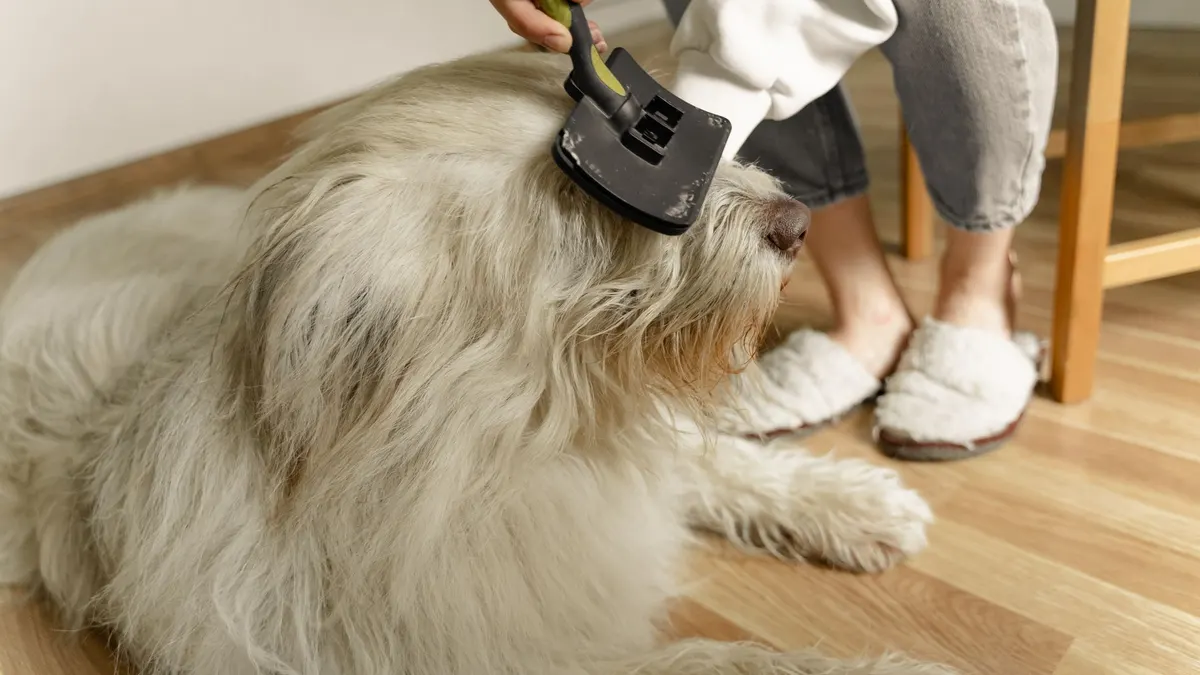
The groomer called at ten minutes to say the thirteen-year-old would not stay standing, and his owner spent the drive home wondering if coat care was now one of the things they'd lost with age. It is not lost — it just needs a redesign. A senior dog folds into a sit because the legs fatigue, the hips ache, and a slick table feels like a balance test. None of that stops grooming; it changes the geometry. Work where the dog is — lying, propped, resting — in pieces small enough that nobody has to be brave.
The redesign, in one paragraph
Groom a dog who cannot stand long in five-to-ten-minute sessions, on a non-slip floor mat or the dog's own bed, in whatever position he chose — side-lying first, one side per session. Spend the minutes where they matter: hindquarters, belly, armpits, behind the ears, paws. Soft slicker or pin brush, wide-tooth comb, detangling spray, no forced positions, no elevated tables. Bathe in stages or with waterless products. Book a mobile groomer for clips and baths. Stop the moment pain appears.
Why standing became the hard part
Several things shift at once. Muscle loss and arthritis in the stifles, hips, and spine make standing still genuinely exhausting — a dog folding into a sit is reporting fatigue, not defiance. Balance declines, and a raised grooming table that was fine at seven now feels unstable and frightening. Senior coats change texture too: thinner, drier, sometimes cottony, tangling faster at every friction point. Dogs with dental pain or sore necks stop tolerating head handling. And heavier or incontinent seniors get dirty in places they can no longer reach or clean themselves.
The stakes rise as ability drops, because old skin thins, tears easily under brushing or mats, and heals slowly. What used to be a cosmetic problem becomes a wound problem.
Where the short minutes go
If you only have eight minutes, spend them here, in this order:
- Hindquarters and under the tail. Urine and fecal soiling cause mats and skin scald — the single most uncomfortable grooming issue for frail seniors. Keep it clean, keep it clipped short.
- Belly, groin, and armpits. Friction zones where mats tighten invisibly against thin skin.
- Behind the ears and the chest feathering. The classic silent mat locations.
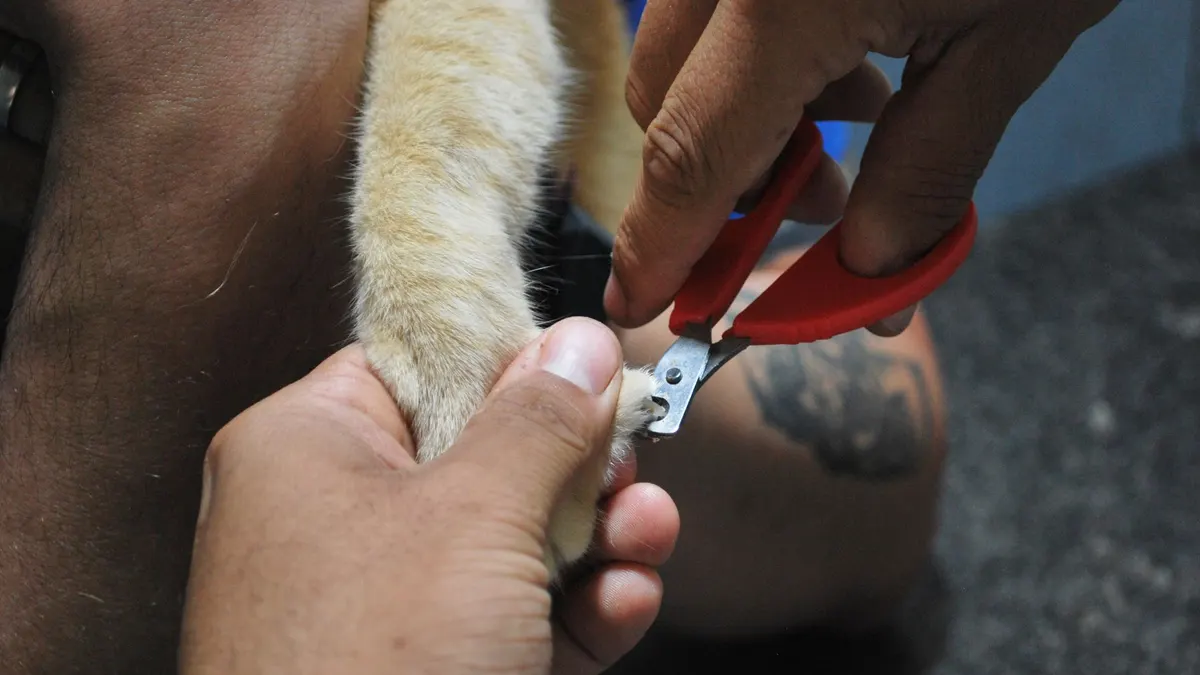
- Paws. Hair between the pads trimmed level with the pads, nails short — both are traction issues, not vanity.
- Back and sides last. Pretty, but lower priority than the zones that cause pain.
Show-ring finish is not the goal. Skin health and comfort are.
Positions that work for a lying dog
Forget the standing pose entirely. Build around rest positions:
- Side-lying on a non-slip mat is the workhorse. Brush the exposed side completely, treat, and encourage a gentle roll later or tomorrow for the other side.
- Sphinx position (lying with chest down) gives access to the back, neck, and shoulders without any rolling.
- Lap or couch work for small dogs who are relaxed there — everything happens at your height instead of his.
- Supported brief standing only with a belly sling or folded towel under the abdomen, for one task, one minute, then down again.
- One hand stays on the dog at all times. A wobbly shift becomes a fall in half a second; a resting palm prevents it.
A second person changes everything: one steadies and feeds treats, one brushes. If you groom alone, plan sessions around one side only.
What the table is actually for
Elevated tables are not banned — they are reclassified. A non-slip-covered table at a height where you can work a lying dog's head, ears, and front legs without lifting him is genuinely useful for your back and his neck. What never works: standing a weak dog on a bare table to "finish the job," or leaving one unsecured on any elevated surface. If the table is where the dog feels unstable, the table is the problem, not the dog.
Floor-level grooming sounds humble and outperforms it: no fall risk, no fear response, and a dog who stays calm long enough to actually get groomed.
A week of five-minute pieces
A rhythm that spreads the work so no session becomes a battle:
- Day 1: back and sides, one side only; sweep for new lumps while you're there
- Day 2: the other side
- Day 3: belly, chest, armpits
- Day 4: hindquarters and sanitary area, wipes and clipper if needed
- Day 5: ears, face, eye wipe
- Day 6: paws, pad hair, nail check
- Day 7: rest day — the dog keeps nothing but the good associations
Five to ten minutes each, treats scattered through, end early every time. This keeps the coat tangle-free and keeps a handled, handled, handled dog — which quietly makes every future vet exam easier.
Tools that forgive thin skin
A soft pin brush or soft slicker lifts loose coat without scraping, followed by a wide-tooth comb to find hidden tangles near the skin. Detangling spray reduces pulling and hair breakage. Blunt-nosed scissors for paw and sanitary work, or a guarded electric clipper — clippers beat scissors near skin you cannot fully see.
Two tools stay in the drawer: dematting rakes, which bruise old skin, and your own scissors inside a tight mat, because skin pulled up into a mat gets sliced before you realize it is there. Mat removal against thin skin is a professional job.
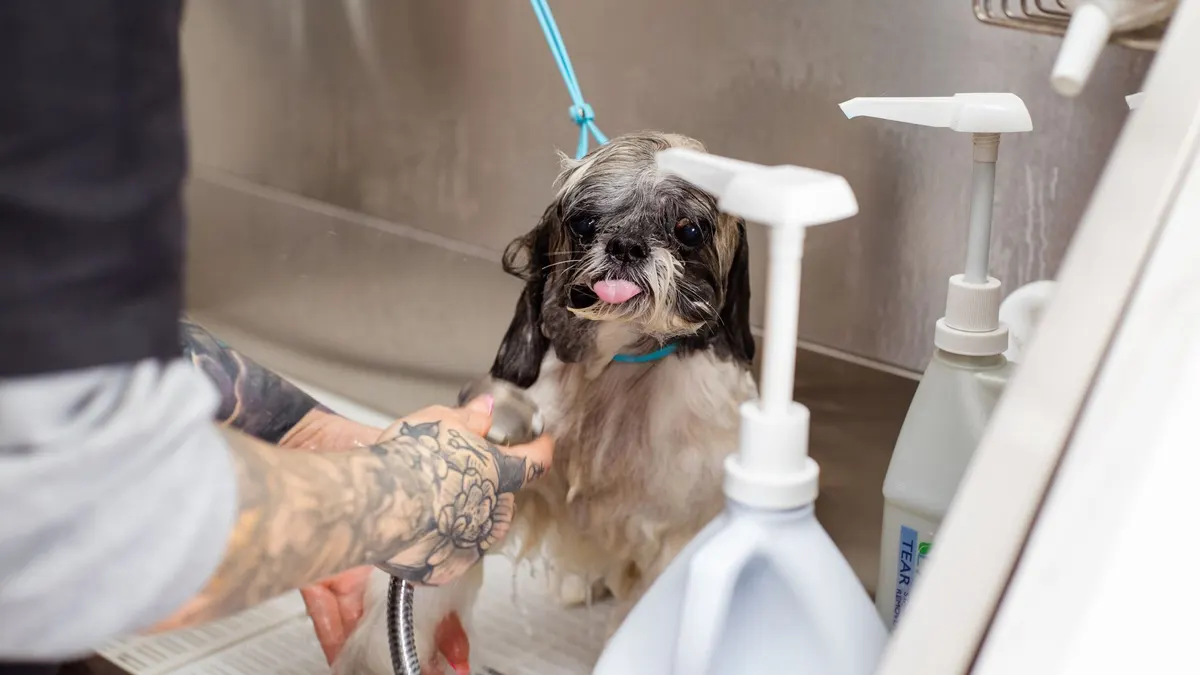
Between real baths, waterless shampoo and washcloth wipe-downs handle most senior odor and hygiene without a slippery tub — the bathing schedule guide covers how often an actual bath earns its stress cost.
When to hand the brush to a pro
Professional help is a sensible standard for frail seniors, not a failure. Mobile groomers are the best fit: bathing and clipping happen in your driveway, the visit is short, and there is no salon kennel full of strange dogs. Tell them plainly the dog cannot stand long, has sore joints, and may lie down mid-session — good groomers work around this with floor grooming, belly straps, and shorter appointments. Book every six to eight weeks so the coat never reaches crisis point, and ask for a shorter, low-maintenance clip if the breed cut has become unmanageable.
For severely matted dogs, or seniors whose anxiety makes any handling unsafe, a veterinary clinic groom with light sedation is a legitimate, humane option — worth the money precisely because it turns a traumatic hour into a nap.
Signals that mean stop today
End the session and call the vet if grooming produces: yelping or flinching at a specific spot, new snapping during familiar handling, red or torn skin, a mat pulled so tight it pinches, foul odor from a soiled area, moist red patches, or head-shaking and ear pain. Sudden grooming intolerance in a dog who was fine last week is pain information — arthritis, ear infection, dental disease, or a tender lump — and forcing through it costs you both.
Three stamina questions
How do I keep a dog clean if even lying-down grooming is painful?
Shrink the job to hygiene-only: daily wipe-downs of the hindquarters and belly with pet wipes, a waterless shampoo massaged into the dirty areas, and brushing just the coat you can reach without moving the dog. That reduced scope keeps most seniors clean enough between professional grooms and removes the pain of a full session.
Can I use a harness or sling to help the dog stand during grooming?
A belly support sling can hold a dog upright for a minute or two at a time, but it is not a substitute for rest breaks. Let the dog bear most of their own weight with your hands only steadying, and never suspend a dog by the sling alone or leave one hanging unattended.
What if my dog growls or snaps during grooming?
Growling is communication, not misbehavior. Stop, let the dog rest, and retry later on a smaller area. New or escalating growling usually means pain, so book a vet exam — and if home grooming has become unsafe, a mobile groomer or a clinic groom with mild sedation is the humane answer.
Pages for the same tired dog
- The daily grooming routine this fits inside
- How often a bath is actually needed
- Nail trims with a dog who won't stand
- Footing and mat choices for the grooming floor
- Comfort positions for resting and rising
Try the side-lying session tonight
Put a rubber mat down in the living room, wait until your dog settles on his side, and spend five minutes brushing just that exposed flank. No table, no standing, no agenda beyond that one side. If he sleeps through it — and many do — you have just found the format the rest of his grooming years will use.