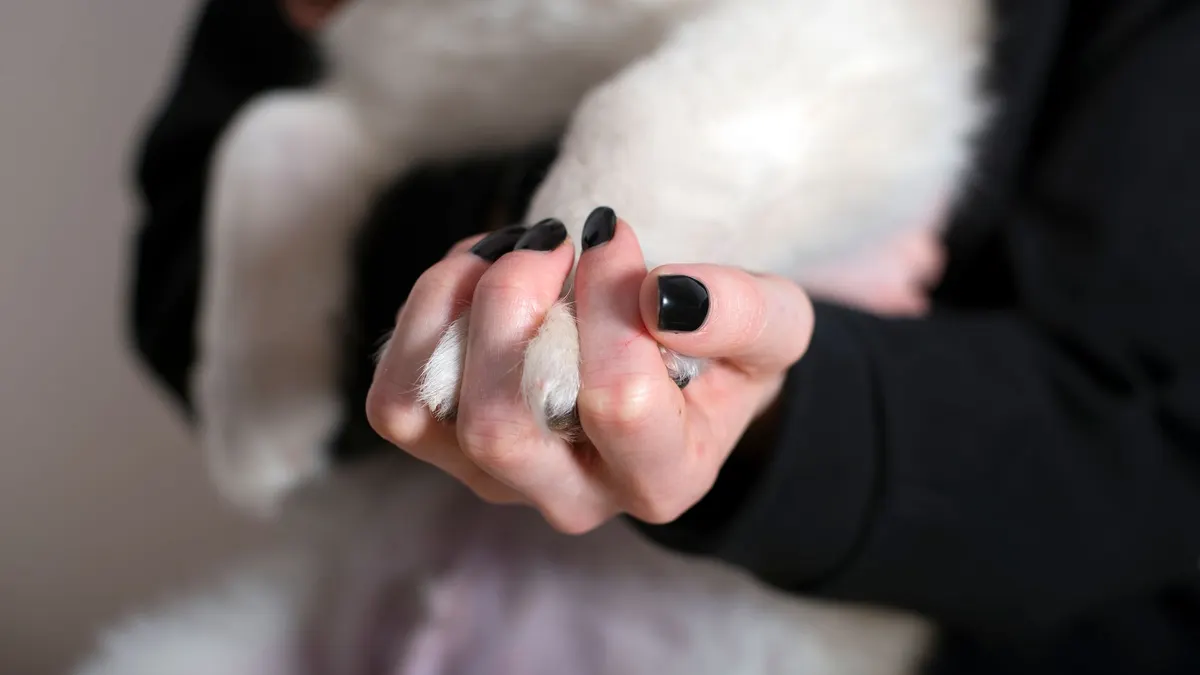
"Why do his nails keep growing when we still walk every day?" A reader asked that about her twelve-year-old shepherd mix, genuinely puzzled, because the nails of her dog's younger years had never needed this attention. The answer is almost never the nails themselves. It is the walk that got shorter and moved to grass, the gait that shifted around sore hips, and occasionally a hormone that changed the whole growth story. Long nails in a senior are a signal — and once you read the signal, the fix is simple and the trim schedule writes itself.
The cause, briefly
Nails are a balance sheet: growth from the matrix against wear from the ground. In healthy seniors the growth side barely changes; the wear side collapses. Walks shrink and soften, arthritic dogs unload sore limbs so certain nails stop scraping, and indoor life files nothing. A smaller share involves nail disease or endocrine conditions like hypothyroidism and Cushing's. Check paws weekly, trim small and often, and read any sudden change as information, not a chore.
What you're hearing and seeing
The diagnosis usually starts with your ears. Clicking on hardwood that was silent two years ago. Then the visual list:
- Nails touch or curl toward the pad when the dog stands squarely.
- Toes look splayed or lifted, angled differently than they used to.
- The dog hesitates on smooth floors, slides sideways getting up, or picks feet up carefully.
- Dewclaws hooking — they never touch ground and are the first to overgrow.
- Nails that split, fray, or look thickened, catching on blankets and rugs.
- A nail changing color at the base, or one toe the dog guards even when nothing is being done to it.
Two of those last items — texture change and guarded toes — are not just "old nails." They belong on the vet list, and the sections below sort which signals mean what.
The wear side of the equation
An active adult dog walking on pavement files the nail from below almost as fast as it grows. In most seniors that balance quietly dies, for three ordinary reasons:
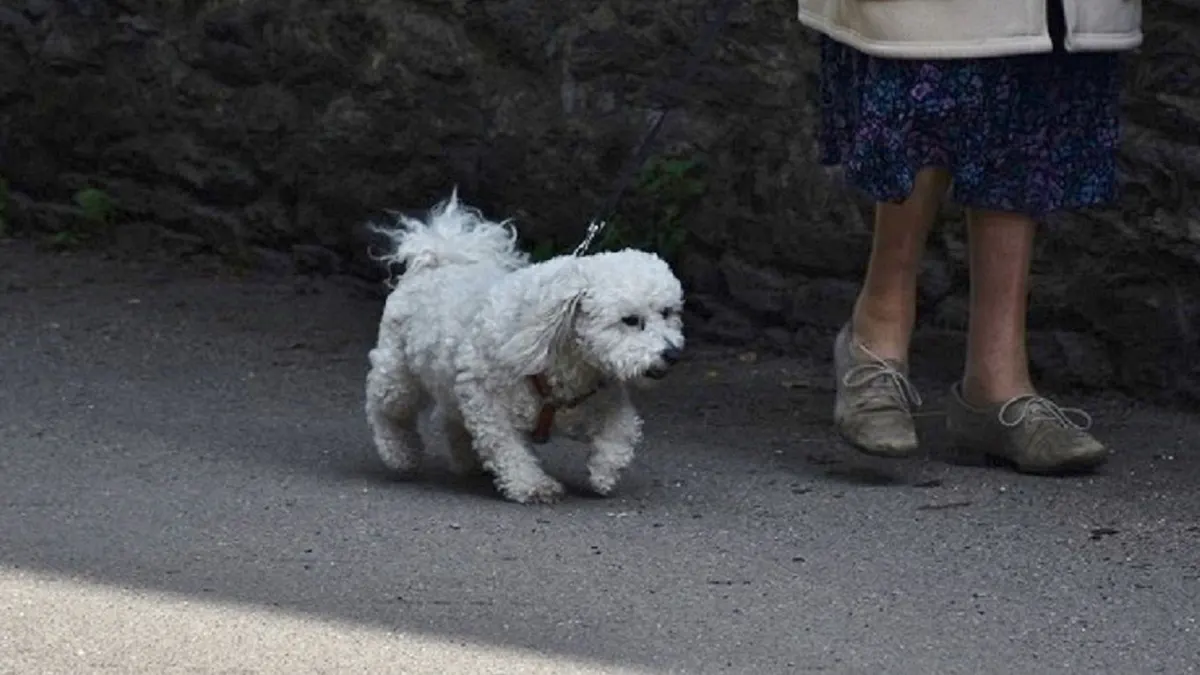
- The walk changed. Shorter distances, grass instead of sidewalk, more car rides, more "he just doesn't want to today." Grass and dirt barely touch the nail.
- The gait changed. Dogs with arthritis shift weight off sore limbs. Whichever nails stopped pressing into the ground stopped wearing — often the dewclaws and one or two digits on the painful leg, which is why overgrowth can be lopsided.
- The nail itself changed. Many seniors grow thicker, more brittle keratin that splits instead of wearing, and a split nail that never gets trimmed gets trimmed shorter by no one at all.
Nothing about the factory line sped up. The loading dock just closed.
When hormones enter the picture
A smaller slice of cases is medical, and worth knowing the pattern for. Hypothyroidism and Cushing's disease both alter skin and coat — and nails ride along: brittle, ridged, overgrown, sometimes with a waxy skin smell or patchy hair loss. If long nails arrive as a package with a pot-bellied shape, drinking and peeing more, a thinning coat, or unusual lethargy, the nails are the visible tip of a metabolic issue. That is a bloodwork conversation, not a clippers conversation.
The distinction to keep in mind: ordinary senior overgrowth is gradual and follows the walk history. Hormonal or nail-bed disease changes the nail's texture and appearance, not just its length.
What overlong nails do to old joints
The mechanics run forward from the toe. When the nail hits floor before the pad, every step levers the nail backward and pushes the toe up. Toes held up change the angle of the foot, then the wrist, then the elbow and shoulder — a chain that an arthritic senior cannot compensate for the way a young dog shrugs it off. Traction drops at the same time, because a dog walking on nails is a dog walking on slick plastic.
In advanced cases, an untrimmed nail curls into the pad and embeds, or a dewclaw grows back into the leg — both painful, both infected, both avoidable. If your senior has started slipping more, nail length is one of the first three things to check, before mats, before booties, before floor runners. The slipping deep-dive explains the full traction picture in why senior dogs slip on hardwood.
The ten-minute paw audit
Once a week, spend ten minutes with the dog on a mat and a flashlight:
- Stand him squarely (or audit lying down) and look at each foot from the side: is there daylight between nail tip and floor, or is the nail touching?
- Press each pad gently to extend the nail and check length and curl, front and back.
- Squeeze the dewclaws — the silent over-growers.
- Feel each nail for thickening, ridges, soft spots, and splitting.
- Watch the toe spread when he stands: splaying that is new tells you the nails have been changing his mechanics.
Write down anything new with a date. A photo of one paw in good light makes next month's comparison effortless.
The click that wasn't just nails
A friend's eleven-year-old basset started clicking on the kitchen floor over a few weeks, and her groomer mentioned, gently, that the nails looked strange — thickened, ridged, growing in a way they never had. Bloodwork found hypothyroidism two months later. The nails were the first visible thing the owner noticed, and the thyroid fix changed the coat, the energy, and yes, the nail schedule. Most overgrown nails are just grass walks and old age. That one wasn't, and the audit above is how you tell the difference.
When nails become a vet conversation
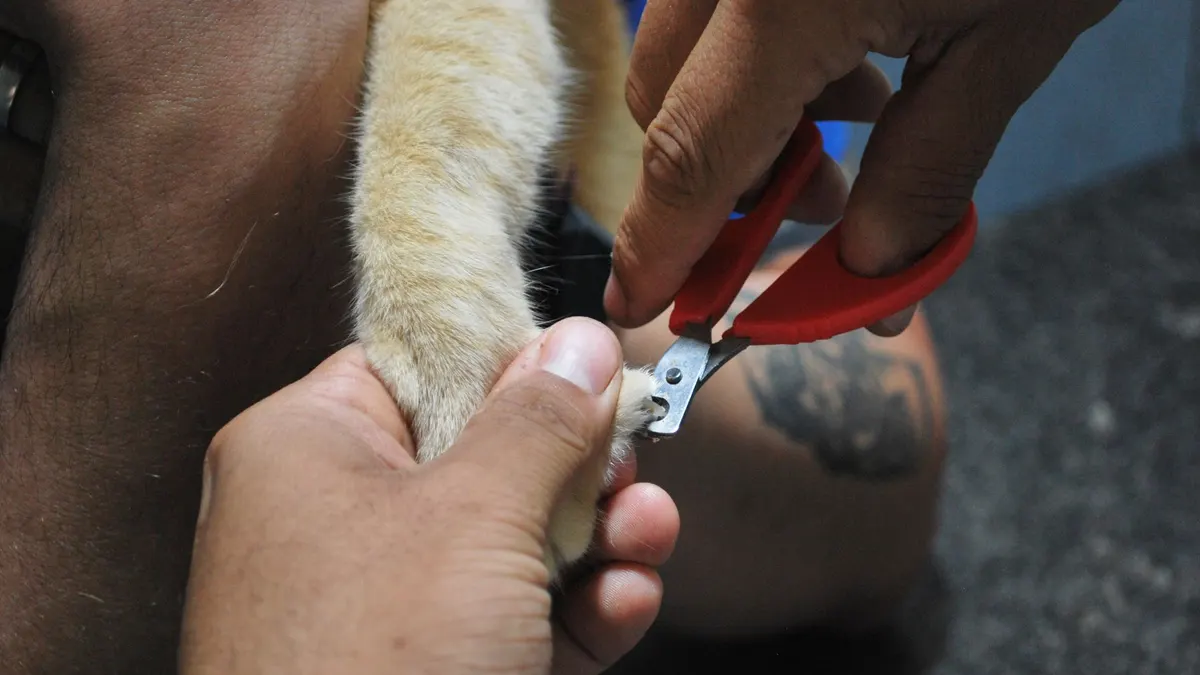
Book the exam for: a nail that has changed color, thickness, or texture at the base; a swollen, red, or draining nail bed; a nail broken at the quick or bleeding that won't stop after fifteen minutes of pressure; a dewclaw embedded in skin; a toe the dog will not let anyone touch; or overgrowth arriving with drinking, weight, or coat changes that suggest the hormonal route. And for the actual trimming — tools, the dark-dot rule, the schedule that shrinks the quick — the hands-on guide is how to trim a senior dog's nails safely.
Three nail-length questions
If walks naturally file the nails, should I just walk my senior dog more on pavement?
No. Adding hard-surface mileage to grind nails trades one problem for several: more joint impact, hotter pads in summer, and more slipping. Light, frequent trims are the safe replacement for lost natural wear, and short walks on gentle, varied ground stay the exercise goal.
Do senior nails actually grow faster with age, or is it only the wear that changed?
Mostly the wear. Growth rate itself does not meaningfully speed up in healthy seniors; what disappears is the pavement filing that used to match it. Thickened, brittle, or oddly ridged nails are a different story — that points to nail or hormonal disease and deserves a vet look.
Are overgrown nails really connected to my dog slipping on hardwood?
Directly. Long nails lift the toes off the floor and shift load onto slick keratin instead of grippy pads — exactly when an unsteady dog needs traction most. Trimming is one of the cheapest mobility fixes available, right alongside runners and mats.
Pages that continue the nail story
- The trimming technique, tool by tool
- Where nail checks fit in the weekly routine
- The full slipping-on-floors diagnosis
- What to raise at the senior wellness exam
- Rugs and runners that buy traction while you trim
Do the floor test this week
This week, walk your dog across your hardest floor and listen for clicking. Then do the ten-minute audit on one evening. If the nails touched, book the trim — yours or a professional's — and set a recurring two-to-four-week reminder while you're in the calendar app. The cause is almost always the wear side of the equation, and the schedule is almost always the cure.