Meal frequency matters more for senior dogs than many owners expect, but there is no universal number that fits every dog. The useful starting point is the dog’s appetite, digestion, body condition, activity, and any veterinary instructions.
Quick answer
Many senior dogs do well with two meals a day, but some do better with smaller, more frequent meals. Frequency answers “how often”; it does not answer how much food the dog needs overall. For portions, see How Much Should a Senior Dog Eat?. For a full daily timetable, see Senior Dog Feeding Schedule: A Simple Guide.
Why frequency matters for older dogs
As dogs age, appetite, digestion, dental comfort, and energy can vary more. A predictable number of meals makes changes easier to spot. If a dog suddenly skips a meal, loses interest in food, or seems uncomfortable after eating, that is much easier to notice when the routine is consistent.
Two meals is a common starting point
For many senior dogs, two meals a day is a reasonable starting point. It distributes food across the day and avoids relying on one large meal that may be less appealing or harder for the dog to manage comfortably.
If your dog seems more comfortable and steady with a split schedule, that is often a better long-term answer than forcing a rigid single-meal routine.
That said, some dogs may benefit from:
- smaller meals spread across the day
- meals timed around activity or naps
- a slower rhythm if the dog tires easily
- close monitoring if the dog has a sensitive stomach
Two meals is not a requirement. If your dog eats slowly, tires during meals, has a small appetite, or seems uncomfortable after a larger serving, discuss whether splitting the same daily amount into three or more smaller meals makes sense. Do not increase the total daily amount simply because meals are more frequent.
How to choose a starting frequency
Use the dog’s pattern as a guide:
- Steady appetite and digestion: Two consistent meals may be a practical baseline.
- Small appetite or slow eating: Smaller portions offered more often may be easier to finish.
- Discomfort after larger meals: Ask your veterinarian whether splitting the daily amount could help.
- Medication or health-related timing: Follow the prescribed instructions rather than changing frequency independently.
- Weight change: Review total calories and body condition, not just the number of meals.
Keep the total daily food amount consistent unless a veterinarian or the food’s feeding guidance indicates a change. Frequency and portion size are related, but they are separate decisions.
Signs that the schedule may need changing
The feeding schedule may need adjustment if the dog:
- eats too quickly and then seems uncomfortable
- avoids one meal and then becomes difficult to manage
- vomits after feeding or has loose stools
- seems restless or uncomfortable around mealtime
- suddenly stops eating with the usual enthusiasm
A routine is helpful, but it should support the dog’s wellbeing rather than force a rigid pattern.
Keep the feeding area easy and calm
A quiet space can make mealtime easier for an older dog. This is especially true in homes with a lot of noise, foot traffic, or busy kitchen activity.
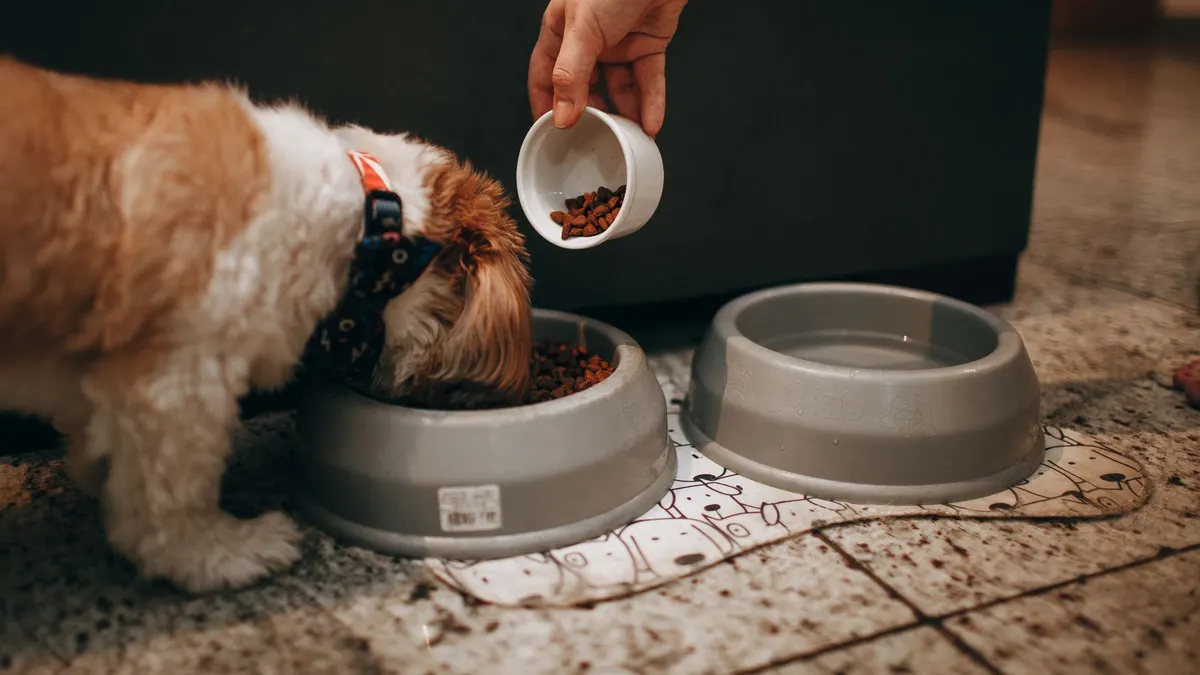
Check the bowl setup and location as well. A stable, easy-to-reach feeding zone matters for comfort and can help reduce mealtime stress.
See How Should You Feed a Senior Dog? and Best Non-Slip Dog Bowls for Senior Dogs for related setup ideas.
When a vet conversation is worth it
If the dog suddenly seems less interested in meals, has vomiting, diarrhea, or a sharp appetite change, a veterinary check is a good next step. Feeding schedules are not the only factor, and some changes in appetite relate to health rather than routine.
Bottom line
The best meal frequency is the one that keeps the dog comfortable, regular, and easy to monitor while preserving the appropriate total daily amount. For many dogs, two predictable meals work well; others need a more individualized plan.
Related guides
- How Much Should a Senior Dog Eat?
- How Should You Feed a Senior Dog?
- Senior Dog Food: What Nutrients Matter Most
- How to Help an Older Dog Maintain a Healthy Weight
FAQ
Is two meals a day enough for a senior dog?
Often yes, but not always. Some senior dogs do better with two smaller meals or a more customized split schedule.
Can a feeding schedule cause digestive issues?
A very irregular or stressful routine can contribute to gut upset or low appetite, so predictability helps.
Should I feed at the same times every day?
It helps a lot. Consistency makes it easier to monitor appetite changes and keep the dog comfortable.
What if my senior dog only eats small amounts?
A smaller, more frequent plan may be worth trying, especially if the dog is sensitive or seems to tire during meals.