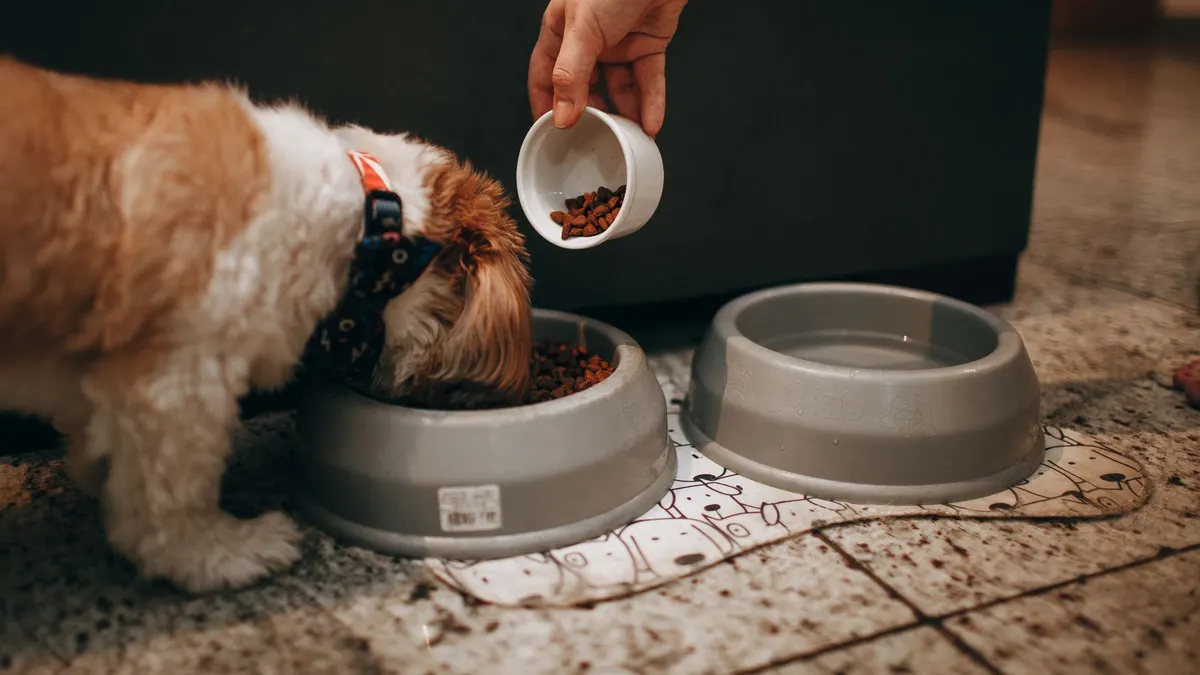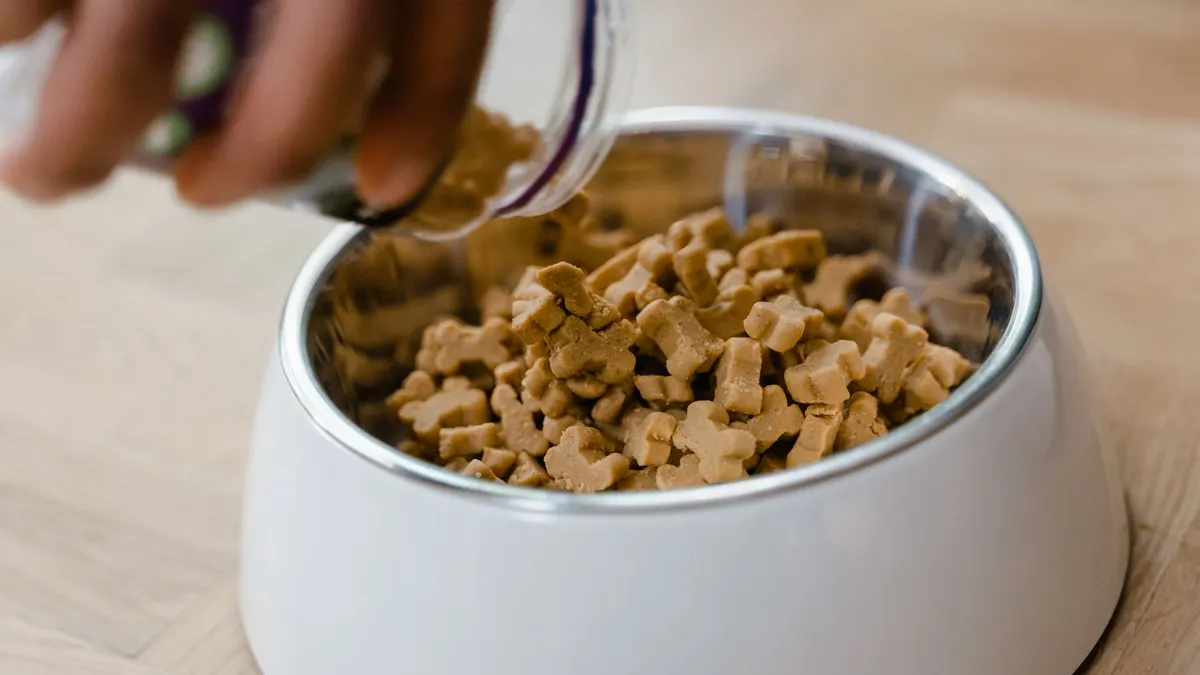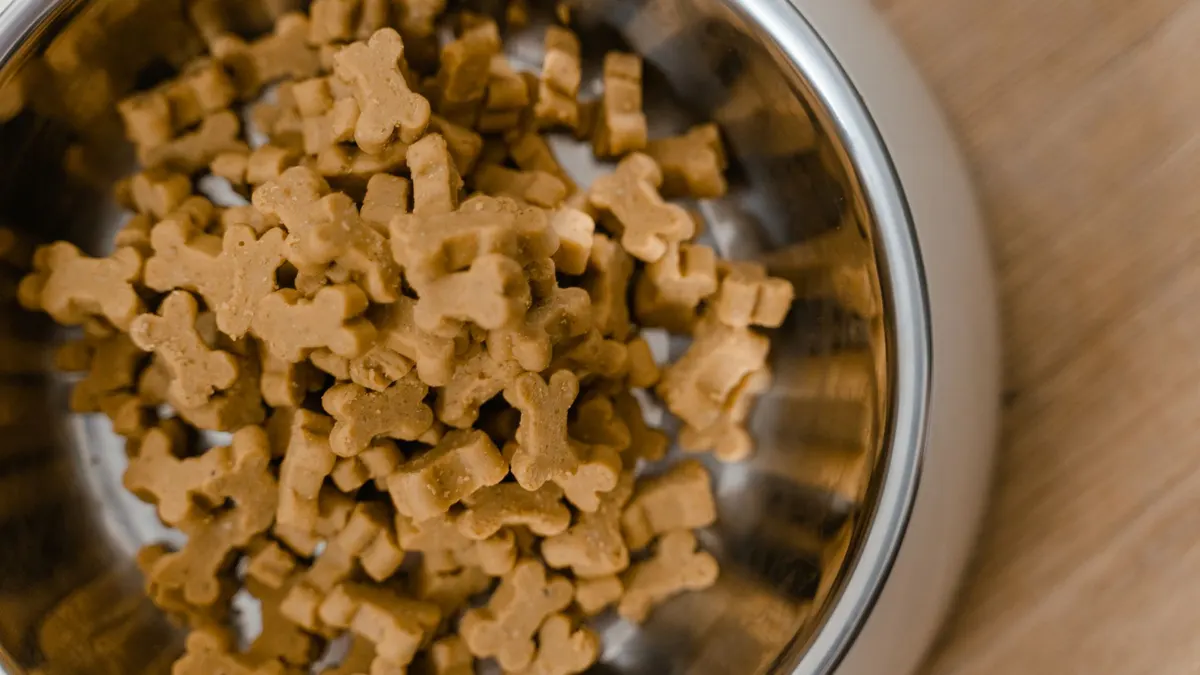
The wet-versus-dry question comes up often because senior dogs do not all have the same eating needs. What matters is not which format is“best” in general, but which one works best for your dog’s comfort, digestion, and daily routine.
Quick answer
Wet food may be easier to chew and can add moisture to the diet, while dry food can be practical and easy to portion. For many senior dogs, the best choice is the format that helps them eat comfortably, maintain a healthy weight, and digest well.
Wet food is often easier for older dogs to eat
Wet food can be useful if the dog has dental issues, a weaker appetite, or trouble with dry kibble. It may also help when a dog needs a little more moisture in the diet.
This does not automatically make it the best choice for every senior dog, though. The real question is whether the dog will finish the food and feel steady after eating.
Dry food can still be a solid option
Dry food can be convenient, easy to store, and simple to portion. Some senior dogs do well with it when they chew comfortably and maintain a stable appetite.
The downside is that dry food may be harder for a dog with dental discomfort or a slower chewing pattern. For some older dogs, the texture alone makes the meal less appealing.
Match the format to the dog’s real pattern
A practical choice depends on a few things:
- appetite and enthusiasm at mealtime
- comfort when chewing
- stool quality and how the dog feels after eating
- body condition and weight stability
- how easy the routine is to maintain day to day
If one format clearly supports better digestion and steadier weight, that is usually the better choice regardless of what a label or trend suggests.
Mixed feeding can work if it is balanced
Some senior dogs do well with a combination of wet and dry food. This can make meals more appealing while still supporting hydration and calorie management. The key is to keep the total daily calories realistic and the mealtime routine predictable.
See how-much-should-a-senior-dog-eat and how-should-you-feed-a-senior-dog for more on portioning and routine.
When to ask a veterinarian
If the dog quickly refuses food, has trouble chewing, vomits after meals, or loses weight, a vet review is worth doing. Food format can matter, but dental pain, digestive changes, or broader health issues may be part of the picture too.
Bottom line
There is no universal winner between wet and dry food for senior dogs. The best choice is the one that keeps the dog eating comfortably, maintaining a healthy body condition, and feeling steady day to day.
Related guides
- How Much Should a Senior Dog Eat?
- How Should You Feed a Senior Dog?
- Senior Dog Food: What Nutrients Matter Most
- Best Foods for Senior Dogs With Sensitive Stomachs
FAQ
Is wet food better for senior dogs?
It can be, especially if the dog struggles with chewing or needs more moisture in the diet. But not all dogs do better with it.
Does dry food help dental health?
It can help some dogs with chewing, but it is not a substitute for dental care. See senior-dog-dental-care for more on oral health.
Can I mix wet and dry food?
Yes, if it helps the dog eat consistently and the total daily calories stay appropriate.
What matters most when choosing a format?
Comfort, digestion, body condition, and the dog’s real eating pattern matter more than a generic label.