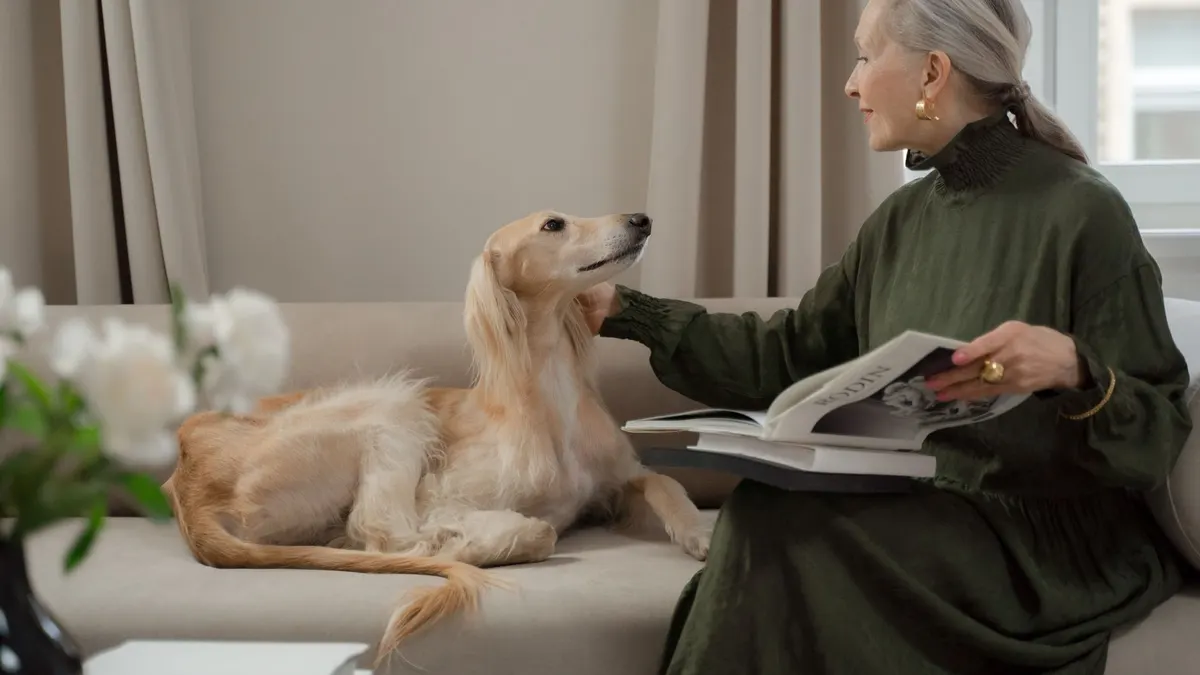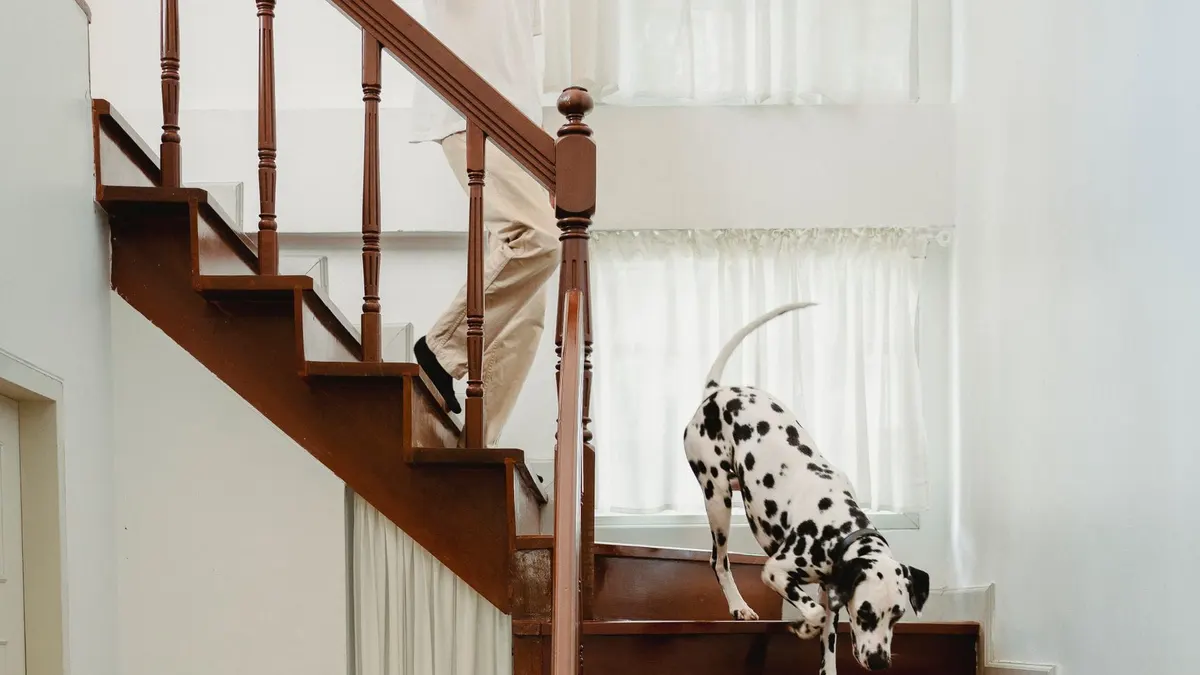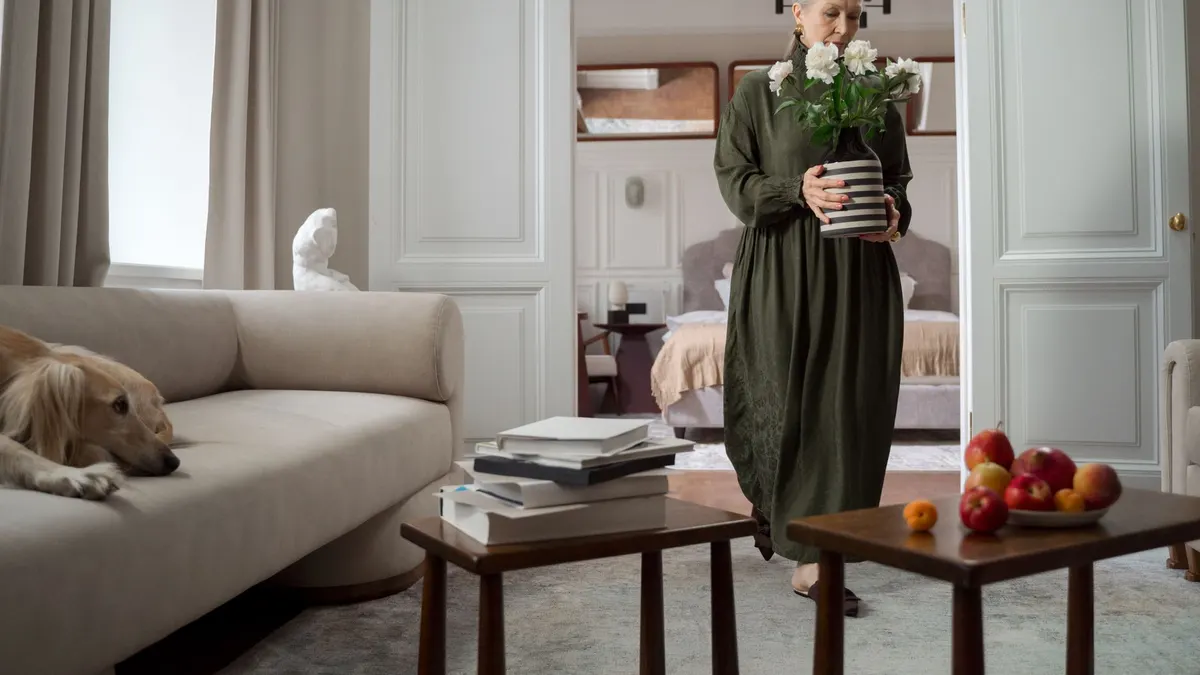
The best sleeping floor is the one that lets your dog rest, stand, reach water, and get outside without repeated difficult stairs. For a dog whose balance, strength, vision, or recovery has changed, a downstairs setup is often simpler, but the right choice depends on the actual home and the dog’s routine.
Quick answer
Choose downstairs when stairs are slippery, frequent, poorly lit, or increasingly difficult. Upstairs may still work when the dog moves confidently, the route is secure, and essential resources are nearby. Do not make a sudden location change if it causes distress; set up the new area first and transition calmly.
What matters most
The decision should be based on function rather than age alone. Watch how your dog handles stairs when rested and later in the day, and whether they can turn, stop, and descend without slipping. Consider access to the yard, water, food, medication, and the people who provide care.
When downstairs is usually safer
Downstairs is often the more practical choice when your dog:
- hesitates, slips, or falls on stairs
- needs frequent bathroom trips during the night
- has difficulty standing or turning after rest
- becomes confused in dim light
- tires quickly or needs help from a caregiver
Set up a comfortable bed, water, and a clear route to the exit on the same floor. The Senior Dog Bedroom Setup guide covers the resting area itself.
When upstairs may still work
An upstairs bedroom may be reasonable if the dog uses the stairs confidently, the steps have secure traction, lighting is reliable, and the dog does not need frequent unsupervised trips. Keep the route clear and avoid forcing the dog to use it when tired, painful, or unsteady.
What to do at home
Prepare the new sleep area before moving the dog. Use familiar bedding, place water within easy reach, and keep the first route short and uncluttered. If the dog sleeps upstairs now, move the routine gradually when possible rather than changing every cue at once.
Never block access in a way that traps the dog or prevents a caregiver from reaching them. Use a secure gate only when it is appropriate for the layout and the dog cannot push through or climb it.
Watch for red flags
If the dog’s ability to use stairs has changed, observe whether the same problem appears on level ground. New reluctance, weakness, pain, repeated falls, or confusion should not be explained away by age. A veterinary assessment can help identify whether the sleep location is the main issue or only exposing a broader change.
When to call a veterinarian
Contact a veterinarian promptly for a fall, collapse, severe pain, sudden weakness, trouble standing, or a rapid change in balance. Arrange a visit for persistent stair hesitation, repeated nighttime wandering, new accidents, or difficulty getting up after rest.
Bottom line
The best sleeping location minimizes difficult transitions and keeps essential resources close. Choose the floor that supports calm rest and safe movement, then reassess as your dog’s function changes.