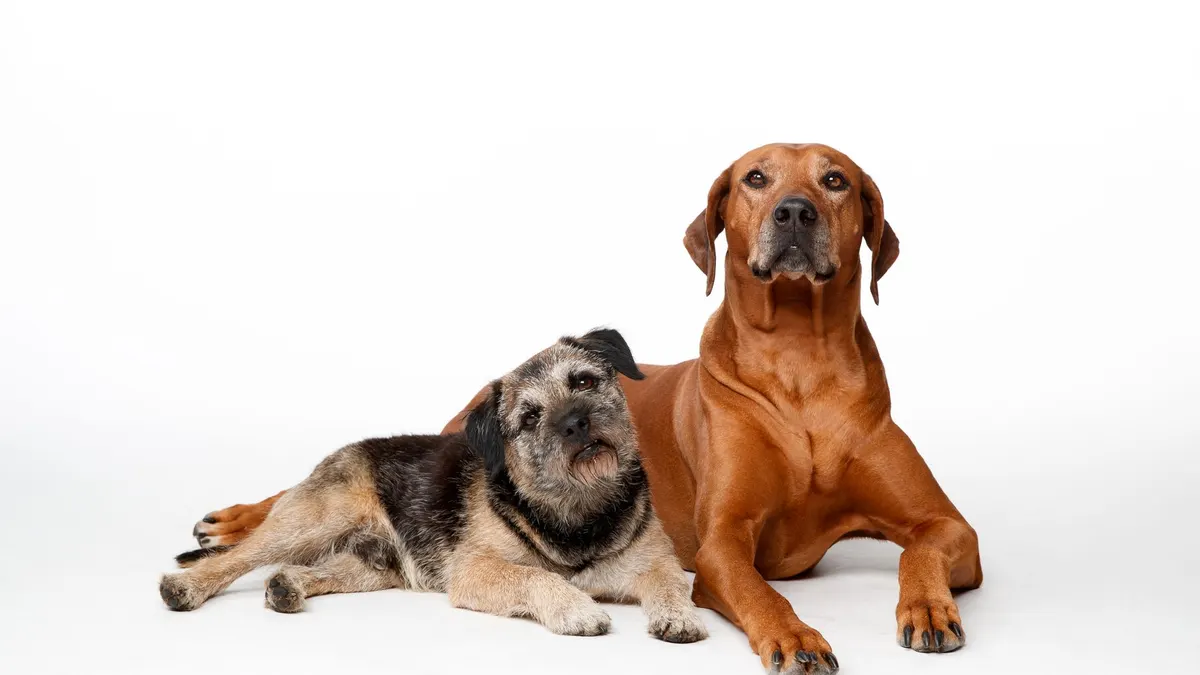
Mobility problems hit large dogs differently: there is no easy scoop-and-carry when your dog weighs as much as you do, slippery floors are genuinely dangerous, and the equipment that works for a Beagle fails at 40 kilos. But large dogs also have an advantage — they usually respond well to strength-preserving exercise, and the right equipment restores a surprising amount of independence.
This guide is for dogs already struggling: hard to rise, wobbling on walks, or avoiding stairs they used to take for granted.
Quick answer
Large-dog mobility support rests on four pillars: a diagnosis (weakness has several causes with different treatments), lifting help built for big dogs (handled harness or rear sling), a home with real traction and step-free routes, and daily muscle-preserving exercise. Weight management stays part of the plan — extra kilos multiply every other problem.
First: get the cause, not just the symptom
Hind-end weakness in a large senior dog can come from very different places, and they need different responses:
- Osteoarthritis — the most common; pain-driven, improves with weight control, pain medication, and muscle work
- Cruciate ligament disease — often a sudden lameness or "can't quite stand" pattern; surgical and non-surgical paths exist
- Degenerative myelopathy (DM) — a progressive spinal cord disease common in Shepherds and similar breeds; managed with exercise and equipment, not curable
- Lumbosacral stenosis and disc disease — spinal pain and nerve compression; some presentations are time-sensitive
Why this matters: exercise is medicine for arthritis but must be calibrated carefully in DM, and knuckling-over can be an emergency rather than an aging quirk. A neurologic and orthopedic exam is the starting point of every plan below.
Lifting help that actually works at 40 kilos
- Full-support harnesses with handles over the hips (and sometimes the chest) let you steady the dog through rises and stairs. Fitted correctly — wide straps, clear of armpits — they are safe for daily use. The senior harness guide compares the options by support type.
- Rear lifting slings go fully under the belly/hips for dogs that cannot weight-bear at all; use for short assists, not all-day support.
- Two-person technique for stairs and car transfers: one at the chest, one at the hips. Plan it before you need it.
- Your back counts. Bend at the knees, keep the dog close, and if daily lifting is becoming part of life, a vet or physiotherapist can show you mechanics that last.
What not to do: lifting by collar, legs, or tail; helping so much that the dog stops trying to stand; or letting a struggling dog thrash on slippery ground. Falls do more damage than weakness.
Home setup for a big, unsteady dog
- Traction on every route. Large rubber-backed runners on hallways and the kitchen path; interlocking foam or yoga mats at the bed, bowls, and turning points. A heavy dog needs more grip than a light one — thin decorative mats slide under load.
- Step-free everything. Food, water, and rest on one floor. Ramps (not jumps) for the car; furniture access either gated off or ramped.
- Rise-friendly rest. A firm, high-density orthopedic bed lets the dog push up; low, sagging cushions trap them. See the orthopedic bed guide for what matters at large sizes.
- Lighting and predictability. Night lights on the main route and a stable furniture layout reduce the missteps that cause injuries.
- Toe grips or boots can add grip on uncarpeted floors where rugs are impractical.
📋Large Dog Mobility: Home Safety Checklist
0/8 completed- Vet diagnosis in hand (orthopedic vs neurologic changes the whole plan)
- Support harness fitted: wide straps, handle over hips, no armpit rubbing
- Rubber-backed runners on all main routes, mats at rest and turning spots
- Stairs gated or assisted; car handled by ramp with two-person backup
- Bed is firm, high-density, and rise-friendly
- Nails short and any paw fur trimmed — both change grip more than owners expect
- Weight at target — extra kilos multiply every mobility problem
- Daily assisted or independent walks continued (muscle is the goal), not canceled
Exercise: the part owners get backwards
The instinct with a struggling large dog is to rest it. Rest is exactly what accelerates decline — muscle is what stabilizes weak joints, and it melts fast in a large dog that stops moving.
- Short and frequent beats long and rare: two or three 10–20 minute walks a day rather than one big outing.
- Surface choice: grass and dirt over concrete; flat routes over hills.
- Physiotherapy and hydrotherapy: swimming and underwater treadmills are genuinely effective for large dogs and worth finding a clinic for.
- Assisted walks: with the harness handle in hand, you can let the dog do 90% and catch the wobble 10% — that is the point of the equipment.
- Stand-and-eat practice: three or four short assisted stand sessions a day rebuild hind-end strength more than owners expect.
When to ask a veterinarian
Schedule within days: new or worsening difficulty rising, mild wobbliness, reluctance on stairs, paw dragging that comes and goes.
Promptly — same day: sudden inability to stand or bear weight, knuckling over that does not correct, loss of bladder or bowel control with weakness, a tense painful abdomen or back, collapse.
Ongoing: pain medication reviews (large dogs often need dose adjustments as disease progresses), weight checks, and quality-of-life scoring once good and bad days diverge.
Related guides
- Senior Dog Care for Large Breeds
- Best Harnesses for Senior Dogs
- Best Non-Slip Mats for Senior Dogs
- Best Orthopedic Dog Beds for Seniors
- Why Are My Senior Dog's Back Legs Weak?
- Senior Dog Mobility Exercise
FAQ
How do I help a large senior dog stand up?
Use a support harness with a handle or a rear lifting sling placed under the hips, assist on the count of three while the dog pushes, and let the dog do as much of the work as it can. Never lift by the collar or legs, and check your own lifting technique — most owners hurt their backs before the dog improves.
Are support harnesses safe for everyday walks?
Yes, when fitted correctly: straps wide enough not to dig in, positioned clear of the armpits, and used to steady rather than carry. A harness used constantly should be removed at rest and the skin underneath checked for rubbing.
What floor surfaces help a large dog that slips?
Large rubber-backed runners on every main route, yoga mats or interlocking foam tiles at rest spots and turning points, and grippy paw grips where rugs are impossible. Bare hardwood and tile are the highest-risk surfaces for a heavy, weak dog.
Can a large dog with weak back legs still recover muscle?
Often yes, if the cause is arthritis or deconditioning rather than progressive spinal disease. Controlled daily walking, weight management, and vet-guided physiotherapy or hydrotherapy rebuild muscle. The vet diagnosis determines what is possible.
When is hind-end weakness an emergency in a large dog?
Sudden inability to stand, dragging or knuckling over on the paws, loss of bladder or bowel control, or a painful, tense belly need same-day veterinary attention — these can indicate spinal cord disease, where hours matter.